Sex, Coverage and Gender Bias: Being “Hobby-Lobbied”!
Posted on | July 16, 2014 | 2 Comments
David and Barbara Green/Hobby Lobby
Mike Magee
In its 5-4 decision in favor of Evangelical Christian purveyor of all things crafty, Hobby Lobby, the conservative male contingency of the Supreme Court managed to both engage and enrage all sides in the culture wars of a half century past.
With the decision, “closely held” (whatever that means) corporate entities “gained a conscience”, just like individuals, and the right to pick and choose from the menu of 20 forms of contraception required under the Affordable Care Act. Hobby Lobby chose to delete 2 morning after pills and 2 intra-uterine devices (IUD’d) they considered to be abortion inducers.
The Democratic leadership rapidly responded with a proposed Senate Bill (Protect Women’s Health From Corporate Interference Act) that would negate the effect of the Supreme Court decision and immediately drew the support of the 55,000 gynecologists strong American Congress of Obstetricians and Gynecologists which, in a clear slam down stated, “a woman’s boss has no role to play in her personal health care decisions…The value of family planning, including contraception, is clear. It allows women to time and space their pregnancies, leading to more optimal health outcomes for mother and for baby. And it helps to prevent unintended pregnancy; in America, nearly one half of all pregnancies are unintended…It is also essential that when an ob-gyn prescribes the appropriate contraceptive for each individual patient, he or she can trust that the patient will have access to that treatment option. Restrictions to this access are an unnecessary, inappropriate impediment in the patient/physician relationship.”
The last time ACOG came out this strongly on birth control was a half century ago when ACOG’s then director of women’s health issues, Luella Klein, MD, labelled the growing reimbursement for the newly released Viagra in the face of widespread non-coverage of birth control pills a “form of bias against women”. “People say pregnancy is natural, but what woman wants 21 or 25 pregnancies… This insurance exclusion makes no sense. Contraception provides great savings to the health care system, yet it is the individual woman who is shouldering the burden of this cost savings to insurers.”
While the pill had been legal and widely available since 1965 when the ruling in Griswold v. Connecticut struck down state laws banning the sale of birth control, the pill remained largely uncovered as the new millennium approached by insurance companies who said it was not a “medical necessity”. This claim had been under attack for decades, but legislation over the years had been successfully defeated by a coalition of businesses and the United States Conference of Catholic Bishops. This is the same group that pharmaceutical giant Pfizer approached in 1997 to get a Vatican read on whether they would actively oppose Viagra.
As a Catholic commentator explained the nuanced tortured rationale leading to the green light years later, “The Church has not condemned the use of Viagra. Artificial contraception, as you must know, is the intentional prevention of conception or impregnation through the use of various devices, agents, drugs, sexual practices, or surgical procedures before, during, or after a voluntary act of intercourse. Viagra, on the other hand, is a drug that helps males to overcome a pathological condition preventing them from engaging in the conjugal act with their spouses. Destroying or denying a good (conception) is quite different from enhancing or strengthening a good (as by use of Viagra).”
In the first six weeks after Viagra’s approval, the Church stood by it’s word – no opposition expressed to the drug, and tacit affirmation that this was “real medicine for a real disease” that made possible the normal resumption of natural marital relations. The tightrope for Pfizer was attempting to maintain the support of physicians who were becoming increasingly vocal about what they considered to be gender specific reimbursement bias, without triggering a negative reaction to Viagra reimbursement by the formidable Catholic lobby.
The fact that Gloria Feldt, then president of Planned Parenthood had made a very publicized comment about the disparity was of some concern. But when the 39,000 strong American College of Obstetrics and Gynecology issued a statement condemning the lack of coverage in the face of reimbursement of Viagra as a “form of bias against women”, pressure was building. Forced to take a stand, Pfizer quietly voiced support for reimbursement of both Viagra and contraceptives as necessary and medically sound therapies, and added coverage of birth control pills for its own employees for the first time.
With the Hobby Lobby ruling, instigated in part by the prior compromise with the US Conference of Catholic Bishops over coverage of contraception in Catholic organizations including hospitals and universities, the old lines have been reformed. And once again, American women and their doctors are caught in the cross-fire.
For Health Commentary, I’m Mike Magee
Tags: aca > ACOG > health care law > Hobby Lobby > Obamacare > supreme court
Are Doctors Afraid To Touch Patients?
Posted on | July 3, 2014 | 5 Comments
Mike Magee
Where do I begin? When I read the JAMA title last week, “Banning the handshake from the health care setting”, my immediate reaction was, “Seriously, have we gone this far?”
Then I read the dispassionate opening, “The handshake represents a deeply established social custom. In recent years, however, there has been increasing recognition of the importance of hands as vectors for infection, leading to formal recommendations and policies regarding hand hygiene in hospitals and other health care facilities. Such programs have been limited by variable compliance and efficacy. In an attempt to avoid contracting or spreading infection, many individuals have made their own efforts to avoid shaking hands in various settings but, in doing so, may face social, political, and even financial risks.”
And my second reaction was, “Is this really about patient welfare or about institutionally based doctors and their reticence to take the risk to touch a patient”.
Then I read, “Particularly in the current era of health care reform, innovative, practical, and fiscally prudent approaches toward the prevention of disease will assume increasingly important roles.” And my third reaction was, “Do they really want to go there, to justify contact-less caring as cost-effective?”
And in the arena of rare and strange analogies, the authors proclaim, “Although the mortality associated with smoking has been found to be substantially greater than that associated with hospital-acquired infections, some parallels may be drawn between the proposal to remove the handshake from the health care setting and previous efforts to ban smoking from public places.” To which my inner doctor shrank as humanistic care went up in smoke.
Finally I read the very last sentence, and it said, “Given the tremendous social and economic burden of hospital-acquired infections and antimicrobial resistance, and the variable success of current approaches to hand hygiene in the health care environment, it would be a mistake to dismiss, out of hand, such a promising, intuitive, and affordable ban.” And I concluded, “Just one more reason why Americans need to avoid going to the hospital.”
For Health Commentary, I’m Mike Magee
Tags: hand infection > hand washing > hospital care > infection prevention > JAMA > patient-physician relationship
ACA Will Amplify Healthy People 2020’s Early Successes
Posted on | June 27, 2014 | 2 Comments

Mike Magee
We are now in the fourth decade of “Healthy People”, the US Public Health’s strategic road map for both guiding and measuring the success of population wide health initiatives. The scope of the initiative is impressively broad, including 42 different categories and over 1000 touch points.
We’re currently striving to reach goals outlined in Healthy People 2020. In that plan, 26 “leading health indicators” are identified for top priority concentration. A snapshot reveals that, in the first third of this decade, the nation has met or exceeded the goals in 4 areas, and has demonstrated improvement in 14 of the 26.
A recent summary revealed some high points:
1. Age-adjusted homicides have decreased to target amounts.
2. Targets for adult physical activity and muscle strengthening have been met.
3. Childhood exposure to secondhand smoke has declined as hoped for, and environmental efforts have cleansed the air that our children are breathing.
4. Improvement has been shown in the frequency of pre-term births and in infant deaths.
5. Colorectal cancer screening, childhood immunizations, and hypertension control have improved.
6. Adolescent use of drugs and alcohol are down.
7. Adult tobacco use continues to decline.
8. More HIV positive individuals know their serostatus.
9. More kids who reach the 9th grade have gone on to earn a high school diploma.
The summary also revealed 8 areas where no improvement has occurred and 3 areas where we have actually reversed the progressive trend, including:
1. Major depressive episodes and suicides in adolescents.
2. No improvements in the rates of childhood obesity or in the intake of vegetables.
3. A decline in dental visits.
The data reported out precedes the full 2014 implementation of the Affordable Care Act. But recent data has shown that nearly 10 million citizens have gained new access to health insurance, and with it will come higher levels of care coordination and other critical services like dental care and substance abuse treatment. Also built into standard models, and innovative trials occuring throughout the country, are a wide range of health promotion activities whose results will serve to guide future programmatic initiatives. Preventive services at no cost to patients are now available to over 100 million Americans.
As the government’s Public Health experts have reported, “public health always represents unfinished business.” But to this they add, “Further analyses to explain the changes noted herein can amplify national discussions about aspirations for a healthier nation.” With the institution of the Affordable Care Act, and the expansion of electronic medical records, as well as the ability to monitor the results of hundreds of competing approaches to advancing health and human potential, we are clearly on the right track.
To declare success, however, we will need to structurally unite around these gains, deflect naysayers, and maintain momentum. As important, we must demonstrate, as part of our success story, that investing in health and prevention can effectively decrease not only the nation’s chronic disease burden, but also its every expanding financial burden as well.
For Health Commentary, I’m Mike Magee.
Tags: aca > Health Costs > health prevention > Healthy People 2020 > Obamacare > public health > US health care
AHC’s and The “Medical-Industrial Complex” : Re-establishing Appropriate Checks and Balances
Posted on | June 20, 2014 | Comments Off on AHC’s and The “Medical-Industrial Complex” : Re-establishing Appropriate Checks and Balances
Mike Magee
In this week’s New England Journal of Medicine, there were dueling articles addressing the question whether this nation’s investment in Academic Medical Centers is helping or hurting when it comes to improving the quality and efficiency of our health care system.
In the lead article, Gail Wilensky and her co-authors add up the federal and state subsidies for Graduate Medical Education (GME) in their first paragraph ($9.5B from Medicare, $2B from Federal Medicaid, $4B from State Medicaid, and $4B from the VA and HRSA) for an impressive $19.5B, and challenge conventional wisdom by stating that increased funding will not offset the cost of training physicians, and that indirect funding formulas only serve in “paying institutions more, rather than because they provide higher value”.
The second article, penned by experts from the AAMC, argues that “The cost of GME extends well beyond the costs partially covered by direct GME support. Investments in research and complex clinical activities are critical to the environment for robust, diverse training programs.”
It’s an inside the Beltway battle. But the real elephant in the room is the “medical-industrial complex” whose appetite over the past half century has become every bit as large as the “military-industrial complex” Eisenhower warned about at the end of his second term as President in 1960.
How did we get to this point? First, what is an Academic Health Center? Most consider an AHC to consist of a medical school and one or more other health professional schools (nursing, dentistry, veterinary medicine, pharmacy, public health) existing in tandem with one or more affiliated teaching hospitals, usually under common ownership or at least closely aligned. As vertically and horizontally integrated entities, they have significant market power and expansive programmatic offerings. These generally include a full spectrum of patient care programs, both in-patient and out-patient, the newest and most complex technologies, a rich collection of professional talent in all fields, a high volume of basic medical science and applied medical scientific research, and the full spectrum of residency and fellowship training programs.
Who pays for all this and when did it begin? The origins of the AAMC and coordinated advocacy by AHC’s dates back to the end of the 19th century. At that time a small group of institutions led by Harvard, Yale, Columbia, University of Pennsylvania, Johns Hopkins and others coalesced to explore how best to advance medical education, research and patient care. Medical education, focused originally on undergraduates, and improving the quality of their training (as exposed by the Flexner report in 1910) required a multi-decade concerted effort. Research at the time was a minor source of revenue for institutions who relied on modest foundation grants and the free service of busy clinicians.
As Eli Ginzberg frequently noted, World War II was a watershed moment for the future of AHC’s. In 1942, the AAMC and the AMA created a liaison board to consider the impact of the war on medical students and the provision of services for citizens at home. It would become the Liaison Committee for Medical Education (LCME). This body would concern itself with a range of issues including physician workforce planning. Before the war ended, fully 40% of all physicians (55,000) were in uniform. As important, the war provided them with a taste for specialization and they liked the flavor of it especially when served up by medical luminaries like Hugh Morgan in Medicine, Michael DeBakey in Surgery and Bill Menninger in Psychiatry.
A sizable portion of these wartime physicians decided to take advantage of the 1944 Servicemen’s Adjustment Act’s (GI Bill) liberal financial support and reimbursement policies and went to AHC’s for specialty training. What they discovered were enterprises that were expanding, slowly at first, with the help of funds from the Hill-Burton Act of 1946 designed to improve patient access to hospitals nationwide, especially those in rural settings and the poor in urban environments. AHC’s took advantage as well of capital markets and linkages to the new Veterans Administration hospitals designed to manage the war casualties.
Demand after the war exceeded supply of both hospital beds and physicians, in part due to uneven distribution of doctors. Soldiers returning, 15 million strong, had been exposed to medical discoveries in surgery, blood products, antibiotics and barbiturates, and trauma care. Add to this, that as a result of the War Labor Board’s action declaring expenditures by employers as tax deductible business expenses not restricted by war time wage freezes, and the IRS’s subsequent decision to make health care expenses tax deductible, private health insurance coverage was rapidly becoming the norm for those with corporate employment.
As 1950 arrived, there was enormous public support for more health services and more medical research. To manage the former, it was felt, the country needed more doctors and more hospital beds. The federal and state governments addressed this at first with modest contributions for both medical education and medical school brick and mortar construction. To augment the numbers of physicians, immigration reform permitted a rapid influx of foreign trained physicians. As for the research, federal funding for Research and Development went from 3 million in 1940 to 70 million in 1950, with over 75% dedicated to the specialty dominated AHC’s.
With the influx of funding, bed capacity expanded and 11 new medical schools were added between 1946 and 1963 resulting in 1500 additional student slots, a 25% boost in graduates annually. In 1965, their were 10 additional schools being build, and federal and state “improvement grants” were at work in many others. And then Medicare and Medicaid were passed. This provided cost plus financing of large numbers of patients who in the past had been unable to pay for services. It also provided liberal direct and indirect cost reimbursement for GME programs. As a direct consequence of this, combined with the expansion of employer based plans, 3rd party payments of hospital bills rose from 77% of costs to 91%. In 1960, the total revenue of medical schools in the US was $436 M, with 40% or $176M federally funded. By 1976, the schools received $2.4B with 51% or $1.2B attributable to federal financing. Between 1960 and 1988, the number of physicians per 100,000 increased from 140 to 233, and total health costs rose tenfold to $497B, 11.2% of the GNP.
AHC’s which had been constrained by financial and physician resources, and managed with controls established by universities, independent local boards and philanthropists, now – flush with cash and driven by specialized departmental chairmen responsible for dollars from research grants, GME funds and patient services – expanded full bore into new technology, hospital facilities, research labs, faculty and GME programs of every shape and size. And with the additional partnering funds of pharmaceutical and medical device companies whose reps were by now essentially “in-house”, top AHC leaders now had assistance in staffing clinical research, writing papers for publication, receiving invites to serve on journal peer review panels and governmental scientific bodies, and making presentations at prestigious meetings. The “medical-industrial complex” was now fully unencumbered and moving forward with an impressive head of entrepreneurial steam.
By 1983, the institution of prospective payment for hospitalizations combined with the growing excess of both hospital beds and academic physicians, signaled to all that the nation’s “caring capacity” had lost any reasonable linkage to actual need and was riddled with high variability, broad disparities, and unsustainable inefficiencies. Those who thought competition equaled cost containment were sadly disappointed in the years that followed. Rather the forces at work yielded a wide range of conflicts of interest, boundary pushing in advertising and marketing, widespread duplication of services, expansion of the uninsured, and widespread over consumption of services.
The bottom line is that continued advances in efficient and effective health delivery do require responsible national investment in both medical education and medical research. But as we move forward with reforms in the health delivery system as part of the Affordable Care Act, we would be well served to re-institute deliberate checks and balances on the “medical-industrial complex”, rather than enabling further expansion of the very entities that have been so instrumental in creating the complex set of challenges we are currently attempting to address.
For Health Commentary, I’m Mike Magee
Tags: aca > academic health centers > AHC > Conflict of Interest > Eli Ginzberg > gail wilensky > medical-industrial complex > Obamacare
Eli Ginzberg in 1990: What Will Physicians Need To Function In The Future?
Posted on | June 13, 2014 | Comments Off on Eli Ginzberg in 1990: What Will Physicians Need To Function In The Future?

“They will need to hone problem solving abilities and understand the role of uncertainty in medical decision making; to gain access to, and to use effectively, the ever larger pool of medical information, which means acquiring computer literacy; to talk to patients and even more important, learn to listen; to develop a greater understanding of the role of the physician in today’s society; to be sensitive to the moral and ethical issues that affect responsibilities toward the medical system; to have the technical competence to practice medicine; and to continue training to keep abreast of the expanding knowledge base and the technology of medicine.”
Tags: AHC > Eli Ginzberg > health professional education > medical school training > residency training
AMA Claims Of Right To Lead Largely Ignored
Posted on | June 12, 2014 | 2 Comments

Mike Magee
In a September 6, 2012 article in the New England Journal of Medicine written by leaders from the Center for Health Equity Research and Promotion at the University of Pennsylvania and Wharton titled “What Business Are We In? The Emergence of Health As The Business of Health Care.”, the authors write:
“….whereas doctors and hospitals focus on producing health care, what people really want is health. Health care is just a means to that end — and an increasingly expensive one. If we could get better health some other way… then maybe we wouldn’t have to rely so much on health care…If health care is only a small part of what determines health, perhaps organizations in the business of delivering health need to expand their offerings.”
Nearly two years later, we see clear evidence that the House of Medicine remains locked in a debate about “who should lead” rather than demonstrating innovative and responsive leadership that might yield new offerings. This week, the AMA’s House of Delegates took about an hour of their valuable time to debate the exact wording to clearly communicate to the Joint Commission on Accreditation of Healthcare Organizations that they were offended by its recent restatement that leadership of “primary care medical homes “ was not the exclusive domain of physicians ( a position also taken by the National Committee for Quality Assurance, the Accreditation Association for Ambulatory Health Care, and the Utilization Review Accreditation Commission).
The American Association of Nurse Practitioners wasted no time in advantaging the opening, deliberately aligning with patients’ needs versus physician needs. Their statement: Leadership should not be “defined by a profession…Instead, we believe that team-based care is best thought of as a multidisciplinary, non-hierarchical collaborative centered around a patient’s needs.”
Lost in the back and forth is the fact that the “Medical Home” concept from its inception was stale and undervalued the role of individuals and families (“Too Much Medical, Not Enough Home”). In reality, the health marketplace is already reshaping it’s workforce for new health delivery approaches. Consider these recently published numbers from Health Affairs:
Nurse Practitioners: 6,611 in 2003 to 16,031 in 2013, an increase of 142 percent over the decade.
Physician Assistants: 4,337 in 2003 to 6,607 in 2013, an increase of 52 percent
Pharmacists: 7,488 in 2003 to 13,355 in 2013, an increase 78 percent.
RN (Taking Licensure Exam): 76,688 U.S. nurse graduates took the NCLEX-RN for the first time in 2003. This number grew to 155,018 in 2013, an increase of 102 percent.
As Medicine continues to demand its perch at the top of the health hierarchy, others from the ranks of both health providers and health consumers see the current high cost and low performance environment as begging for new models of care. When they do their competitive analysis, what do they see?
1. Primary Care physician recruitment is inadequate to meet the demand.
2. Nearly 40% of patients already see a specialist or non-physician for primary care.
3. Coordination of care and referral to specialty care and hospital services can be managed by non-physician providers.
4. Consumers increasingly will co-manage their own records and continuity of care.
5. Less expensive providers, down-stream even from the caring professions listed above, may be better suited for chronic disease management, health coaching, health planning, and health prevention.
6. Less expensive providers are more willing and able to put in the time and effort to accomplish #5.
7. Primary care physician access is often inconvenient, inefficient and expensive compared to other emerging service providers.
8. Primary care physicians are over-trained for the majority of their daily encounters in ambulatory practice.
9. Primary care empathy levels decline during training; satisfaction levels vary widely, and burnout is high.
10. Health workforce mobility, mobile diagnostics and information technology, if aligned with consumer choice and consumer empowerment, could in many carefully selected cases help avoid a doctor’s visit and manage the care decision in the home.
Both the AMA and the AAFP have spent too much time already on the issue of who’s in charge. If they really want to be the leaders of new approaches to care, they will need to earn it by demonstrating concrete innovative leadership. Fewer words, more action.
For Health Commentary, I’m Mike Magee
Tags: AAFP > ama > health leadership > health workforce training > nurse practitioners > pharmacists > physicians assistants > RN training
Deconstructing Apple’s New HealthKit – It’s iOS8 Preview
Posted on | June 3, 2014 | Comments Off on Deconstructing Apple’s New HealthKit – It’s iOS8 Preview

Mike Magee
This morning I got an e-mail message from educational media design expert, Paul Schwarz. He’s the founder of Symphony Learning in Boston, and the creator of award-winning software for organizations like Harvard Medical School, Lexia Learning Systems and publisher Houghton Mifflin. His message to me, “Only Apple can take a beautiful idea, create a beautiful user interface around it, lock us all into their ecosystem, and then get other developers to build stuff to make their stuff better…It’s an impressive company.”
In case you missed it, Apple caused a stir this week at the 2014 Worldwide Development Conference in San Francisco. Developers had anticipated the announcement of a new Apple Operating System (iOS8) soon to be available in the marketplace. But that’s not what captured everyone’s attention. Rather it was Apple, through it’s App invasion strategy, announcing its intention to stake out both the home and health has fertile grounds for development.
The “Smart Home” move, in part to head off competitor Samsung, will link energy, security and kitchen appliances to achieve and maintain maximum safety and efficiency. More important, such integrated systems provide the framework for capturing human motion, action, intention and detection of variances from normal predictive behaviors.
Not excited yet? Layer on Apple Vice President Craig Federighi’s presentation. You can listen to it HERE, or if you’d rather an animated summary by Sheetal Kartik, press HERE. Working with Mayo Clinic – and a bunch of other top shelf academic medical centers – they’ve created the framework for a new Health app called “HealthKit”, and invited designers to develop new features or integrate existing ones. Federighi says, “It just might be the beginning of a health revolution.”
Now add one more piece, the piece that, when combined with the first two elements, drew a large applause from the WWDC audience. “We have a new programming language. The language is called Swift and it totally rules,” according to Federighi. More important was tech leader, CNET Editor-at-Large Tim Stevens’ review, “As a coder, I can tell ya, Swift looks impressive. Proof in the pudding, grain of salt, etc. etc. But what I just saw looks great.” Added Cambridge, Mass, based Tom Copeman, CEO of artificial intelligence company Nara, “This could involve lighting, hardware, heating, music, entertainment, home security and surveillance…it’s an industry worth $100s of billions.”
Now you may recall that, some time ago, when Google Health went down, I commented, “The problem for Google Health, and arguably for Health Vault as well, has been a lack of basic understanding of modern health, where it is heading, and the role technology must play in its’ transformation. Google felt that ‘information’ = ‘solution’. Mirroring the existing health care system, it reacted rather than proacted, accepting segregation without promoting strategic health planning in a meaningful and comprehensive way.”
Compare this to Apple’s messaging, laid out clearly, directly, and briefly:
“How are you?” now has a really accurate answer.
Heart rate, calories burned, blood sugar, cholesterol — your health and fitness apps are great at collecting all that data. The new Health app puts that data in one place, accessible with a tap, giving you a clear and current overview of your health. You can also create an emergency card with important health information — for example, your blood type or allergies — that’s available right from your Lock screen.
See your whole health picture.
Quickly view your most recent health and fitness data in one dashboard.
Manage what you’re tracking.
See a list of the different types of data being managed by Health, then tap to see each one individually.
Set up every detail.
You have complete control over exactly which data to share with each health and fitness app.
Just in case.
Create an emergency card that’s accessible from your Lock screen.
Your health and fitness apps will soon work even harder for you.
With HealthKit, developers can make their apps even more useful by allowing them to access your health data, too. And you choose what you want shared. For example, you can allow the data from your blood pressure app to be automatically shared with your doctor. Or allow your nutrition app to tell your fitness apps how many calories you consume each day. When your health and fitness apps work together, they become more powerful. And you might, too.
In 2007, I defined the concept “Techmanity”, technology that humanizes relationships. Will Apple finally deliver on the promise of this futuristic vision? Time will tell. What can be said now is that connecting home and health, assisted by a remarkably beautiful device and app, and enabled by a new approach to coding that is far faster and more efficient in energy consumption, suggests that health consumers and health providers may soon find themselves on the same page – and device.
For Health Commentary, I’m Mike Magee
Tags: 2014 WWDC > Apple > Craig Federighi > health information > health technology > HealthKit > iOS8 > Paul Schwartz > Symphony Learning > Tim Stevens

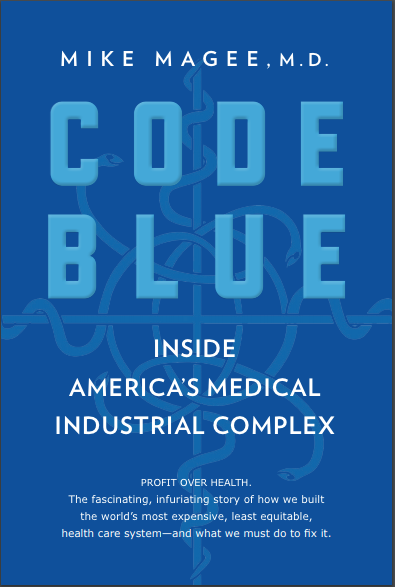
"Code Blue INDEX online"


Prospective Health Blog
BIOGRAPHY

NIH Precision Medicine
BIOGRAPHY

Health in 30
BIOGRAPHY

Larry's Letters
BIOGRAPHY

Precision Medicine, Euthanasia, Abortion, Communism, Trillions of Dollars, Losing Freedom, and Town Hall Mobs BIOGRAPHY

Yearning for Universal Coverage Is Not Universal
BIOGRAPHY

