Majority Favor ACA by 8%.
Posted on | January 26, 2018 | Comments Off on Majority Favor ACA by 8%.

Health Care Poverty – An American Phenomenon.
Posted on | January 25, 2018 | 3 Comments

Mike Magee
With great fanfare this week, the CEOs of Amazon, JPMorgan Chase, and Berkshire Hathaway announced that they were creating a healthcare company “free from profit making incentives and constraints.” Pledging to provide their combined 1.1 million employees with “simplified, high-quality and transparent healthcare at a reasonable cost” by “harnessing technology”, their move is more about parochial cost control and segmented solutions for the “have’s” than addressing fundamental inequities for the “have-not’s”.
For stark contrast, a recent report by Professor Philip Alston, UN Special Rapporteur, on growing poverty and absence of solidarity in America, approaches the problem from the other end. Alston writes, “instead of realizing its founders’ admirable commitments, today’s United States has proved itself to be exceptional in far more problematic ways that are shockingly at odds with its immense wealth and its founding commitment to human rights.”
By whatever measure you choose – the Stanford Center on Inequality and Poverty rankings, the OECD comparisons of 37 developed nations, or the World Income Inequality Database – the U.S. owns the bottom and continues to decline. Of special concern are American youth, 25% percent of whom fall under the poverty line compared to an average 14% across all other OCED nations.
In health care, we are a walking contradiction. One of the wealthiest nations on Earth, we manage to live shorter and sicker lives than everyone else. One in every eight Americans now lives in poverty, and half of those fulfill the definition of “extreme poverty”. Over ½ a million citizens are now homeless.
Over the past three decades, wages have stagnated for the bottom 50% of Americans, while earnings for the top 1% have increased by 205%, and earnings for the top .001% have increased 636%.
These disparity figures decline further if you factor in the medical outlays of the poor and the rich. A recent analysis found that “medical outlays effectively redistributed about 1.37% of total income from poorer to richer individuals.”
Half of all uninsured people have trouble paying medical bills, and 20% of all insured do as well. In the past few years, health costs have sent an additional 7 million Americans into poverty, in part because health insurance deductibles have increased fourfold between 2006 and 2017. 90% now pay in excess of $1,300 individually and $2,600 per family in deductibles. The new poor are sicker than ever before as well, because of care avoidance and because they lack the resources for basic services.
Even as utilization of both outpatient and inpatient services and therapies have declined in the past two years, spending has increased, not decreased, as a result of aggressive corporate pricing. For example, while hospital admissions declined by 13%, spending has risen 8% over the past 5 years. That was a bargain compared to drug prices. Spending there rose 27% over the past 5 years despite decreased utilization across all classes of drugs.
Not surprisingly, a majority of Americans (66%) now cite the cost of health insurance as a major stressor in their lives. It’s enough to make you sick! And yet, that is good news for American investors in the Medical-Industrial Complex, which now accounts for 1/5th of our economy.
What Jeff Bezos, Jamie Dimon, and Warren Buffett fail to realize is that treating health care as a business challenge and opportunity in the immediate post-WWII period was this nation’s “original health care sin.” Tinkering at the edges will have little, if any, impact. What is required now is a well thought-out, universal approach to coverage that shares risk and benefit for all of our citizens, and provides a pathway to health for all Americans.
Tags: disparity in health care > income disparity > Philip Alston > poverty in America > US health reform > warren buffett
Medical Device Regulation – FDA’s Weakest Link
Posted on | January 22, 2018 | 1 Comment
Bjork-Shiley heart valve
Mike Magee
Most Americans remain unaware that in the eyes of the FDA not all therapies are considered equal when it comes to regulatory approval and oversight. Drugs are one thing, but medical devices are quite another.
As we’ve seen with drug approvals, over the 20th century, organized review and oversight of the efficacy and safety of America’s medicines tightened in response to tragedies like the infection of children from tetanus-tainted diphtheria vaccine in 1901, the poisoning death of over 100 children from sulfanilamide elixir in 1938, and the fetal deformities associated with thalidomide use in pregnant women in 1961.
In response to all of the above, a relatively stringent and formal review process, somewhat liberalized over time with “fast-tracks” and “abbreviated reviews”, created a level of confidence in American medicines. Most citizens assume that a similarly stringent process exists for approval and oversight of medical devices. But they assume this at their own risk.
In fact, even the most high-risk implantable devices are often approved after a single clinical research trial, and most of these are not randomized, controlled or blinded trials. Some 15% of approved devices created by this $150 billion dollar industry in the U.S. are eventually removed from the market, but often not removed from the patients in whom they were implanted. Unlike drugs, devices often remain for a lifetime, subjecting their subjects to continued risk and worry.
Such was dramatically the case with the Bjork-Shiley heart valve co-invented by American engineer Donald Shiley and Swedish heart surgeon Viking Bjorg in 1971. It’s basket design with metal carbon-coated disc held in place by two welded struts was seen as a technological improvement and implanted in 55,000 patients around the world from 1979 to 1986 before being pulled off the market. By then the company had been purchased by Pfizer in 1979.
The problem? A design defect led to the fracture of the anchoring struts releasing the discs from their housings in over 400 patients and resulting in nearly 300 sudden deaths. This left behind some $500 million in liability for Pfizer to deal with, which was nothing compared to the remarkable burden for remaining patients and families left to weigh the risks versus the benefits of having their potentially deadly heart values replaced.
The FDA regulatory framework at the time for medical devices was still relatively new. Like other FDA regulation, it was the product of a tragedy. In 1970, Dr. Hugh J. Davis sold his invention, a small fish like implantable uterine device which dragged a porous multifilament string, to the A.H.Robins Company. In 1971, it went to market as an IUD that would be a safer alternative to birth control pills considered high-risk at the time. Called the Dalkon Shield, it was implanted in 2.8 million women. But within five years, its association with infection, septic abortions and death was irrefutably established and linked to its’ mutifilament tail. Within the decade, there were 300,000 lawsuits and A.H. Robins went bankrupt.
In response to the public outcry, Congress passed the 1976 Medical Device Amendments to the Food, Drug and Cosmetic Act, and for the first time required testing and approval of “medical devices.” The loose system they put in place had to deal with the fact that all the devices in use at the time had never been independently analyzed or approved. They were effectively grandfathered in.
All new products were placed in one of three classes. Class I included low risk devices like tongue depressors or forceps. Class II devices were “cousins” to other devices already in use like joint replacement devices and electrocardiographs. And Class III were new devices which appeared to carry some risk like pacemakers or heart replacement valves. Class I and II required quick and inexpensive premarket review, little extra documentation, and simple “premarket notification”. Product enhancements could be filed when they occurred or at annual reviews. Class III required that manufacturers provide some kind of evidence that the product was safe and effective, but this often came from scientific reviews that were less than rigorous and often anecdotal. In return the company received a “premarket approval.”
Liberalization of the process occurred in the years that followed with two tracts created for new product approval: 1) “premarket approval” requiring clinical testing and inspections, or 2) the 510(k) process requiring affirmation that the new device is essentially similar to a device already on the market. User fees range from around $200,000 for “premarket approval” versus around $4000 for the 510(k) tract.
Equivalency can be in the eye of the beholder. For example, the ObTape Vaginal Sling for operative repair of female stress continence sailed through on a 510(k) approval in 2003 based on the manufacturer’s contention that it was substantially equivalent to support tapes manufactured by J&J and American Medical Systems already in use. But when adverse reports of encapsulation and expelling of the material with infection began to surface in 2004, it became clear that the ObTape was made of a dense material poorly incorporated by biologic tissues while the comparators were porous materials that allowed for vessel in-growth. In 2006, the product was withdrawn. In a bizarre twist, the ObTape creators had argued that the product was unique enough to support their patent application on the one hand, but essentially similar enough to existing products to allow 510(k) approval on the other hand.
As might be expected, the use of the less expensive and faster 510(k) route proliferated, and the FDA, poorly staffed and funded to support a rigorous regulatory process, did little to obstruct abuse. The net effect was that 113 approved devices had to be recalled between 2005 and 2009 because of serious complications or death. Roughly 4 out of 5 of these had avoided vigorous review. In 2010, 500 million individual devices were recalled nationwide, and a review by the Institute of Medicine found the approval process ”flawed based on its legislative foundation” and that the FDA lacked a “integrated premarket and post-market regulatory framework.”
Historic problems from infection plagued duodenoscopes, to knee pad implants rejected thrice for 510(k) approval but pushed over the finish line after direct appeals by New Jersey’s two senators, to Cyberonics vagus nerve stimulators to treat severe epilepsy which failed to stop convulsions but killed patients by stopping their hearts, continued to occur. And legal redress “checks and balances” are limited. A Supreme Court ruling in 2008 extended pre-emption protection to manufacturers of high-risk devices that cleared the premarket approval process.
Critics claim that the situation is getting worse, not better. The 21st Century Cures Act, which dramatically drew the support of Joe Biden in the wake of his son Beau’s cancer death, was also loaded with FDA changes that further liberalized approval of medical devices including the use of “data summaries” and “real world observational studies” to support device approval.
New devices appeared in multitudes. Let’s take for example the case of pacemakers. Approximately 400,000 Americans have them implanted each year, with 80% over 65 and 20% over 80 years old. In 1984, there were 56 heart conditions for which the American College of Cardiology approved a pacemaker as treatment. Twenty-five years later, that list had bulged to 88 conditions. Only 5% of those indications were backed by double-blind studies. Some 60% of the approved indications were based on recommendations from a 17 member expert government panel. 11 of those 17 were on the payroll of medical device makers.
One real world issue not covered by the 21st Century Cures Act legislation was the fact that medical devices are fundamentally different than pharmaceuticals in one important respect. If a drug is pulled from the market, a patient can stop the drug and it will eventually clear from the system in a relatively short period of time. In contrast, many devices either cannot be safely removed, or their removal comes at great risk.
When Pfizer finally settled its’ Shiley Heart Valve claims with a $500 million settlement, roughly 1/3 of that payment supported a fund that allowed patients to consult with their cardiologists and deliberate what to do next. Those who chose inaction accepted the uncertainty and lifelong dread that at any moment the struts on their valves might give way, and that sudden death would follow. This pressing reality – the potential irreversibility of harm – has been somewhat lost in the continuing debate over regulation of medical devices.
Tags: FDA regulation > medical device industry > medical devices > Shiley heart valve
Is Tenet Healthcare Your Collection Agency?
Posted on | January 18, 2018 | Comments Off on Is Tenet Healthcare Your Collection Agency?

Mike Magee
When America’s politicians and business leaders elected to promote a free-enterprise approach to health delivery services in the immediate post-WWII period, they were choosing a course diametrically opposed to not only our Allies, but also our enemies at the time.
We rejected serious health care planning. Instead we chose to directly and indirectly infuse taxpayer dollars into the hands of entrepreneurs running research enterprises, hospitals, insurance companies, medical journals, medical schools, pharmaceutical companies and more. Remarkably, we did this while our own military leaders were simultaneously executing well-thought out implementation of national health delivery systems in Germany and Japan as part of rational nation building efforts.
Now, nearly three-quarters of a century later, we have stubbornly held on to the myth that “defeating disease” will leave health in its wake, and that “scientific progress” is synonymous with “human progress”. Course corrections, now in their third and fourth and fifth iterations have failed to correct for complexity, disparity, high cost, high variability, and poor outcomes including declining life expectancy.
Where simplicity and proper national planning are obviously called for, we instead are forced to witness ever expanding institutional gymnastics in the pursuit of compensating for the absence of appropriate “checks and balances” and the raw pursuit of profitability at the cost of our own mental and physical well-being.
Consider for example that medical debt is now a $75 billion affair spread over 43 million people, and that billing (including verifying coverage, eligibility, coding and documentation) is now a $24 billion market in the U.S.
Crazy, right?
But it gets worse. Case in point: Tenet, the Dallas-based for-profit hospital network that has “for-sale” signs up on many of its’ hospitals to get out from under $15 billion in debt. They have quietly shifted 5% of their assets to Conifer. That name may be unfamiliar to many, but the subsidiary names of Central Financial Control and Syndicated Office Systems LLC are all too familiar to many burdened with medical debt.
Tenet’s Conifer employs 15,570 people to harass Americans owing money to 77 Tenet hospitals. That’s bad enough. But the venture has been profitable enough, with profit margins double those in health care delivery, that they now contract services to 700 other hospital nationwide including many non-profit Catholic hospitals.
If harassing patients forced into debt by absent or skinny health plans with high deductibles and TSAs isn’t your cup of tea, consider the joy of trying to run a hospital that routinely struggles to secure grey-market access to standard supplies like IV solutions or morphine. The Martin Shkreli’s of the generic world, working with entrepreneurial zeal in our Wild West version of a health care system, have finally caused traditional American health care leaders to go radical.
Consider the fact that Carolyn Clancy, now running Veterans Health Administration, and Don Berwick, along with former Senator Bob Kerrey, have signed on to a plan, led by the vaulted Intermountain Healthcare System based in Salt Lake City, to launch their own generic drug company. As the system’s CEO says, “We are not going to lay down. We are going to go ahead and try to fix it.”
Good luck with that – fixing complexity with one more step in the chain. Seems counterintuitive to a leader like Don Berwick who thirty years ago, channeling Deming, favored eliminating steps to improve quality and lower cost, rather than adding steps. It was Deming who famously said, “Quality begins with the intent, which is fixed by management.”
What is our intent? To answer this, we need to do what all others did as their nations struggled under the chronic burden of disease returning after WW II. We need to ask the very basic question, “How do we make America and Americans healthy?” An honest response will require both universality and solidarity on a national scale.
Tags: Bob Kerrey > Carolyn Clancy > Central Financial Control > Conifer > Deming > Donald Berwick > generic drus prices > Health care intent > health planning > health reform > Intermountain Healthcare > Shkreli > Syndicated Office Systems LLC > Tenet > Veterans Health Administration
Time For Americans To Speak on Health Care Priorities
Posted on | January 11, 2018 | Comments Off on Time For Americans To Speak on Health Care Priorities
Cathy Caldwell, Alabama CHIP
Mike Magee
Of all the developed nations on earth, our’s is the only one with no cogent national plan to support our citizens’ health, productivity and well-being. What we have in its place is an opaque and deeply collusive system of discovery profiteering that has entangled not only industry, but also academic medicine, government agencies like the NIH and FDA, and our elective representatives.
To access profits and career advancement requires a blind eye to transgressions that are, at this point, so obvious and egregious that they carry us all beyond ludicrous. Together we pretend that “defeating disease” as we once defeated the Nazi’s is not only finally within the reach of our brilliant scientists, but an adequate substitution for say – insurance for an everyday kid with a raging ear infection.
If you are Cathy Caldwell, Alabama’s CHIP director, you know the difference. CHIP provides coverage for approximately 9 million kids in the U.S. at a cost of approximately $20 billion a year. It’s part of a patch-work of quick fixes, including the establishment of federal funded community health centers that provide service to 24 million citizens, that are made necessary by our nation’s unwillingness to act in solidarity with each other and embrace universal coverage for our citizens.
The CHIP quick-fix was a series of partial authorizations which have left states like Alabama increasingly in the lurch. For example, Congress’s last 2-year funding provided full funding the first year, but only $5.7 billion the second year. As Caldwell stated recently, “I just do not understand how they even call (the CHIP) patch a half-year of funding. I am trying to get my head around it.” Her program serves 85,000 kids and is administered in partnership with the states BC/BS plan. How are the families involved dealing with the possible near term closure of CHIP? From Caldwell: “I think most are freaked out.”
And yet, you’d never know that from the round of congratulatory back slapping among medical sciences top elite who’s careers are as far removed from the realities of Alabama’s under-class as is humanly possible. No, this week they were all high-fives as Congressional Republicans and Democrats, in overwhelming numbers approved their third consecutive $2 billion increase in the annual NIH budget.
The NIH annual budget now tops $34 billion, enough to keep some 300,000 academic scientists gainfully employed across America. This revenue stream is doubled or tripled or quadrupled by a wide range of contractual relationships with industry with the bounty of patents and royalties being the shared pot of gold at the end of the rainbow.
What does the American public receive in return? Well, that’s hard to say. We don’t even have full access to the results of the studies that our own NIH funded. In 2008, the NIH created the ClinicalTrials.gov database and, in a toothless demand, insisted that studies (positive and negative) be reported out on this open access site. The major academic journals made a great show at the time that they would no longer publish papers who’s results were not listed on ClinicalTrials.gov. But within a year, under the industry threat of lost journal ad revenue, they folded.
Where are we ten years into transparency? Well this week we had a round of congratulatory headlines. Our vaulted academic medical enterprises, self-proclaimed the best in the world, had managed a “C” – reporting out 72% of their trials, and 40% of these were posted years later than required by law. Our FDA and NIH pledge more aggressive oversight but neither have additional staff or funding to support good intentions.
Does reporting matter? Well it did in 2008 when academicians working with GlaxoSmithKline hid clinical evidence that buy Paxil online use in teenagers increased suicidal thoughts and actions. And it did that same year when Dr. Joan Daughton at the U. of Nebraska refused to release results of a study on the use of stimulants in 4 and 5-year-olds who had been labeled by industry marketers and compliant physicians as having ADHD. Other researchers were already picking up permanent neurotransmitter abnormalities in the brains of adults treated with Ritalin in pre-school years. Yet a decade later, the funded results of Daughton’s work have not surfaced in print or online.
The absurdity of all this is why increasingly the elite of the MIC, and their Congressional enablers, find themselves out-of-step with an American public who prioritize universal health care at the top of their list, and not the latest potential yet still to be validated gene cure for inherited blindness in a handful of kids in the U.S. Even if they could come up with the $850,000 per treatment that the company (and its academic partner patent holders) intend to pocket, how does that possibly make up for Cathy Caldwell’s CHIP kids in Alabama?
A health care system built on “defeating disease” is largely fueled by the pursuit of profit, fame and academic power. It should never have been offered as a substitute for a well-planned, equitable, and efficient health delivery system. The time has come to finally get our priorities straight.
Tags: cathy caldwell > CHIP > clinicaltrials.org > FDA > joan daughton > medical research > MIC > NIH > ritalin study
2018 – The Year of Dr. King.
Posted on | January 2, 2018 | Comments Off on 2018 – The Year of Dr. King.

Mike Magee
We awaken this morning, on this sacred day that honors Martin Luther King Jr., to the continued reverberation of racist and profane commentary days ago from his polar opposite, a man who adds insult to injury by bragging that his vile actions will help him in the polls.
And yet 2018 has the potential to be a monumental turn-around year for America, a year when we stare our true culture in the face, and decide to embrace health and well-being.
Fifty years ago, Rev. Martin Luther King Jr. warned that excessive materialism, militarism, and racism were “inseparable triplets”, and that our nation required a “revolution of values…a restructuring of the very architecture of American society.” Recently, conservative columnist David Brooks said as much with these words, “The first step in launching our own revival is understanding that the problem is down in the roots.”
Our culture is so blatant in its disrespect for human and planetary health that it’s simply hard to ignore any longer. Dr. King recognized this core truth a half century ago when he said, “We are all caught in an inescapable network of mutuality tied into a single garment of destiny. Whatever affects one directly affects all indirectly. We are made to live together because of the interrelated structure of reality.”
With new leadership in 2018, we might begin the long transformative step toward a healthier culture.
On gun violence:
Our’s is a country that not only allows and promotes guns, but also now limits federally funded research on gun violence and has attempted to muzzle physicians who wish to discuss gun safety with their patients. There were 36,161 motor vehicle crash deaths in 2015. That’s bad, but it’s 91 fewer deaths than caused by guns that year. We’re killing 100 people a day with our guns, 60% of which are suicides – successful 90% of the time when a gun is the instrument.
On planetary health:
We just marked the 25th anniversary of the landmark “Warning to Humanity”, a consensus document filed by 1,700 scientists on global warming. Trump’s pull-out of the Paris Accord aside, the group now 15,000 scientists strong from 184 countries, just published an update in the journal BioScience. Lead scientist, Henry Kendall, states, “If not checked, many of our current practices put at serious risk the future that we wish for human society and the plant and animal kingdoms, and may so alter the living world that it will be unable to sustain life in the manner that we know.”
On childhood obesity:
Futurists now predict that the obesity rate in today’s children, when they hit adulthood, will be 57%. And with this, soaring rates of diabetes and heart disease surely follow, while health resources are diverted to elusive “scientific progress” as American “human progress” continues in steep decline.
On gender inequality and abuse:
Of course, the list goes on – consider the mind-boggling short and long-term implications of what appears endemic sexual abuse in and out of our workplaces. And that doesn’t even begin to address the fact that we seem to have managed to elect as our president a man who is a confessed serial sexual abuser.
Yet, to his credit, President Trump, with his vile labels, has done nothing more than force us to face, in sharp relief, our true selves and the “inseparable triplets” Dr. King described now 50 years ago. The time has come to fulfill his dream of a healthier America. 2018 is the year, and elections are just a few short months away.
Tags: american culture > childhood obesity > culture and health > gun violence > Paris Accord > planetary health > sexual abuse > Social determinants of health > trump
Santa’s Message on Health
Posted on | December 25, 2017 | 8 Comments

 Mike Magee
“Dear Quinn, Luca and Charlotte,
Thank you for believing in my magic. I hope you will always believe in magic.
Believe in the magic of family. There are times you will stumble, but your family will always be by your side.
Believe in the magic of laughter. It will keep you whole.
Believe in yourselves because I believe in you.
Take care of each other.
Love always,
Santa”
When I read this message to three of our ten grandchildren on this snowy Christmas morning in New England, it spoke to me of strength and resilience, of love and solidarity, of healthy minds and bodies and spirits.
This coming year will be a critical challenge for all Americans. How will the American family respond? How do we make America healthy again? I cling to Santa’s final words – “Take care of each other.”

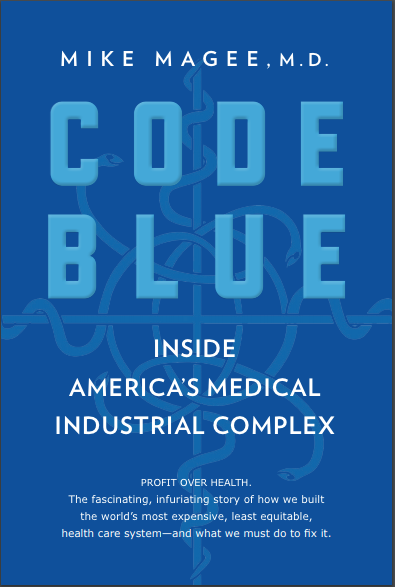
"Code Blue INDEX online"


Prospective Health Blog
BIOGRAPHY

NIH Precision Medicine
BIOGRAPHY

Health in 30
BIOGRAPHY

Larry's Letters
BIOGRAPHY

Precision Medicine, Euthanasia, Abortion, Communism, Trillions of Dollars, Losing Freedom, and Town Hall Mobs BIOGRAPHY

Yearning for Universal Coverage Is Not Universal
BIOGRAPHY

