Techmanity in 2015
Posted on | December 31, 2014 | 1 Comment

Mike Magee
Massachusetts has just announced that its physicians will now be required to demonstrate competency in Electronic Health Records.(1) But the potential for good in a marriage of Medicine and Technology goes far beyond individual acceptance and competency. I call that potential, “Techmanity”.
Back in 1983, Dr. John A. Benson, Jr., then President of the Board of Internal Medicine, voiced these words when questioned about technology’s impact on the patient-physician relationship. ”There is a groundswell in American medicine, this desire to encourage more ethical and humanistic concerns in physicians. After the technological progress that medicine made in the 60’s and 70’s, this is a swing of the pendulum back to the fact that we are doctors, and that we can do a lot better than we are doing now.” (2) He accurately described the mood then, and for most of the 20th century, of clinicians toward technology, a complex love-hate relationship that has rejoiced and cheered on progress, while struggling to accept and master change in a manner that would avoid driving a wedge between them and their patients. (3)
It is fair to say that, as the health consumer movement has matured over the past 30 years, and physicians have moved away from paternalism to partnerships and team based approaches to care, that outright resistance and abject fear of technology has progressed to and beyond grudging acceptance. In part the people, and the people caring for the people have developed computer skills together, pursued broadband and wireless connectivity together, and discovered the value of personalized and customized computer search engines together.
Medical Informatics Meets Consumers
As this has occurred the specialty of Medical Informatics has risen to legitimacy within the Medical hierarchy, and its leaders have reinforced the need to advantage technology and informatics in support of humanistic care. (3) One such voice is that of Warner V. Slack, who heads the Center for Clinical Computing at Harvard Medical School. No “Johnny-come-lately” to the field, his first published paper in Medical Computing appeared in the New England Journal of Medicine in 1966. (4) His book, Cybermedicine: How Computing Empowers Doctors and Patients for Better Health Care, is considered a classic, and argued, as Health Informatics expert Kevin Kawamoto said in 2003, that “Computers can be mutually beneficial for both the patient and the health care provider”. (5)
If we have managed to move as caregivers from resistance to acceptance of technology in health care, we have not moved far enough. The technology sub-committee for the National Commission for Quality Long Term Care states: “In embracing technology in Medicine, we must view it as both assistive and transformational.” (6)
Ignoring Geography
The revolutionary strength of modern information and scientific technologies is that they ignore geography. In so doing they allow us to reorient and connect beyond the limits of a range of barriers whether they be physical, social, financial or political. The danger is not in over-reaching but in under-reaching. Our vision must be sufficiently forward looking and expansive to challenge technology innovators. Where are the “killer applications” that would allow lifespan planning to move us ahead of the disease curve? How can we target technologic advances in health to first reach our citizens most at risk? How do we, in powering the health technology revolution, broaden our social contract to include universal health insurance? How do we unite the technology, entertainment, and financial sectors (previously locked out of the health care space) with the traditional health care power players, and incentivize them to work together to create a truly preventive and holistic health delivery system that is equitable, just, efficient, and uniformly reliable? How can each citizen play a role in ongoing research and innovation, and help define lifelong learning and behavioral modification as part of good citizenship? What can corporate America do to advance health information infrastructure and in “doing good,” do well financially, serving Main Street as it serves Wall Street?
Moving Beyond Acceptance and Addressing the Empathy Gap
Health Information leaders of the 21st century need to be more revolutionary. Were they to achieve at their full capacity, our health care system would transform and re-center around relationship-based care, cementing the people to the people caring for the people. If we were to do that we would see improvement on 10 different fronts simultaneously: empathetic access, efficiency, team care coordination, multi-generational family linkages, inclusion of informal family care givers in the health care team, targeted interventions for vulnerable populations, informed mutual decision making, lifespan health planning, evidenced based personalized care, and palpable presence of physicians, nurses and care team members in the home.
Paul Dinsmore, in the AMA Book of Project Management said, ” … designed properly…technology can be a great gift to humanity.”(7)
We no longer can afford to simply accept technology. We must embrace techmanity for all it is worth.
References:
2. Nelson, B. Can Doctors Learn Warmth? New York Times. September 13, 1983.
6. Magee, M. Fully Leveraging Technology to Transform Health Care. Technology Sub-Committee, NCQLTC.
7. Dinsmore, Paul C. and Jeanette Cabinis-Brewin, Eds. AMA Handbook of Project Management. AMACOM, New York. 2011.
Tags: edward short cliff > health information technology > humanistic care > kevin kawamoto > massachusetts board of registration in medicine > meaningful use regulations > paul dines more > techmanity > warren slick
Positive Medicine Credo: A Higher Calling
Posted on | December 24, 2014 | Comments Off on Positive Medicine Credo: A Higher Calling
Mike Magee
I was recently asked about the Medical Journalism Code of Ethics referenced in JAMA in 1992. One of the grounding documents on which that Code was based was the original Positive Medicine Credo which I wrote in 1986. Rereading it now, some two decades later, I believe it remains relevant as a series of guide posts for caring individuals of every persuasion who believe that their choice to respond to others in need involves “a higher calling”. I offer it to you in this Giving Season as an opportunity for reflection and a starting point for renewed commitment in 2015. Happy New Year!
POSITIVE MEDICINE CREDO:
PATIENT-CENTERED: As health professionals, we are committed to a patient-centered, pride-filled approach to the organization and delivery of healthcare.
PROFESSIONAL COLLABORATION: We promote collaborative processes based in shared education, language, and tools.
COMMUNITY LEADERSHIP: We are community servants who believe in equal access to health information and healthcare for all.
CONTINUOUS IMPROVEMENT: We recognize our imperfections and constantly strive to improve our performance, seeking humanistic and scientific solutions that ensure positive and coordinate outcomes.
PROFESSIONAL POSITIVITY: We are committed to personal revitalization, recognizing our responsibility to provide hope and reassurance to all those we serve and to promote courage, strength and positive attitudes
“Eric Garner’s Death Highlights America’s Empathy Gap”
Posted on | December 17, 2014 | 1 Comment
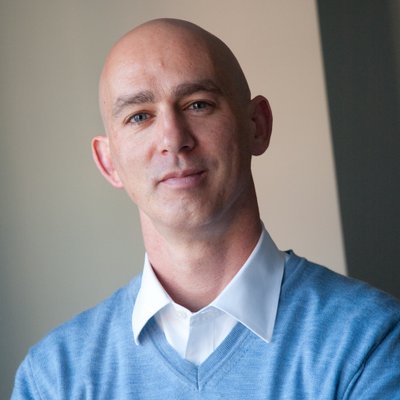
Michael Magee,
CEO, Mayoral Academies
I have been struggling to put into words the range of emotions set off by the death of Eric Garner and others in the recent past. What is there left to say? Then this morning, I read an editorial in the Providence Journal written by my son, Michael, which perfectly captures the challenge we face as a civil society.
It’s title, “Eric Garner’s death highlights America’s empathy gap”, directs the focus of all caring Americans, and most especially those of us who have pledged our lives to caring for others.
In the body of the article, Michael says, “ It is easier to harm other human beings when you believe their lives have less value than your own, and easiest when you don’t consider them human beings at all. In a nation profoundly and increasingly segregated by race and class, we have the conditions for precisely this sort of dehumanization and concomitant violence. Institutions have grown up with it and around it and have perpetuated it.”
“Just as there is no ‘separate but equal’ there is no ‘separate but empathetic.’ There are many ways for human beings to develop empathy and understanding, to disabuse themselves of the inherited tribal suspicions that cause them to act like fools and devils. The experience of literature and art and great oratory can be a transformative window into the lives and perspectives of people whose cultural experiences have been very different from our own. But by far the greatest mother of empathy is social familiarity, or what we might just call friendship or community. To put it bluntly, public servants are less likely to put their friends and neighbors in choke holds.”
Near the end of the piece, he focuses on the role of education, an area he is more than familiar with as CEO of the Rhode Island Mayoral Academies. He correctly sees our public education as essential to meaningful change. As he says, “ Highly restrictive neighborhood schools, their gerrymandered enrollment zones guided by the invisible hand of property value, should be opened to a broad cross-section of children that reflect the diversity of entire states. Given the unlikelihood of mandated desegregation, we should accomplish this through an expansion of racial and economically diverse public schools of choice. Those would be good places to start. We’ve got to start somewhere and we had better start now.”
Each of us has a role to play. As a starting point, I highly recommend that you take a few moments to read Michael Magee’s piece. You will find it HERE.
For Health Commentary, I’m Mike Magee.
COSTCO, Adam Smith, and Healing America.
Posted on | December 10, 2014 | 3 Comments

Mike Magee
Today, on CNBC, highest cudos went to COSTCO’s, not simply for exceeding expectations with a 7% year-over-year growth, but for having the lowest employee turnover of any major retail business in the United States.
COSTCO’s founder was well known for saying he purposefully paid his employees way above a living wage (because it was only right) and was still a billionaire. He wasn’t fudging. In fact, according to Bloomberg Businessweek in June, 2013, current CEO Craig Jelinek confirmed that the average hourly worker at COSTCO made $20.89 an hour, not including overtime, and received great health benefits to boot.
Compare that with the famous, flag-waving, nickle and dime leadership of Walmart which weighs in with skimpy benefits and an average hourly wage of $12.67. But the CNBC analysts noticed one thing more about COSTCO – it feels better to shop there because the workers are happy, healthy, helpful and productive.
Now none of this is exactly break-through thinking or revelatory knowledge. However, it caught my eye because I’ve been reading Eli Ginzberg’s “The House of Adam Smith”. The legendary “maverick health economist” earned his PhD at Columbia in 1934 at the age of 23 with a dissertation that explored the sociopolitical factors shaping Adam Smith’s classic “The Wealth of Nations”.
Years later, Ginzberg recalled, “I could not possibly reconstruct the sense of excitement that I experienced as I read the book for the first time. Nor could I reconstruct the intensity of my feelings as I saw the possibility of correcting a major historic misinterpretation and revealing Adam Smith for what he was, a liberal reformer, instead of as so many wished him to be, a rigid defender of free enterprise.”
Eli taught over 10,000 students in his 53 years at Columbia. His last class occurred on December 3, 2002. That was one week before he died, just short of his 92nd birthday. I am not certain what he taught that day, but I am absolutely convinced from my conversations with him over the years that Adam Smith was close at hand and near the surface.
According to his good friend and Business School colleague, James W. Kuhn, “Smith’s approach to economics would become Eli’s own”, specifically, “…the habit of evaluating policies by their contributions to peoples lives, a natural preoccupation for Smith who was best known during his lifetime as a moral philosopher.”
Adam Smith was born June 16, 1723, in Kirkcaldy, Scotland, forty miles from Edinburgh. Eli Ginzberg was born on April 30, 1911 in New York City.
What does Eli (and therefore Adam Smith) in his “House of Adam Smith”, have to say about our current environment, the 99.9%, productivity and justice? Here are a few excerpts:
On corporate appeals to government, off-shore wealth, and cloaking oneself in patriotism:
“The confusion was tremendous. The babble of special pleadings became most disconcerting to the quiet student. But a few skeptics were able to see the forest for the trees. The people were bewitched by the word liberty. All crimes could be committed under its aegis. All is fair in love and war and in the struggle for liberty…Adam Smith listened to the trading interest but was not greatly impressed with its plea. He was convinced that merchants were not citizens of any country and was therefore amused by their appeal for public support on the basis of patriotism.”
On productivity:
“Smith was not the first to advance the theory that all wealth is derived from labor. Smith however broke new ground in building the complete system of economic thought around the concept of productive labor….The history of the world was in his opinion the history of the increasing efficiency of labor.”
On the attitudes of rulers toward the 99.9%:
“The rulers of the state despised the populace, and, except in times of crisis when man power became important, ignored it completely. During normal periods the commonalty had to labor hard, pay high taxes, and behave itself. Art, politics, and learning were the vested interests of the rich and powerful.”
On Corrosive Government Policies; (note: the Settlement Acts sought to assign management of the growing poor population to the geographic locality of birth or residency – thus restricting mobility and opportunity; and the Apprenticeship Acts required 7 years of servitude labor before hanging a shingle – which rarely followed.)
“The Settlement and Apprenticeship Acts interfered with both the supply of labor and the conditions of labor…Corporations with exclusive privileges were established better to enforce the apprenticeship regulations…. The apprenticeship regulations were undoubtedly a great boon to the masters…. Masters were frequently permitted to establish rules and regulations for the conduct of their business. In most cases the charter members of the corporation limited the number of people who might engage in their trade….Novices upon the payment of an entrance fee receive free board and lodging in return for 14 hours worked per day….An apprenticeship after seven years of service became a journeyman. He didn’t receive wages for his labor and secured a modicum of independence. In theory, but not in practice, a journeyman might become a master after several years additional service. Without wealthy relatives one could never hope to become the head of a trade for often a capital of several hundred or even thousand pounds was required.”
On Congressional Inaction: Cost-Of-Living/Minimum Wage/Trickle Down Economics:
“The government viewed with favor the apprenticeship and corporation laws for it believed that the public benefited from the regularization of industry. However it really was an impertinent affectation to maintain that any good could result from legislative measures which trampled upon the most sacred property of man – his labor.”
On Unintended Outcomes (Think Kansas tax policy; Ferguson, MO, militarization of police; Staten Island, NY police policy- 2014):
“During the second decade of the 18th century, one estimate placed the number of unprofitable poor at 1,500,000. The care of the poor developed into England’s most important industry. The burden was especially severe upon the landowners. The land tax was very high….The great increase of robberies which took place during the middle of the century could be explained only by the desperate condition of the poor.”
On Fear Post- 9/11 and Torture:
“The liberties of Englishmen have been severely curtailed in an attempt to solve this perplexing problem….The various regulations violated natural liberty and justice without achieving any practical results. Unfortunately, the common man, after suffering from these oppressions for more than a hundred years, had not yet rebelled.”
On the Economics of Justice:
“When piece work is well rewarded, laborers frequently overstrain themselves in their desire to improve their position.”
In studying Adam Smith, Eli executed his own conversion from Economist to Moral Philosopher. Shortly after completing his initial field studies, in 1939, he laid out the truisms that would be his “touch posts” for the next 6+ decades. He said that economic policies should “seek equity; that a self-regulatory economy is an oxymoron; that government played a critical role in regulating the economy; that racism was an unsolved problem; that our continental dimensions had an important impact; and finally that we could no longer be an island unto ourselves.”
For Health Commentary, I’m Mike Magee.
My Father’s 100th Birthday: Why I Love Him.
Posted on | December 3, 2014 | 17 Comments
Mike Magee
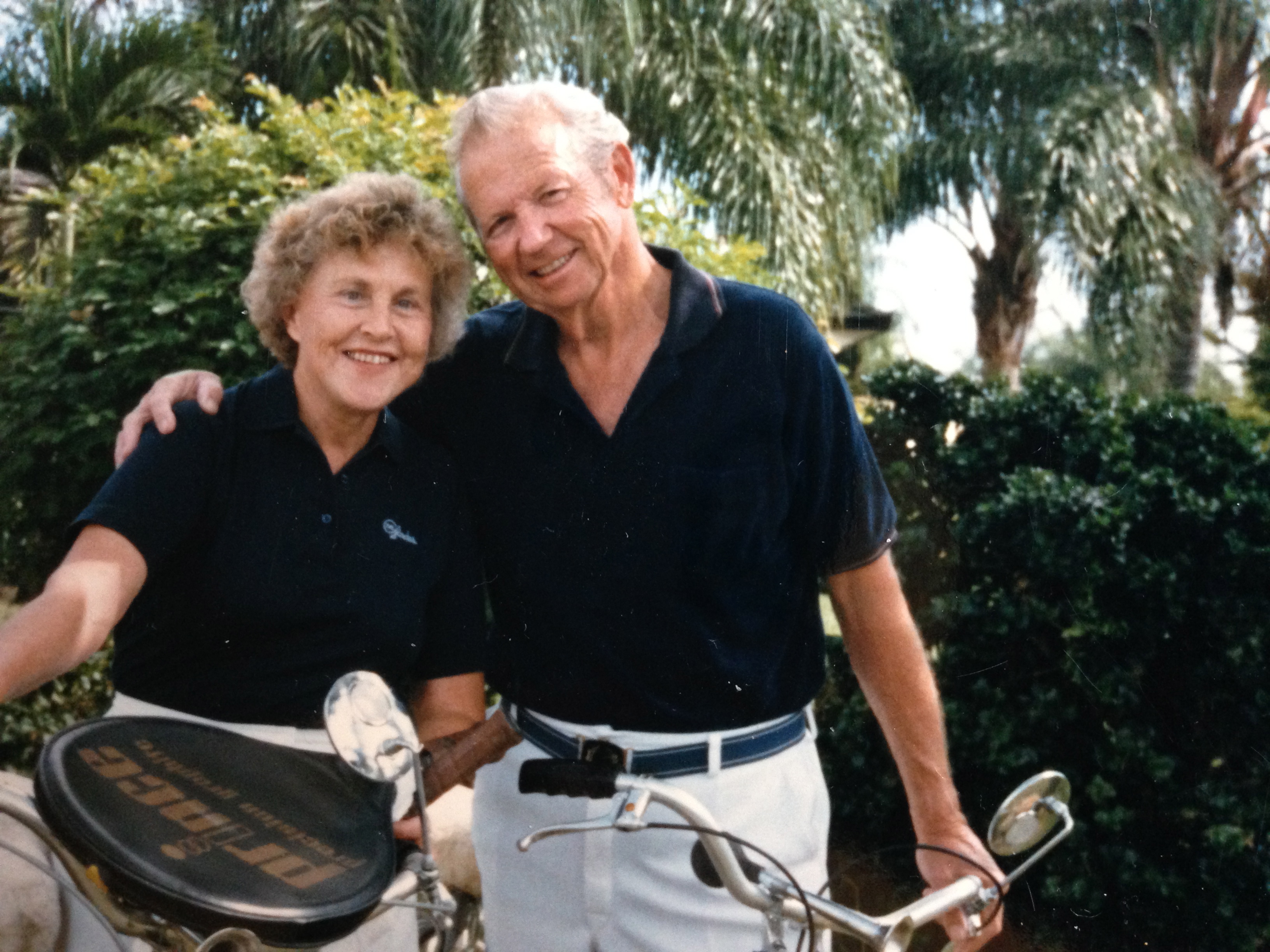
My father was born on December 5, 1914. Today is his 100th Birthday. And although he died on September 15, 1998, and my mother some three years earlier while caring for him, there is rarely a day that goes by that I do not think of them.
What do I love about my father?
First and foremost, he loved my mother, and everything flowed from that.
We kids understood that we were an extension of their love.
I loved his physical presence – that he was big and strong, that he embraced us, held us tight.
I liked that he taught me to whistle, which remains a useful skill.
I was proud that he took care of people as a job, and that the people who he took care of loved him so much.
I liked that every Christmas our dining table was full of baked goods that his patients gave him to thank him for his many kindnesses – giving them time, having open office hours day and night, making house calls when they were scared or worried.
I loved that he was honest, that he didn’t cheat or fudge, that he believed your name had to stand for something.
I loved that he was a gentleman and a gentle man.
I liked that he liked to build things, that he owned tools he rarely got to use, and that he’d get upset because we were always messing with his stuff.
I liked that he liked clothes, especially shoes. He liked to look good, and he wore clothes well.
I liked that he always had lots of change in his pockets.
I liked that he knew the owners of the local stores across the street by their first names.
I liked that he was patriotic and courageous. I learned after his death that he earned a Bronze Star on May 9, 1945. We never saw that medal or ever heard him talk about that day, ever.
I like that he was modest. He didn’t brag. He didn’t have to. I liked that.
I liked that he delegated. He and my mother expected us kids (there were 12 of us) to help teach each other skills like bike riding, and catching a ball, and climbing a tree.
I liked that he took risks, and wanted us to take risks as well – even though a few of those risks turned out to be unwise and too costly.
I liked that he wasn’t perfect – it meant we didn’t have to be perfect, but we did have to try, and we did have to be independent.
I liked that he was often watching in the background, a last stop before disaster, and that his intervention was usually at the direction of our mother.
I loved that the two of them were a team – and that we kids were the players.
I liked that he could take a hit, that he would never fall apart, no matter how bad things were, he would get up the next morning. Our father was reliable, consistent, upright, sturdy, alive.
I thought he was handsome. Others thought so too.
I loved that he was a family man.
I liked that he had a spiritual core – not because of his religious belief system, because his values were secure with or without religion. And not for any punitive conceit – hell rarely made it into our family’s consciousness. No, I liked his spiritual core because it signaled respect for a greater good, a directing hand, the capacity to endure, a reason to try to reach for the stars.
I love my father. He was such a good man. I have tried in some ways to be like him.
When I think of him, I always remember one evening, arriving home from college, coming through the door, and being greeted by him. He enveloped me in a big hug that night – tight, long – and kissed me on the cheek, and said my name. He was smiling. His eyes were alive and happy. I can smell him. I can feel his presence.
Why I Thank Presidents Nixon, Bush(41) and Obama This Thanksgiving Day.
Posted on | November 27, 2014 | Comments Off on Why I Thank Presidents Nixon, Bush(41) and Obama This Thanksgiving Day.
Mike Magee
Last evening, the night before Thanksgiving Day, I went to sleep shaking my head. I had just watched the 1974 documentary, “Hearts and Minds”, which documented the behaviors of five American presidents from Eisenhower to Nixon, as they distorted the truth and led our country into a disastrous war.
Of the many images that refused to disappear as I drifted off to sleep, there were two, juxtaposed that were front and foremost. The first was a distraught and weeping 8 year old Vietnamese boy, holding a picture of his handsome father, as he refused to let go of his flag-draped father’s coffin being lowered into the ground. His full fledged grief, his defiance, his honest and human reaction to the shock and inhumanity of it all, reminded me of my own four children at this age. In his grief, he expressed love and honored his father’s memory forever.
The image was then starkly followed by a matter of fact interview, again in 1974, of the seersucker suit draped William Westmoreland who explained that “Well, the Oriental doesn’t put the same high price on life as the Westerner. And as the philosophy of the Orient expresses it, life is not important.”
Thinking of him and those years again, which in many ways I’d sooner forget, and realizing that to some extent, we have managed to repeat our mistakes, and embrace the same types of biases, in our actions in Iraq and Afghanistan, well, you can understand why I sighed a bit for the human race last evening.
But this morning, I came across Coral Davenport’s report in the New York Times, which seemed sent to deliver a Thanksgiving message that said, “Yes, but…” It make me offer thanks to Presidents Nixon, Bush(41), and Obama. And here’s why.
1. In 1970, the Senate passed the Clean Air Act 73-0, and President Nixon, who had created the EPA, signed the bill into law. This landmark legislation was intentionally writ large to allow the head of the EPA broad latitude in addressing future needs.
2. In 1990, another Republican president, George Bush, signed legislation that further strengthened the law after 89 senators, including Mitch McConnell supported the changes. Of this action, our new incoming Majority Leader, who has recently decried actions of the EPA as attempts to destroy “Big Coal”, has stated, “I had to choose between cleaner air and the status quo. I chose cleaner air.” President Bush’s action allowed the EPA to first begin to measure levels of ozone and mercury in our air.
3. Finally, faced with an inability to sign on to any new legislation, President Obama has made the most of the gifts that his two predecessors have provided him, and focused on mining the full potential of that far reaching, now nearly half-century old act. Most notably, it has become the leading edge of an attack on global warming. It’s chief instruments? Significant tightening of standards on coal-fired power plants to take effect next year and a new fuel-economy standard of 54.5 miles per gallon on automobiles by the year 2025. This last step alone helps explain why hybrid and electric technology is on a tear, and why Canadian tar sand and cross-territorial pipelines are really so “old school”.
So this Thanksgiving, I choose to see the world for what it is, endless shades of grey, imperfect, and yet hopeful. And I thank Presidents Nixon, and Bush, and Obama, for these wise actions, and for the good they continue to provide for each of us, wherever we are, and for our planetary patient.
Happy Thanksgiving!
Parent Alert: Graco Stollers Recalled Due to Baby Fingertip Amputations
Posted on | November 21, 2014 | 1 Comment

Parent Alert: Baby products giant Graco has recalled 5 million strollers like those above after babies have lost fingertips in the framing. To check whether your stroller is safe, contact Graco Children’s Products at (800) 345-4109 or online at gracobaby.com.
« go back — keep looking »
"Code Blue INDEX online"


Prospective Health Blog
BIOGRAPHY

NIH Precision Medicine
BIOGRAPHY

Health in 30
BIOGRAPHY

Larry's Letters
BIOGRAPHY

Precision Medicine, Euthanasia, Abortion, Communism, Trillions of Dollars, Losing Freedom, and Town Hall Mobs BIOGRAPHY

Yearning for Universal Coverage Is Not Universal
BIOGRAPHY

