The Religion of Medicine.
Posted on | February 4, 2015 | 6 Comments

Mike Magee
This week, New York Times introspective columnist, David Brooks wrote, “Over the past few years, there has been a sharp rise in the number of people who are atheist, agnostic or without religious affiliation. A fifth of all adults and a third of the youngest adults fit into this category….As secularism becomes more prominent and self-confident, its spokesmen have more insistently argued that secularism should not be seen as an absence — as a lack of faith — but rather as a positive moral creed.”
That got me thinking – and my conclusion was that, for me, and perhaps for my father as well, Medicine has been our religion. This begins to explain my world view and some of the discomfort I feel (and often express) when my fellow disciples fall short on our vows.
Were there a “Ten Commandments” for this religion called “Medicine”, what would they be?
I. Put your patients interests above all other interests, including your own.
II. Believe in science, and make judgements based on the best current knowledge available.
III. If there is a person in need, respond, without prejudice or delay.
IV. Maintain your own physical, mental and spiritual health so that you are able to offer your patients the entire value of your full human potential.
V. Touch your patients – with your hands, with compassion, and with understanding.
VI. Treat each patient as an individual. Maintain faith in the wisdom of individualized decision making within the patient-physician relationship.
VII. Listen carefully to what is said and especially what is unsaid.
VIII. When you make an error, as you surely will, admit it directly, apologize, and learn from it.
IX. Recognize your own prejudices, and work to ensure they do not compromise your ability to care for others.
X. In your actions, behaviors, and beliefs, bring honor to your profession and to all those whose lives have been entrusted to you.
Quietly, without realizing it, I and many other physicians, have been practicing this “religion” for many years. It has brought meaning and value to our lives, and occasions of sorrow and disappointment. For most of our years, we have practiced this religion in the privacy of the patient-physician relationship, applying it’s tenets as best we could, with the encouragement of our fellow disciples, our patients, and their families.
What to do when a disciple transgresses? This always has been a challenge, especially in the early years. Like the time in Raleigh, NC, when on-call, I phoned the attending to let him know an accident victim with a crushed bladder needed to go to the operating room, and his three word response, “Black or White?” That was disappointing.
But in modern times, the boundaries of our religion have extended into the public space, and some of our own disciples have embraced those spaces – in politics, or business, or media – while maintaining a dual identity as “physician”. It is in this public space that I have often experienced discomfort and questioning about my own religion.
Shouldn’t the “church leaders” have been more vocal in admonishing the “legitimate rape” remarks of Congressman Todd Atkins in 2012?
And what about Dr. Rand Paul’s comment on immunizations in the middle of a U.S. Measles epidemic, ““I’ve heard of many tragic cases of walking, talking normal children who wound up with profound mental disorders after vaccines.” Should church leaders go after this wayward public leader/parishioner? He has had no reticience in going after them, like when he said, “The A.M.A. has been struggling for years, and they do not represent doctors across the country. And AAPS has been growing dramatically as doctors who want to fight against big government join together under a different banner. The A.M.A. doesn’t represent me. I’ve never been a member.”
It’s not that this disciple doesn’t have the right to advance the religion of Libertarianism above his own former religion Medicine. Of course he does. But must I still accept him as a member of my religious community since he clearly has made his choice?
Same holds true for Dr. Mehmet Oz. He’s joined the highly profitable religion, “Herbalism”. That’s fine. But does he belong in my church? And why did I have to be led by a third year medical student from Rochester in October, 2014, who had the courage to speak up. Why weren’t my own church leaders challenging this huckster? It’s just a bit unnerving to hear a junior parishioner say aloud what others are thinking, “Organized medicine has an interest in protecting physicians as a profession. They want to maintain the prestige, trust, and income that physicians have historically received in the US. In order to protect the profession as a whole, organized medicine sometimes has to protect individual doctors, even if they are not acting in the best interest of patients. The AMA may fear that undermining Dr. Oz could undermine overall trust in doctors.”
I’m an older parishioner now. I’ve been around this church for a long, long time. And these dual parishioner problems are not new. They’ve tripped up others in the past, like Senator Bill Frist who affirmed, based on video tape reviews, that Terri Schiavo was “not somebody in persistent vegetative state”.
But sometimes, the dual parishioner does us proud, and boldly declares our religion’s supremacy above all others. Take for example, Chick Koop, when on release of his landmark HIV/AIDS Report, said simply, “I’m the nation’s doctor, not the nation’s chaplain.” He’s why I still belong to this religion.
For Health Commentary, I’m Mike Magee
Tags: ama > bill frist > dr > immunization > legitimate rape > measles epidemic > oz > rand paul > terri schiavo > todd atkins
Planning for Evil vs. Planning for Goodness: Why Medicine Should Embrace the Social Sciences.
Posted on | January 30, 2015 | 1 Comment

Mike Magee
An article by Daniel Jonah Goldhagen in last week’s New York Times Sunday Review, “How Auschwitz Is Misunderstood”, created a dramatic contrast to an address I delivered a few days earlier at a New York liberal arts college titled “Closing The Empathy Gap: Leveraging Healthcare Relationships”.
Goldhagan’s major point was that the widely held belief that German “death factories” were created for bureaucratic efficiency was inaccurate. Rather, he explains, it would have been far more “efficient” to murder their victims on site. Why then Auschwitz? In his fifth paragraph he answers the question. “The Nazi leadership created death factories not for expeditious reasons, but to distance the killers from their victims.”
The remaining eight paragraphs tie this historic horror to a distinctly non-empathic world view. As the article states, “It expressed the Nazis’ unparalleled vision that denied a common humanity everywhere, and global intent to eliminate or subjugate all nonmembers of the ‘master race.'” Putting a personal face on the German policy, he notes that “Heinrich Himmler, the head of the SS and the man most responsible for putting the Germans’ plans in action, proudly announced in an address in 1943: ‘Whether nations live in prosperity or starve to death interests me only insofar as we need them as slaves for our culture.’”
If creating a non-empathetic world requires planning and distance, then it follows that creating an empathetic world requires planning and intimacy marked by compassion, understanding and partnership.
This is the case I made a few weeks ago relying on work I presented in 2002 to the World Medical Association in Helsinki when serving as the WMA Resident Scholar. The study had shown that in six countries surveyed (U.S., U.K., German, South Africa, Japan and Canada), the most valued relationship in society, second only to family relationships, was the relationship with a physician.
In exploring why that was so consistently the case, simultaneous surveying of thousands of physicians and patients in those countries once again showed consensus in their definition of this relationship. Over 90% of doctors and patients agreed that its’ power derived from its ability to deliver compassion, understanding and partnership.
The study further revealed that, in 2000, the relationship, again consistently in all six countries, was evolving. It was moving from individual to team approaches, from paternalism to partnership, and from individual to mutual decision making.
As for the commonly held desire to evolve from an interventional to a preventive health delivery model, the study demonstrates that health information, flowing directly from the relationship, was far more likely to be followed and deliver desired behavioral change than information from all other sources including the Internet.
Was there room for improvement in this relationship. Yes, certainly. In a series of “gap analyses”, the study uncovered significantly different views when comparing doctors and patients, and reality to the ideal. Where were these gaps?
1. Information seeking: Patients sought out information, independent of their physicians, when faced with illness, far more frequently then their physicians realized. For example,in the U.S., 69% percent of patients said they had sought information independently, while only 35% of physicians believed that their patients had pursued information not provided by them. These gaps were even wider in other countries (Germany: 71%/11%; U.K.: 51%/15%; South Africa: 56%,9%; Japan: 35%/6%)
2. Empathetic Physician Behavior: On five measures of ideal behavior (compassion, trust, understanding, patience, listening), patients in all six countries saw average double digit room for improvement when comparing “ideal” to “reality”. Gaps: US – 19%, UK – 27%, Canada – 17%, Germany – 20%, SA – 12%, Japan – 31%.
3. Access to Physicians: On five measures of ideal access to physicians (attentiveness, time spent, ease of appointment, treatment choice, access to specialists), patients in all six countries saw double digit room for improvement when comparing “ideal” to “reality”. Gaps: US – 25%, UK – 40%, Canada – 29%, Germany – 22%, SA – 14%, Japan – 24%.
Finally, this social science, Harris Poll designed survey revealed that the positive impact of the patient-physician relationship in all countries studied was multifactorial. In addition to reactive care, the relationship contributed to preventive health planning, management of individual and societal fear levels, expansion of individual and societal confidence and optimism, reinforcement of family and community bonds, and maximizing productivity.
The final summary slide two weeks ago, at St. Thomas Aquinas College, said “Civil societies marked by empathy, compassion, and justice, are the result of stable, committed, trusting relationships by members of these societies. Family, educational, and health care relations are critical foundation blocks for any society committed to expanding human potential.”
As the Goldhagen article correctly suggests, preventing a “common humanity” takes work. But certainly then the reverse is true as well – creating a common humanity takes work as well. In retrospect, this study, utilizing social science tools, correctly forecasted the dynamic factors that would help shape the American health delivery system in the decade ahead. And yet it was rejected for publication by the New England Journal of Medicine, though one reviewer of three described it as “provocative”.
The challenge of creating a civil society must advantage existing relationships in a deliberate way. It is a “vision battle” as Eli Ginsberg suggested way back in 1937: “Social life implies control, control implies power, power implies conflict. The more dynamic a society, the more probable the conflict, for the great conservative institutions – the law, the church, the school – operate most efficiently in a static environment. But the phenomenal vitality of modern technology leads ‘to ever new conquests. The economic system is caught up in the advance… the political system follows in the rear… with strange twistings and tergiversations.’ Impotent is thought when in direct conflict with gold and the sword.”
More than ever, health has become a human endeavor with the potential to shape a society for the better. But to do so, medicine, and its educational institutions, must look beyond genomics and the wonders of biotechnology, to consider as well how the social sciences might advance human behavior.
As Eli noted, shortly before Himmler and Hitler broke out of their box, “Economic depression, political revolution, the transvaluations of legal systems, mass psychoses – these, the increasingly typical phenomena of Western civilization – underline the failure of the social sciences to control behavior…The test of genius is not so much the discovery of new facts, as the discovery of new relations between old facts.”
For Health Commentary, I’m Mike Magee
Tags: Auschwitz > Daniel Jonah Goldhagen > Eli Ginzberg > NYT > patient-physician relationship > social science research > wma > world medical association
Your Annualized Personalized Health Check-up
Posted on | January 21, 2015 | 1 Comment
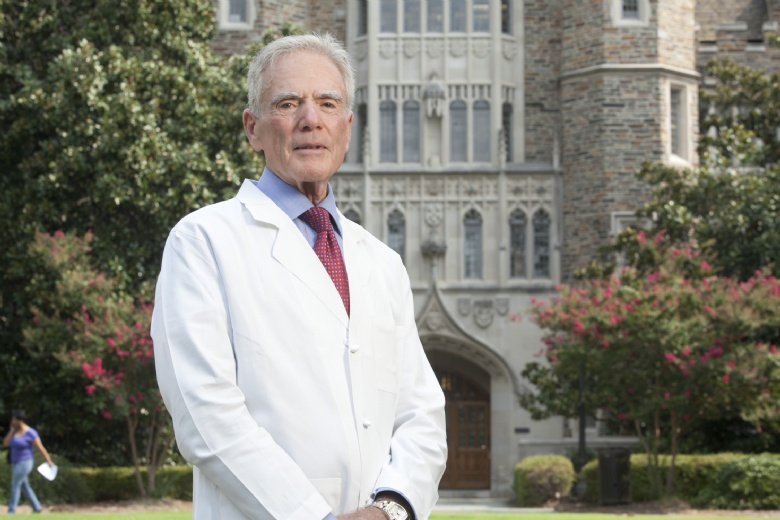
Ralph Snyderman M.D.
In a January 10, 2015 editorial in the NewYork Times, Dr. Ezekiel Emmanuel derides the annual physical exam as a multi-billion dollar waste of time. The exam in current practice is indeed ineffective in preventing disease and reflects the inadequacy of a reactive approach to health care which costs almost $3 trillion/year of which two-thirds is for treating preventable chronic diseases. Not only is the current annual exam a waste of resources, it is more importantly, a waste of an opportunity to fix a bigger problem – our health care system’s expensive focus on treating established diseases, most of which are preventable. Rather than a cursory look for disease with inadequate tools, the annual physical could be made to focus on three health enhancing activities: first, assessing the patient’s specific risks of developing diseases; second, enhancing the patient’s awareness of their health risks, the value of their health to them and their ability to impact their health through what they do and; third, developing shared goals and a yearly plan to promote their health and prevent diseases to which they are susceptible.
This approach, termed “personalized health care,” is being developed at Duke University and is a proactive strategy that is taking hold as a far more effective way to deliver health care. Rather than treating established disease, it proactively provides personalized disease prevention with the engagement of individuals as partners in improving their health. Capabilities to measure each individual’s risk of disease, track its development, and treat it specifically are becoming available through advances in genomics, digital and biotechnologies.
Sophisticated health assessment tools, along with a deeper understanding of the need to truly engage patients in their care are leading to the modern version of the annual checkup that can foster health promotion and disease prevention. An annual physical, using the personalized health care approach, could be the key to promoting the nation’s health, preventing chronic diseases, and reducing needless health expenditures.
Unlike the current “worthless” annual physical, the personalized health care annual exam or approaches like it could be the linchpin for preventing diseases and the waste of our precious health resources. Health, after all, is a terrible thing to waste.
Ralph Snyderman, MD is Chancellor Emeritus at Duke University, former president and chief executive officer of the Duke University Health System and director of Duke’s Center for Research on Prospective Health. His analysis above appeared originally in his Prospective Health blog.
Tags: Duke University School of Medicine > NYT > prospective health > Ralph Snyderman M.D.
A Young Man in the Mold of Martin Luther King
Posted on | January 19, 2015 | 2 Comments

Today is Martin Luther King Day. On the government site that honors this federal holiday, it says: “Dr. Martin Luther King Jr. once said, ‘Life’s most persistent and urgent question is: What are you doing for others?’ Each year, Americans across the country answer that question by coming together on the King Holiday to serve their neighbors and communities.”
How do you serve others, and in so doing, serve yourself? And how can human beings preserve their own dignity and honor their own full human potential through non-violent actions? I found the answer to this in a teenager, attempting to recover from the loss of his father, while be taunted and bullied by cruel classmates. In a courageous attempt to support her son, his mother moved him to a new school and hoped for the best.
Over the years, I’ve called attention to the danger and damages related to bullying – especially in schools. The AMA Alliance alerted me to the issue now many years ago. They and other groups have worked tirelessly to highlight the issue and mobilize a response.
But in all those efforts, I doubt that anyone has done as much good as the young man featured in the video above. Please give it six minutes of your time and then share it and pass it along. Here’s where social media can really help in promoting Public Health. And it is a perfect way to remember Martin Luther King’s spirit and legacy.
Foe Health Commentary, I’m Mike Magee.
White House Conference on Aging: How To Get Involved
Posted on | January 16, 2015 | Comments Off on White House Conference on Aging: How To Get Involved

The White House Conference on Aging has announced the five regional forums that will lead up to the summer 2015 conference.
The regional forums will take place in the following cities:
Tampa, FL, February 19th
Phoenix, AZ, March 31st
Seattle, WA, April 9th
Cleveland, OH, April 27th
Boston, MA, May 28th
Read more from Cecilia Muñoz, Assistant to the President and Director of the Domestic Policy Council, here.
To get involved, visit the WHCOA website here and submit your comments and suggestions to the team.
The 2005 White House Conference on Aging: Ten Years Later
Posted on | January 12, 2015 | 4 Comments
 2015 White House CoA
Mike Magee, MD
We are rapidly approaching a 2015 White House Conference on Aging. It will mark the 50th anniversary of Medicare and Medicaid, and the 80th anniversary of the Social Security Act. (1) A decade ago, in preparation for the 2005 event(2), and as a commissioner on the National Commission on Quality Long Term Care, I chaired the Commission’s technology subcommittee, and some months later wrote a summary. As is often the case, it can take a decade for events to catch up with vision. But for planners of the 2015 meeting, the summary below provides a useful framework for discussion.
“Traditionally, the area of greatest interest had been in the application of technology for the management of disease and disability to assist older Americans in their ability ‘to age in place.'(3) But as the Conference approached, and an analysis of aging Boomers with high functionality and high expectations came front and center, the vision expanded and raised the question, ‘How might technology extend independence, productivity and quality of life for our nation’s oldest citizens?'(4) Since the Conference, and as part of the work of the National Commission for Quality in Long-Term Care, the exploration has both broadened and sharpened its focus.(5) The question today is ‘How might technology be applied to re-engineer homes for health and assure maximum connectivity to support aging citizens as part of the multigenerational family, the community and a preventive oriented health delivery system?’
This insight, that the technology should not be limited only to fourth and fifth generation Americans, but rather, in an integral way, be applied to assist as well the three generations below them – their children, grandchildren, and great-grandchildren – reinforces the concept of technology applications as both assistive and transformational. In supporting our most senior citizens in home design, care team connectivity, mobility, cognition, entertainment, learning and employment, might we reorient our support for citizens and their families around a more home centered approach that reinforces independence, productivity, connectivity and efficient application of limited resources?
Such a vision focuses on healthy bodies and health minds. It assists memory as well as mobility. It harnesses software and hardware to not only improve individual quality of life, but to also advantage family, community and societal goals. For example, extending workplace involvement can be extraordinarily beneficial to the overall health of an elder citizen. Coincidentally, harnessing the knowledge, skills and experience of these citizens can positively impact the success of a community and all of its citizens.(6)
Independence also implies responsibility centered on individuals and their networks of support including family, friends and caring professionals. As citizens we have differing capabilities and needs, and these change as we age. We must help each other. But to do so efficiently, we must advantage virtual connectivity and a full range of technologic applications that unlock our fullest individual and collective human potential.(7)
The revolutionary strength of modern information and scientific technologies is that ‘they ignore geography.’ In so doing they allow us to reorient and connect beyond the limits of a range of barriers whether they be physical, social, financial or political. The danger is not in over-reaching but in under-reaching. Our vision must be sufficiently forward looking and expansive to challenge technology innovators. Where are the ‘killer applications’ that would allow lifespan planning to move us ahead of the disease curve? How can we target technologic advances in health to first reach our citizens most at risk? How do we, in powering the health technology revolution, broaden our social contract to include universal health insurance? How do we unite the technology, entertainment, and financial sectors (previously locked out of the health care space) with the traditional health care power players, and incentivize them to work together to create a truly preventive and holistic health delivery system that is equitable, just, efficient, and uniformly reliable? How can each citizen play a role in ongoing research and innovation, and help define lifelong learning and behavioral modification as part of good citizenship? What can corporate America do to advance health in the broadest sense of the word, and in ‘doing good,’ do well financially, serving Main Street as it serves Wall Street?
Individuals, families, corporations, universities, health caregivers, and government entities all have a role to play. Technologies can enable, operate, connect, instruct and assist. But to do so logically and efficiently they must conform to a vision that is both generalizable and customizable. Technology offers the flexibility and fluidity to pursue health, independence, mobility, financial security, social engagement and cognition in hundreds of thousands of uniquely different environments simultaneously, while also pursuing a single unified and collectively committed vision for our nation.(8)
The vision for technology must be integrated into a broader and more transformational quality of life model. IT must equally serve 4th and 5th generation Americans as it addresses the needs of 1st, 2nd, and 3rd generation Americans. It must address variability of services, and be broadly inclusive, and universal in coverage. It is not so much about Aging as it is about Living, and doing so to our fullest human extent. Technology has the power to assist us in healing, providing health and keeping our nation and global family whole. But it’s capacity to delivery on this promise is dependent on a vision for health that is both broad and inclusive.”
The 2015 White Conference on Aging offers a unique opportunity to explore a range of issues that impact elder Americans. But to “heal” them, we must create a health care system that provides “health” while keeping the multi-generational family “whole”. If we can do all that, that would be a “holy” thing.
For Health Commentary I’m Mike Magee.
References:
- 2015 White House Conference on Aging.http://whitehouseconferenceonaging.gov/about/index.html
- Office of Technology Policy of the Commerce Department’s Technology Administration, “Technology and Innovation in an Emerging Senior Boomer Marketplace.” 11 December 2005,http://www.civicengagement.org/agingsociety/WHCOA_generalmaterials.htm
- Mann, WL. Editor. Smart Technology for Aging, Disability, and Independence: the State of Science. Wiley Interscience, July 2005.
- Pew, RW and Van Hemel, SB. Editors. Technology for Adaptive Aging. Board on Behavioral, Cognitive, and Sensory Sciences and Education. National Research Council of the National Academies of Science.2004, http://books.nap.edu/openbook.php?record_id=10857&page=1, (20 September 2006)
- National Commission on Quality of Long-Term Care.http://www.newschool.edu/ltcc/reports.html
- Boehm, EW. “Healthcare Unbound Meets the Digital Home.” Healthcare Unbound 2005 Meeting. Boston, MA.http://www.tcbi.org/files/brochures/TBCI_HU2005_Brochure.pdf
- “America’s Aging Workforce Posing New Opportunities and Challenges for Companies to Utilize Mature Employees.” Conference Board. 19 September 2005,http://www.agingworkforcenews.com/2005_09_01_archive.html
- Dishman, E. Inventing Wellness Systems for Aging in Place. Computer. 2004;37:34-41.
Tags: 2015 White House Conference on Aging > health technology > Medicaid > Medicare > senior health
Collapsing Databases in Health Care
Posted on | January 2, 2015 | 2 Comments

Mike Magee
Three enormous health databases are in the process of going virtual or electronic. The first of these is the Clinical Research Database or CRD. On the back end of the Vioxx withdrawal, conflict of interest concerns, and legitimate health consumer desires for early access to discovery information, major research databases moved toward open transparency. For better or worse, the public demanded access to the vast majority of positive and negative results of studies at the time of completion. These results are now electronic and readily transferable, far and wide. (1,2)
The second database is the Continuing Medical Education or CME database. It, too, is going electronic. In fact, projections are that 50% of all U.S. CME will be electronic by 2016, and eCME has been demonstrated to be effective. It is likely that within ten years, the vast majority of CME will be virtual and will be applied in real time rather than in episodic segments. Handheld devices are increasingly standard medical equipment in caring encounters, providing immediate database support to the patient/physician relationship during the evaluative and joint decision making process. This allows experts to quite confidently predict that in a preventive health care system where information is overwhelmingly the dominant health care product, CME will be inter-changeable and indecipherable from the care itself. (3)
And this brings us to the third database, CCE or Continuing Consumer Education. The consumer movement continues to evolve from educational empowerment to active engagement and inclusion in the health care team. 80% of Internet users in 2010 already accessed health information on the web. (4) Patients and their families will increasingly demand access to the same hand-held hardware and information software that the other care team members are using. This will help avoid any confusion that might arise from multitracked information and accelerate the need for simple and well- designed educational products. By using the same devices and educational platforms, issues of standards and problems of incompatibility that might compromise the primary “home to care team to home” loop will melt away.
Two Translation Gaps
Three large growing databases – CRD, CME, CCE – have going virtual and are increasingly accessible. What remains are two translation gaps. (5) The first is between CRD and CME, and it ensures that discoveries will take many years to penetrate and inform clinical practice. If, for example, a study reveals that it is safer and better for mother and child to provide epidural anesthesia at 2 cm rather than 5 cm dilation, and that doing so not only does not increase Csection rates but ensures safer, more comfortable labor and better Apgar scores for the baby, under our past system, this knowledge transfer to practice would be a multiyear affair. With virtual CRD and CME, there exists the ability to collapse those databases upon each other and almost immediately affect practice behavior changes coincident with a new discovery.
If CRD and CME will collapse upon each other, CME and CCE will in many ways become one and the same. Thus, the frantic efforts to develop Personal Health Records on the one hand and Electronic Medical Records on the other are already raising entrepreneurial eyebrows. Are these not, after all, one and the same? Does not all clinical data originate with the people? Do they not loan this data to the people in whom they have the greatest trust and confidence – their physicians, nurses, and other caregivers? And if our records are one and the same, should we not also use the same informational resources to support our joint decision-making? Wouldn’t this be the best way to help us stay on the same page and avoid any chance of miscalculation, misinformation, or mistake?
Information Domination
As we move from intervention to prevention, health care will be an information dominated product or service, and this product will be anchored by three massive, collapsing databases – discovery (CRD), medical (CME) and consumer (CCE) – with primary ownership residing where the data originated, with the people, and provided primarily to the people caring for the people.
Killer applications that allow health care to move from intervention to prevention to strategic health planning will emerge on the consumer side with health care professionals moving toward the people to support confidence, trust and relationship building. By utilizing the same software, information will double connect the people to the people caring for the people, rather then serving as a double check on each other.
For Health Commentary, I’m Mike Magee
References:
1. Greener M. Drug Safety On Trial. EMBO Reports. 2005. http://www.ncbi.nlm.nih.gov/pmc/articles/PMC1299263/
2. PhRMA Statement Supporting Enhanced Transparency. Aug. 2, 2010 http://www.phrma.org/media/releases/phrma-statement-supporting-enhanced-transparency
3. Harris JM. The growth, characteristics, and future of online CME. The Journal of Continuing Education in The Health Professions
http://onlinelibrary.wiley.com/doi/10.1002/chp.20050/abstract
4. Fox S. Health Digital Divide. Pew Research Center. Feb. 1, 2011. http://pewinternet.org/Reports/2011/HealthTopics.aspx
5. Haynes B and Haines A. Getting research findings into practice: Barriers and bridges to evidence based clinical practice. BMJ 1998; 317: 273,1998 http://www.bmj.com/search?author1=Andrew+Haines&sortspec=date&submit=Submit

"Code Blue INDEX online"


Prospective Health Blog
BIOGRAPHY

NIH Precision Medicine
BIOGRAPHY

Health in 30
BIOGRAPHY

Larry's Letters
BIOGRAPHY

Precision Medicine, Euthanasia, Abortion, Communism, Trillions of Dollars, Losing Freedom, and Town Hall Mobs BIOGRAPHY

Yearning for Universal Coverage Is Not Universal
BIOGRAPHY

