Status Report – 27 Months After Newtown.
Posted on | March 13, 2015 | Comments Off on Status Report – 27 Months After Newtown.
Mike Magee
December 14, 2012 seems a long time ago – 27 months ago tomorrow. That is when 20 young souls, age 6 and 7, were shot down in Newton, CT. Two days after the tragedy, I wrote:
“Did we as a nation do all that was possible to avoid the disaster in Newtown, CT? Clearly no. Do the issues of what we didn’t do – manage our guns, manage our mentally ill, manage our violent culture – require elaborate study? Not really. What we require is thoughtful and deliberate action. Policy defines action. Actions seek to alter or curtail human behavior – move us forward toward our finer selves in the interest of the collective good.”
Was our nation able to overcome the destructive impulses of the NRA and pass meaningful laws to help ensure that these youngsters have not died in vain? No.
And yet, in the actions of our citizens, there is cause for hope. Since the tragedy, a group of Moms, Mayors, and Gun Survivors have coalesced. They are now 2 1/2 million strong and growing. They are asking each of us to “Join the campaign to expose the NRA’s state-by-state effort to gut our public safety laws.”
Since Newtown, “Everytown For Gun Safety” has been tracking the shootings of youngsters in schools across America, and analyzing and mapping the events. They have just released the findings for December 15, 2012 – December 9, 2014. To see their maps, and the entire report, go HERE .
In the meantime, here’s their quick summary:
“In the two years since the mass shooting in Newtown, Connecticut, there have been at least 94 school shootings including fatal and nonfatal assaults, suicides, and unintentional shootings — an average of nearly one a week. During the last three months alone, there were 16 school shootings including a single week in which there were five incidents in five separate states. These school shootings resulted in 45 deaths and 78 non-fatal gunshot injuries. In 32 percent of these incidents at least one person died.”
“Of the K-12 school shootings in which the shooter’s age was known, 70 percent (28 of 40 incidents) were perpetrated by minors. Among these K-12 school shootings where it was possible to determine the source of the firearm, nearly two-thirds of the shooters (10 of 16) obtained their guns from home.”
“In 35 shootings— more than a third of all incidents — at least one person was shot after an argument or confrontation escalated and a gun was on hand. Regardless of the individuals involved in a shooting or the circumstances that gave rise to it, gunfire in our schools shatters the sense of security that these institutions are meant to foster. Everyone should agree that even one school shooting is one too many.”
I don’t believe that our legislators will have the courage to face off the NRA, and do what is right, without a countervailing political force. So I encourage you to have a look at Everytown, and to make your town part of the movement. Join Moms Demand Action For Gun Sense In America.
Don’t Give Up! Don’t Give In!
For Health Commentary, I’m Mike Magee
Tags: child safety > gun regulation > gun safety > newtown > NRA > public health > public safety
Why Hillary Clinton’s Private Email Matters: Transparency and Health.
Posted on | March 6, 2015 | Comments Off on Why Hillary Clinton’s Private Email Matters: Transparency and Health.

Mike Magee
Hillary Clinton’s use of a private email server to avoid the transparency that was assured by the Freedom of Information Act should be of concern to all Americans, Democrats and Republicans alike. If this is true for the general public, it goes doubly for anyone concerned with improving the health of our nation.
This is because health is fundamentally political. The battles between science and religion, industry and environmentalists, protectionists and profiteers, is hard-wired into our democratic process. Debate, compromise, and hopefully wise course corrections, require consensus and agreement on the facts. Debates can go on for years before consensus is reached, as is so well illustrated with global warming. It’s messy for sure, but impossible in the absence of transparency and disclosure.
In every Administration, there are significant battles, only partially visible, being waged in and among the differing wings of government. There is no reason to believe it would be any different with a Hilliary Clinton Administration. To illustrate how contentious things can become, and how we Americans rely on the free flow of information and an active Press Corps, let’s go back to 1988, and an investigative piece by Peter Schmeisser in the New York Times on July 10, 1988 called “Pushing Cigarettes Overseas”. Here’s a paraphrased summation:
A quarter of a century ago, C. Everett Koop shocked the Tobacco Institute, the lobbying arm of Big Tobacco, with the release of a 618-page report that had reviewed 2,000 research papers, and come up with one overlying conclusion: “Tobacco is as addictive as heroin”.
”Smoking is responsible for well over 300,000 deaths annually in the United States,” Koop said on July 10, 1988. Using charts to reinforce the data, he called for a , ”a smoke-free society.”
He faced some stiff opponents, and I’m not talking about R.J.Reynolds or Jesse Helms. I’m talking about members of the federal government, most specifically, the Office of the United States Trade Representative, who were anxious to open lucrative foreign markets to American tobacco.
The Departments of Commerce and State, as well as Southern congressmen, loved the $2.5 billion annually in export revenue and especially the 76% rise in tobacco export revenue in 1987 over the prior year.
There was trouble in the air. Canada had just pulled the plug on all tobacco advertising and established the principle of using warning labels. Additionally activists in Japan (where 63% of the adult population smoked) and China (where 90% of the adult population smoked) were beginning to use wartime language to describe the American advertising assaults, saying for example that “the current clash that pits America against Asia over tobacco and trade is nothing less than a new Opium War.”
There was no question where Koop stood on the issue of exportation. During the press conference that day he said, ”I don’t think that we as citizens can continue to tolerate exporting disease, disability and death.”
With trade officials like Catherine R. Field, associate general council at the trade office, it was business as usual. ”Personally, I have no love of cigarette smoke. But we are not telling people to smoke, we are simply gaining access to an existing market,” is what she said at the time.
Over the recent years, Europe had closed their doors to advertising. But companies like Philip Morris snuck through the back door by linking name and logo to Formula 1 Grand Prix cars. That had been going on since 1972.
Public Health experts like Judith L. Mackay, then executive director of the Hong Kong Council on Smoking and Health, warned about “the cost in mortality, hospital care, or lost productivity.” Ronald M. Davis, then director of the Centers for Disease Control’s office on smoking and health, agreed with her. He went on record to say, ”My life’s work has been devoted to reducing global morbidity figures, yet in this case we are exporting an obviously hazardous agent. This kind of thing perplexes me as a Government official and frustrates me as a doctor.”
The U.S. Trade Representative and allied Big Tobacco executives had the support of the Reagan Administration, and largely shut down public HHS activities on the issue. Peter S. Allgeier, Assistant U.S. Trade Representative at the time, easily slipped the noose saying that the U.S. loosing out on China’s annual 1.3 trillion cigarette addiction was foolish because “they’re going to smoke whether the U.S. is exporting cigarettes or not.”
David Yen, then chairman of the John Tung Foundation, a Taipei public health organization, had already sent a pleading letter to Reagan asking that the U.S. not use “tobacco as a tool to solve the trade imbalance…We are happy to buy any other American products, but please, don’t push your cigarettes on us.” He was especially worked up about R.J.Reynold’s latest stealth campaign which had sponsored a famous rock band for a concert, and offered tickets which could not be bought for any amount of cash. One could only get a ticket in exchange for 5 empty Winston cigarette packs – if you threw in 5 more, you received a ticket and a souvenir sweatshirt.
Who were the Tobacco Institute’s lobbyists at the time? Former Reagan Administration heavy weights, Michael Deaver and Richard Allen, now prominent Pro-Tobacco players. In the meantime, Jesse Helms was busy sending nasty letters to various country’s Prime Ministers threatening trade tariffs. Of course, he didn’t mention that the U.S. based, Southern companies were not even using North Carolina tobacco leaves at the time. In 1984, R.J. Reynolds had inked a deal with Beijing to harvest leaves and manufacture their product in China for Chinese consumption. Same thing for the Philippines, and on and on.
This caused U.S. Congressman Charles Rose (D, NC) to complain ”The farmers lose income, as the big tobacco corporations break into the Fortune 500.” Helm’s response? ”Our tobacco farmers are experiencing the best of times, with increased quotas…” Rep. Chet Alkins (D, MA) didn’t like the tone of that. He said, that the Reagan Administration was ”sending Asians a message that their lungs are somehow more expendable than American lungs.” Striking a Senior Statesman pose, Strom Thurmond, without cracking a smile said, ”I don’t think that we should dictate to other nations what their health policy should be. . . . That would be interfering with the internal policies of a sovereign nation.”
The president of the Tobacco Institute, added patriotically, ”Tobacco is one of the very few American industries that has the ability to produce a world-class export product.”
In America, we’ve come to expect that our Press will expose characters like these and their unhealthy activities to the light of day. But this is by no means assured. It requires that all of us – including Hillary Clinton – properly balance individual privacy concerns with pressing societal needs for transparency.
For Health Commentary, I’m Mike Magee.
Tags: Clinton email > Freedom of Information Act > health politics > Hillary Clinton > State Department > Transparency
Why Bill Maher is Right About Marijuana – But Also Terribly Wrong.
Posted on | February 25, 2015 | 2 Comments

Mike Magee
Bill Maher prides himself on logic and clarity, and of course, in-your-face, biting humor. This is on full display during his “New Rules” segment, with which he closes each show. He is especially well known for his personal and professional advocacy for the legalization of marijuana. His major points are that the substance is relatively harmless and that the criminalization of the substance has done far more harm than good, especially for minorities.
As he said last week, (while excoriating Ted Cruz and Jeb Bush, both of whom have admitted using the substance in the past, but are opposed to legalizing it), “Obama should acknowledge that putting people in jail for nonviolent drug offenses was a giant mistake in the first place, and then he should use the power of the presidential pardon and free them all.” And, with special reference to the youthful indiscretions of the Bush brothers, “We should at least be honest with our kids and tell them the truth about drug laws in this country. Kids, if you’re gonna experiment, make absolutely certain that beforehand your parents are white and well-connected.”
And, of course, Maher is right. The “Drug War” has been a disaster, and it is patently racist. Just consider the record in the largest cities on the East and West coast. In New York, during Mayor Bloomberg’s tenure, from 2002 to 2012, 1 million police hours were expended making 400,000 marijuana possession arrests. And who gets arrested? That’s well-documented – it’s primarily blacks and hispanics, caught up in “stop and frisk”.
New York Times columnist Charles Blow went after the city’s Democratic politicians on the “how it happens” piece. As he said, “The war on drugs in this country has become a war focused on marijuana, one being waged primarily against minorities and promoted, fueled, and financed primarily by Democratic politicians. Young police officers are funneled into low income black and Spanish neighborhoods where they are encouraged to aggressively stop and frisk young men. And if you look for something you’ll find it. So they find some of these young people with small amounts of drugs. Then these young people are arrested. The officers will get experience processing arrests and will likely get to file overtime… And the police chiefs will get a measure of productivity from their officers. The young men who were arrested are simply pawns.… No one knows all the repercussions of legalizing marijuana but it is clear that criminalizing it has made it a life ruining racial weapon.”
The practice is mirrored exactly on the West coast. Even though young whites have been shown to use marijuana at higher rates than blacks, LA police officers in the past 20 years have arrested blacks for marijuana possession at a population adjusted rate six times that of whites. How about other cities? San Diego – 6X disparity; Pasadena – 12.5 X disparity. In the state capital of Sacramento, the black population (14% of the total) accounts for over half of all marijuana arrests.
Now when you combine the targeting of minorities with the lack of legal resources to fight these arrests, you begin to understand how a minority that accounts for 13% of the population can be the source of more than 40% of all imprisoned Americans. Compare that with whites, who represent 64% of our population, but contribute only 39% of our prison population.
So Bill Maher is right about marijuana, but he’s also terribly wrong. Where he loses me is in glibly suggesting that weed is harmless, at least in comparison to other substances. On the surface, I’ve always known this to be untrue. After all, you’re breathing chemical-laden smoke deep into the bronchial tree. That can’t be good. Young active minds dulled and confused? That can’t be good. Operating motor equipment while impaired? That can’t be good.
Now a major study, published last month in Addiction magazine, under the auspices of the WHO, supports my biases with facts. The author, Wayne Hall, an addiction specialist at the University of Queensland in Australia, compared populations in 1993 and 2013. He focused on “two New Zealand birth cohort studies whose members lived through a historical period during which a large proportion used cannabis during adolescence and young adulthood; sufficient numbers of these had used cannabis often enough, and for long enough, to provide information about the adverse effects of regular and sustained cannabis use.” His results were in line with other recent cohort studies in Australia, Germany and the Netherlands .
Adverse effects of chronic use:
“Psychosocial outcomes:
Regular cannabis users can develop a dependence syndrome, the risks of which are around 1 in 10 of all cannabis users and 1 in 6 among those who start in adolescence.
Regular cannabis users double their risks of experiencing psychotic symptoms and disorders, especially if they have a personal or family history of psychotic disorders, and if they initiate cannabis use in their mid-teens.
Regular adolescent cannabis users have lower educational attainment than non-using peers.
Regular adolescent cannabis users are more likely to use other illicit drugs.
Regular cannabis use that begins in adolescence and continues throughout young adulthood appears to produce cognitive impairment but the mechanism and reversibility of the impairment is unclear.
Regular cannabis use in adolescence approximately doubles the risk of being diagnosed with schizophrenia or reporting psychotic symptoms in adulthood.
All these relationships have persisted after controlling for plausible confounders in well-designed studies, but some researchers still question whether adverse effects are related causally to regular cannabis use or explained by shared risk factors.
Physical health outcomes:
Regular cannabis smokers have higher risks of developing chronic bronchitis, but it is unclear if it impairs respiratory function.
Cannabis smoking by middle-aged adults probably increases the risks of myocardial infarction.”
That’s quite a list. Now Bill Maher is right on two counts: First, alcohol is worse. For example, as we’ve seen on multiple college campuses, you can die from alcohol intoxication. You can’t from marijuana. Second, marijuana possession has become the ultimate “Scarlet Letter” on the records of countless young black and hispanic males in the US. That’s why I’m for legalization.
But at the same time, Maher owes it to his faithful viewers, in his next “New Rules”, to point out that wide open use of marijuana by adolescents and young people is not without risk, and in fact, in Bill’s own words, “Is pretty f—ing stupid!”
For Health Commentary, I’m Mike Magee
Tags: bill maher > drug war > effects of mariquana > legalization of mariquana > Marijauan > New Rules > Real Time with Bill Maher
Precise But (Not Yet) Personal
Posted on | February 25, 2015 | 1 Comment
“President Obama’s new initiative to fund genetic sequencing could be a powerful tool for good in improving U.S. health care—but only if the medical establishment welcomes it.”
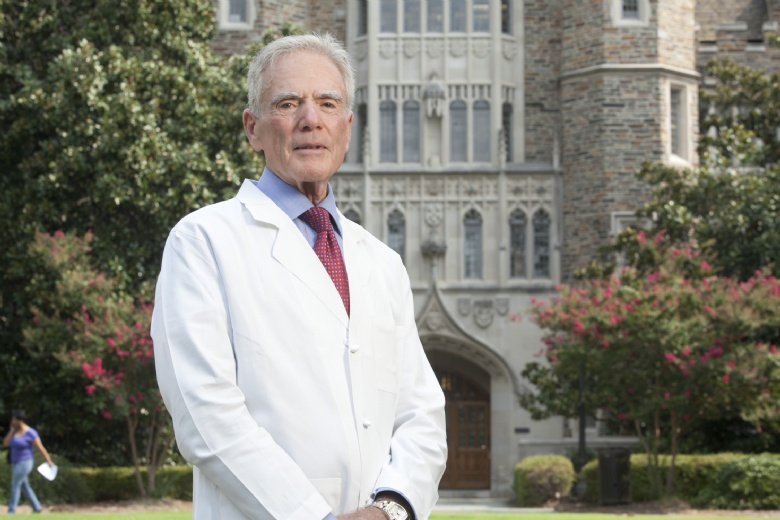
That’s the view of Duke Chancellor Emeritus, Ralph Snyderman, MD in a recent article in The American Interest.
In the article, he explains, “On January 30, 2015, President Obama announced a bold funding initiative to support the sequencing of the genomes of a million volunteers and correlate the data with clinical information to allow a better understanding of the roles genes play in health and disease. This information will boost precision or personalized medicine and allow appropriate therapeutics to be targeted to those who need them — that is, getting the right drug to the right person. This is in contrast to our current “one-size-fits-all” approach to care, where more than half of major drugs are ineffective or cause unwanted side effects, and drug expenditures are currently about $320 billion a year and rising. Replacing that approach with one designed to meet the precise needs of the patient would not only be better medicine, but also more cost-effective.” Read on…
Tags: Duke university > Personalized Medicine > Ralph Snyderman > The American Interest
If the “Homeland” is Safe, Is America Safe?
Posted on | February 13, 2015 | 1 Comment

Mike Magee
“Too often, road safety is treated as a transportation issue, not a public health issue, and road-traffic injuries are called accidents, though most could be prevented. As a result, many countries put far less effort into understanding and preventing road-traffic injuries than they do into understanding and preventing diseases that do less harm.”(1)
That’s what Dr. LEE Jong-wook, director-general of the World Health Organization,said in 2004. At the time it was estimated that 140,000 injuries occur on roads worldwide each day. Fifteen thousand people were disabled as a result, and 3,000 die.(1) In the year 2000, 1.26 million people were killed in roadway accidents, accounting for 25 percent of all deaths from injury that year.(2,3)
In 1990, roadway injuries were the ninth-leading cause of death and disability worldwide. But by 2020, that ranking is projected to shoot to number three, just behind ischemic heart disease and unipolar depression. The change in rank is based on a projection that roadway injuries will increase by 60 percent in 30 years if current trends continue.(4)
The burden of unsafe roads falls most heavily on the most vulnerable. But as we dramatically witnessed on February 4, 2015, in Valhalla, NY, the US is far from immune to this kind of preventable human carnage. In that accident, Metro North train # 659 crashed into a sports utility vehicle driven onto the rails by a 49 year old mother of three. The car was carried a thousand feet down the rails, and she died along with five passengers caught up in a fiery blaze in the lead train car.
An unfortunate “once in a million” transportation event in the most highly developed nation in the world? Apparently not, according to an investigative report in the New York Times last week. Their reporters took a road trip around the Metropolitan area to visit “the 10 crossings that the railroad administration’s accident-prediction algorithm deems the most likely sites for crashes in New York, New Jersey and Connecticut.”
Here’s the list including the number of railroad accidents at each site since 1975:
Elmwood Park,NJ – Midland Ave. (29 accidents)
Brentwood, LI – Washington Ave. Ave. (8 accidents)
Brentwood, LI – Fifth Ave. (8 accidents)
Central Islip, LI – Carlton Ave. (10 accidents)
Ramsey, NJ – Main Street (6 accidents)
Oceanside, LI – Atlantic Avenue (10 accidents)
Wyandanch, LI – 18th Street (6 accidents)
Bethpage, LI – Stewart Ave. (9 accidents)
Hackensack, NJ – Main Street (7 accidents)
Hackensack, NJ – Anderson Street (6 accidents)
Are these the exception rather than the rule across America. Yes and no. The worst location in the US is in Ashdown, Arkansas. They’ve had 19 accidents since 1975. But according to last week’s report, only 112 other sites have risk paradigm scores as high or higher than those listed above, but that’s out of 130,000 nationwide that were studied. Risk rises with the number and type of trains and autos, speed of crossing trains (some commuter trains cross at up to 80 mph), the presence of partially obstructed and “on-grade” track crossings, the absence of automated safety rails, and a history of faulty equipment.
Of course, all of these issues are correctable, and occasionally, after a tragedy, that is exactly what happens. Back in 1982, 9 teenagers riding in a minivan died in a fiery blaze in a train crash in Mineola, Long Island. In the aftermath and public outcry, citizens demanded a corrective response to the unsafe crossing. To their credit, the state did respond, but the creation of the new overpass took them an unbelievable 16 years and $85 million. Balance that against a Federal Highway Administration’s Section 130 program (for crossing improvements) annual allocation of $220 million for our entire nation.
As our Congress considers vast increases in Military and Homeland Security budgets in the name of “securing our homeland” (which are already, by all accounts, excessive), few appear to appreciate the irony. The reality is that “the homeland”, formerly known simply as America, each and every day, for each and every citizen who crosses rail, rides rail, uses roads and bridges, or rides and walks on spaces not safe or adequate for pedestrians, is not safe. And the reason has nothing to do with terrorists. It is a function of a Congress and a range of State Houses which neither lead nor represent this nation very well.
For Health Commentary, I’m Mike Magee.
References:
2.United Nations moves towards action on Road Traffic Safety following Bone and Joint Decade proposal. [press release]. Bone and Joint Decade. September 16, 2003.
3.Ahead of General Assembly, Annan urges commitment to Road Safety. [press release]. Bone and Joint Decade. September 9, 2003.
Tags: homeland security > infrastructure investment > railroad safety > railroad safety metropolitan ny > transportation safety
UNC’s Other “Dean Smith”: Colin “Tim” Thomas M.D.
Posted on | February 11, 2015 | Comments Off on UNC’s Other “Dean Smith”: Colin “Tim” Thomas M.D.
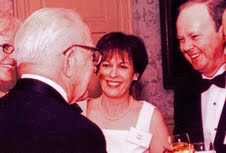 Tim Thomas with Mike and Trish Magee at 2008
UNC Distinguished Alumni Awards, Chapel Hill, NC.
Tim Thomas with Mike and Trish Magee at 2008
UNC Distinguished Alumni Awards, Chapel Hill, NC.
This week the airwaves were filled with well-deserved reviews of the life and accomplishments of Dean Smith, the legendary basketball coach from the University of North Carolina “Tar Heels”. Loving basketball, and having introduced three of our four children to the game while in Chapel Hill from 1973 to 1978, I can well understand the universal admiration, not only for the coach, but also for the man.
But I didn’t want this moment to pass without paying tribute to a lesser known, but equally amazing UNC leader, of the same vintage as Dean Smith. His name was Colin Thomas, but his friends called him Tim. Of him, I wrote in Legends and Legacies: A Look Inside Four Decades of Surgery at The University of North Carolina At Chapel Hill, “Dr. Tim Thomas provided an excellent role model in medical education and showed me what a gentle man and a gentleman looked like in an academic setting.”
Tim died on September 2, 2014, in Chapel Hill at the age of 96. The official announcement of his death celebrated the fact that he was an “internationally recognized surgeon, revered medical educator, outstanding scholar, pioneering research scientist, and devoted Tar Heel”. All true.
But the fact that so many people, including myself, loved and admired him, likely had more to do with who he was than what he did. He was born in Iowa City in 1918, four years after my father. He was a farm boy, raised in the outdoors of Monticello, Iowa, and picked up the “patience, understanding, generosity and grace” that marked his personality from serving and working with horses and farm animals as a kid. Those same qualities were evident in the doctors in his family, and there were many – his father, Colin; his Aunt Edna; his grandfather, John; and his great-grandfather, Johannes.
He arrived in Chapel Hill from the University of Iowa in 1951. There were twelve other faculty members in the segregated state at the time who he later explained “could best be described as idealistic, imaginative, assertive in their quest for new knowledge, having insatiable curiosity and a healthy skepticism of prior truths and new dogmas.” By 1965, he was Chairman of the Department of Surgery, and he remained in that post for the next 20 years. He stepped down as Chairman at his peak, but continued to operate and teach. By the end of it, he had charted more than 60 years of service to this one singular institution.
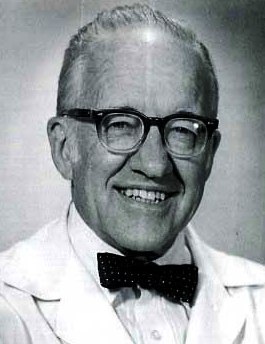
But my sustaining image of Tim is not in an operating theater, but at a simple front table, in long white coat emblazoned with his name, simple bow tie against white shirt, in a crowded, humble classroom, jammed with surgical residents of all sizes, shapes, colors, and disciplines, at 1:30 PM every afternoon, Monday through Friday, for the half decade we shared. This was the Pre-operative Conference, his conference.
As later described, “..resident staff presented their patients to be operated upon the following day. All specialties were involved in these presentations and discussions. The resident responsible for the proposed operation would present the patient to the assembled group of faculty and surgical house staff. Pertinent X-rays, laboratory data, and histopathological slides were used to support the diagnosis and proposed management. No problem was considered trivial, and especially all patients merited at least some discussion. Interrogation of the resident would vary and included the basis for the diagnosis, justification for the operative procedure, history of the disease and treatment, the operative approach, and physiological and pathophysiological characteristics of the disease. There was no deference to authority. Traditional concepts of treatment were never justification for the resolution of a particular problem. Each required individual analysis. With all disciplines being represented, there was excellent opportunity for cross-fertilization of ideas.”
When you would present your case, Tim, and other attendings who modeled themselves after Tim, could always be counted on to pepper you with questions – as often about medical history or embryology, as surgical approach. I attended close to 1000 of these collegial interrogations during my training, and from them learned as much or more about humanity as I did surgery.
As Tim would later say, “The individual that is regarded as a very good surgeon, he’s not in that category simply because he operates more rapidly or ties a knot more rapidly. It’s the decisions that he make as he goes along and the ability to recognize the goals of the operation and what’s important and what is unimportant in trying to achieve these goals.”
What was clear to us, and so well illustrated in this sparklingly decent and wonderful man, was that what made you a good surgeon was the same as what made you a good human being. Chapel Hill produced more than one Dean Smith. He was our’s.
For Health Commentary, I’m Mike Magee.
Tags: Colin Thomas MD > Dean Smith > Tim Thomas > UNC > University of North Carolina
Free Immunization Pt. Ed. Video
Posted on | February 5, 2015 | Comments Off on Free Immunization Pt. Ed. Video
 Free 8 Minute Patient Ed Video

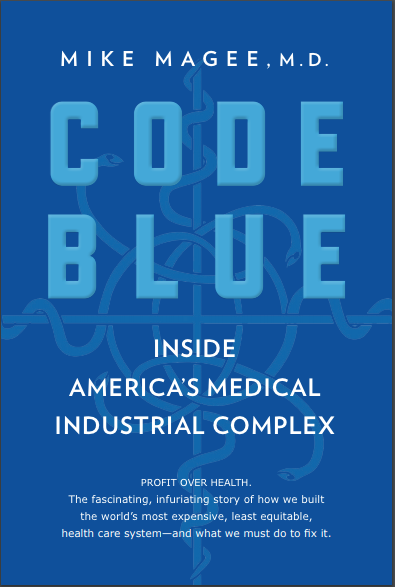
"Code Blue INDEX online"


Prospective Health Blog
BIOGRAPHY

NIH Precision Medicine
BIOGRAPHY

Health in 30
BIOGRAPHY

Larry's Letters
BIOGRAPHY

Precision Medicine, Euthanasia, Abortion, Communism, Trillions of Dollars, Losing Freedom, and Town Hall Mobs BIOGRAPHY

Yearning for Universal Coverage Is Not Universal
BIOGRAPHY


