9/11 Is Still Fresh.
Posted on | September 9, 2016 | Comments Off on 9/11 Is Still Fresh.

Mike Magee
Fifteen years ago, I had the honor to recount the stories of 10 boat captains and 10 passengers who participated in the maritime evacuation of Manhattan Island on 9/11 (the largest maritime rescue operation since Dunkirk in WWII). The experience continues to remind me that America is a great country, and part of our “goodness” is not giving in to fear and prejudice. Fear is never a currency that should be supported or rewarded.
Here are some reviews of ALL AVAILABLE BOATS. If you don’t have a copy, I encourage you to purchase one HERE.
The America it portrays deserves a place in your home.
_______________________________________________________
4.0 out of 5 stars
9/11 Still is Fresh
By Ouisie on July 18, 2016
Having just seen the 9/11 monument, this book was interesting.
5.0 out of 5 stars
Good people doing what they can for each other on 9/11
By Manhattan on April 27, 2015
I consider this material the best of all that has been produced about 9/11. It’s about people coming together to help each other in an extreme situation. They hadn’t prepared for it yet they couldn’t have done better if they’d planned for it for years. Leaders rose to the situation. In the weeks after 9/11 the material in this book was on display with audio of interviews of these people and still photos of them. I visited the show several times. It was displayed in two different locations in lower Manhattan.
5.0 out of 5 stars
A much overlooked yet critical segment of 9/11 rescue.
By Maria Pagano on August 6, 2013
I had no idea of all the effort that went into the water rescue- 450,000 people were picked up all along the shoreline of lower Manhattan and taken out of harms way by these fearless mariners. The photographs and stories were startlingly new, fresh, even for me, another volunteer on that awful day.
BklynMom
5.0 out of 5 stars
New insight into a familiar tragedy
By Camilla W. Von Bergen on January 19, 2012
This book is heartening, and provides a lot of insight into one aspect of the 9/11 tragedy with which most of us have no experience. Although most of us saw television or still photos taken from offshore, I do not think many of us focused on the boats, and mariners, heading towards the devastation. I have always had a great admiration for those who, “…go down to the sea in ships.” My admiration is if anything greater now.
5.0 out of 5 stars
All Available Boats!
By John Curran on October 29, 2011
This @mims Twitter post: ‘Moving documentary of 9/11 evacuation by boat shows #resilience of cities[…]reminded me of how humbled and impressed I was after reading how successfuly the evacuation was conducted by literally ‘All Hands’ who came together and made a difference during this crisis!
5.0 out of 5 stars
All Available Boats
By Mary on August 31, 2011
Short read with lots of pictures. Good book on September 11th and very touching story on what happened that day in New York City. A real eye opener that is sad but shows the hero’s on that terrible day. I would recommend it if you want some inside stories on what happened on that day that will always be remembered by all of us. Mary
5.0 out of 5 stars
WOW!
By A customer on June 24, 2003
I HATE READING BUT I SAW AN ARTICLE IN MY BOATING MAGIZINE ABOUT THIS BOOK SO I HAD TO GET. I READ THE WHOLE THING IN 2 DAYS. THIS IS FULL OF INFO THE NEWS STATIONS NEVER TOLD YOU ON THIS DAY WE WILL NEVER FORGET. THIS IS A MUST FOR ANYONE. NEVER FORGET 9/11
Tags: 9/11 > All Available Boats > America is Great > Manhattan Island > Maritime rescues > Never support fear
Precision Medicine vs. Public Health $$$ – NIH Funding Priorities Not A New Debate.
Posted on | August 29, 2016 | Comments Off on Precision Medicine vs. Public Health $$$ – NIH Funding Priorities Not A New Debate.
Paul Starr, Princeton
Paul Starr’s observations (The Social Transformation of American Medicine, p.370) in 1982:
“In 1964 a Presidential Commission on Heart Disease, Cancer, and Stroke (the DeBakey Commission) which had been appointed at the behest of the Lasker lobby, recommended a massive commitment of federal funds to establish ‘a national network of regional centers, local diagnostic and treatment stations, and medical complexes designed to unite the worlds of scientific research, medical education and medical care.’ The report paid no attention to any environmental, nutritional, or other public health and preventive concerns. Like the report of the Hospital Commission of the 1940s, the DeBakey Commission report was a classic of the kind of myopia that the medical establishment of the mid 20th century confused with visionary ideas. No one, as Elizabeth Drew later pointed out, ever asked whether other diseases such as those affecting children or diseases that could actually be cured might be more worthy of federal effort. The commissions conclusions in favor of a medical assault on heart disease, cancer and stroke were foreordained by the commissions name and its composition (the Lasker lobby as one of its representatives said had a quorum.) The aim was to make medical services more available, but there was little thought as to whether such an investment might actually make a difference in health.”
Eli Ginzberg, Columbia U. Health Economist
And from Eli Ginzberg in 1992:
“I learned several important lessons from my term on the Advisory Committee to the National Institutes of Mental Health(1959-1963): that most bureaucrats measure their success by the amount of money they are able to extract from Congress…; that there was a cozy relationship between the senior officials of NIMH and the academic medical leadership, much like the relationship of senior procurement officers in the Pentagon and the aerospace companies; (and) that fashion and enthusiasm dominate the world of medical ideas and policy as they do other fields.” (from The Eye of Illusion, p.82.)
Tags: Eli Ginzberg > healthcare research > mary lasker > Paul Starr > precision medicine > The Eye of Illusion > the social transformation of medicine
Mylan EpiPen? What About Medicare Part D?
Posted on | August 25, 2016 | Comments Off on Mylan EpiPen? What About Medicare Part D?

Mike Magee
Pediatric drug prices have led the news recently with the fantastic and purposeful price escalation of Mylan’s EpiPen. With all that going on, it would have been easy to miss the analysis of the complete Medicare Part D year over year costs (2014 vs. 2013) that were recently released. 70% of Medicare patients carry Part D policies. The others are enrolled in Medicare Advantage plans or “stand-alone prescription drug plans”.
Here’s a summary:
1. Total billing tic’d up a bit over 17%, with total health care claims up 3.3% by way of comparison. 12.6% of this was from prescription drugs. CMS delivered $121 billion in 2014 compared to $103 billion in 2013.
2. Nine of the top ten drug contenders (by numbers of claims, not total cost) were unchanged from 2013, and all ten were generics. #1 generated a spend of $748 million. #10 a mere $136 million.
3. If you look at cost, however, the top ten in 2014 were all brand name. In the lead, as you might guess was the Solvaldi Hep C star with a $3.1 billion spend. Then came Nexium (antacid), Crestor (cholesterol), Abilify (depression), Advair (bronchitis/asthma), Spiriva (COPD), Lantus SoloSTAR(insulin pen), Januvia(Type 2 Diabetes), Lantus (insulin pen), Revlimid (anemia). Each of these drew more than $1 billion.
4. There were over 1 million prescribing health professionals.
5. Medicare patients who chose brand name over generics on average pay co-pays that are 10 times higher than they need to.
Lessons from Ebola in the Age of Zika
Posted on | August 23, 2016 | Comments Off on Lessons from Ebola in the Age of Zika

Mike Magee
In the run up to the Olympics, and now as they have drawn to a close, Zika has been top medical news when it comes to exotic infectious diseases. It’s story has been so compelling that the mosquito borne disease has pushed Ebola to the sidelines – an epidemic which infected 28,616 Africans and cost 11,310 their lives between 2013 and 2016.
The WHO Ebola Response team, to their credit, has recently published their insights in the NEJM. Here are some of their findings:
“The largest numbers of cases and deaths occurred in Guinea, Liberia, and Sierra Leone, but an additional 36 cases were also reported from Italy, Mali, Nigeria, Senegal, Spain, the United Kingdom, and the United States.”
“Since 1976, and before the recent epidemic, there were 23 known Ebola outbreaks in equatorial Africa.”
The first case occurred in a 2 year old boy from a forested area of southeastern Guinea who died within 2 days on December 28, 2013. The causative agent was Zaire ebolavirus “probably acquired from an animal”. In March and April, the problem exploded with more than 100 regional cases. Thereafter, it spread primarily throughout three countries – Guinea, Liberia, and Sierra Leone.
Of the three, Sierra Leone had the slowest spread. Their epidemic affected 8706 and lasted 22 weeks – case load doubling every 5 weeks. In Liberia 3163 were infected over 15 weeks with case load doubling every 2.8 weeks. Finally, Guinea’s 3358 cases occurred in only 9 weeks long but it’s case load doubled every 1.9 weeks, over-whelming resources.
The study stated, “For Ebola, as for some other infectious diseases, roughly 20% of cases can be considered to be ‘superspreaders,’ being sources of infection for about 80% of cases in the following generation… For example, during an outbreak in the fishing community of Aberdeen in Freetown during January and February 2015, EVD was confirmed in 24 people, with infection apparently acquired from a single source.”
Other observations:
“It is conceivable, but has not been proved, that the more explosive spread of infection across Liberia, and within the capital of Monrovia, stimulated the development of more rapid and effective interventions than in Guinea and Sierra Leone”
“Admitting patients to Ebola treatment centers and shortening the delay before hospitalization could have played a large part in slowing the increase and accelerating the decline in case incidence.”
“ The epidemic took 10 months to reach peak incidence (September 2014), but cases were reported for an additional 18 months (until April 2016), and there may be more to come.”
“In the long tail of the epidemic, foci of transmission persisted for many months during 2015, particularly in areas of Sierra Leone and Guinea where symptomatic patients were unwilling to seek medical care, where contacts of patients fled quarantine, and where deaths from EVD (epidemic viral disease) were followed by unsafe burials”
And finally, this lasting truth about infectious diseases and vulnerable populations:
“The critical question now is how to ensure that populations and their health services are ready for the next EVD outbreak, wherever it may occur. Health security across Africa and beyond depends on the resources made available both to strengthen national health services and to sustain investment in the next generation of technologies for Ebola control.”
Tags: CDC > developing nations > Ebola > epidemics > EVD > WHO > Zika
“Medicaid-for-all” vs. “Medicare-for-all”.
Posted on | August 16, 2016 | Comments Off on “Medicaid-for-all” vs. “Medicare-for-all”.
Families USA/Medicaid Expansion
Mike Magee
The verdict is pretty much in – increasing health coverage through whatever means possible, improves health outcomes.
This is especially true for the large numbers of formerly uninsured who are now covered through Medicaid expansion plans offered through the Affordable Care Act. Healthy citizens are not only less sick (which means less expensive), but also more employable and productive. All the more confusing that 19 states continue to defy logic by refusing to sign up for ACA sponsored plans in their states. A careful look at the numbers may help explain why.
Here are a few facts:
1. Each state dollar invested in Medicaid expansion draws $7 – $8 dollars in federal support.
2. Decreases in uncompensated care could save non-participating states around $22 billion and the federal government around $40 billion.
3. In all states that have used the ACA Medicaid offering, savings have exceeded costs.
4. 19 states have refused to expand Medicaid to adults with incomes at or below 138% of the federal poverty level. Were they all to participate, an additional 5 million currently uninsured would be covered.
Resistance to expansion of ACA Medicaid has been led primarily by Republican governors and Republican legislative bodies in 19 states. They fear being left with a big bill, even though the federal government covers 90% of the costs in perpetuity. They also worry that this is simply a strategy to convert the health care system from private to public, and from state to nationally controlled, much as they view the Medicare-for-all plans that have been floated during this political season.
Less often reported is physician resistance to seeing Medicaid patients. This has had less to do with politics, and more about financial self interest. Historically, Medicaid has been a remarkably poor payor in many states, with the occasional exception of obstetrical care. Rates today continue to be set by individual states. So even though you provide coverage, poor reimbursement may limit physician participation and therefore limit economically disadvantaged patients’ access to care.
What many physicians, especially specialists, have failed to realize is that Medicaid now comes very close to Medicare reimbursement levels in most states. In fact, in 33 states, Medicaid reimbursement is between 70% and 100+% of Medicare payment levels. That’s according to Kaiser’s “Medicaid-to-Medicare fee index measure”. Here are the top five best and worse states:
Best: North Dakota 141%, Alaska 129%, Montana 104%, Delaware 98%, Wyoming 96% (Wyoming is the only ACA non-participating state)
Worst: Rhode Island 38%, New Jersey 45%, California 52%, Michigan 54%, Florida 56%. (Florida is the only ACA non-participating state.)
But comparing “Medicare-for-all” to “Medicaid-for-all” is like comparing apples and oranges. Medicare is fundamentally a national fee schedule with local adjustments for cost-of-living etc. Medicare is accepted by most clinicians and functions with patient protections codified and enforced by a federal agency. It is true national health insurance, albeit administered in some cases though private insurers. Medicaid, in contrast, varies from state to state in its coverage schedule and payments, which are frequently adjusted to reflect individual state financial pressures and priorities, as interpreted by state political bodies.
The expansion of coverage for the poor in America through the ACA Medicaid offering has been a success in identifying the most vulnerable, bringing them out of the shadows, and enlisting them in programs of varying value. This is no doubt progress. But in health delivery, high degrees of variability in coverage schedules, or payment schedules, or consumer protections, is never good.
At the end of the day, as soon as is feasibly possible, we need to build upon Medicare’s national model. After all, if our national taxes are on the hook for 90% of the cost of Medicaid expansion anyway, why should we continue to carry the cost, in financial and human terms, of high state by state variability in performance?
Tags: aca > access to care > Families USA > health care coverage > Kaiser > Medicaid > Medicare > physician fees > state insurance coverage
Why Do Health Professionals and Their Schools Ignore The Planetary Patient?
Posted on | August 8, 2016 | 2 Comments

Mike Magee
If health is defined today as the capacity to reach one’s full human potential, our environment – including the quality and availability of water, air, soil, and plant and animal life – are critical determinants of human health. For too long health professionals have considered the planetary patient as beyond their domain. In reality, it is the health of this “patient” that provides the basis for all other health endeavors.
In embracing and caring for this “patient”, we learn that integrated solutions, forward thinking, team approaches to problem solving, wise prioritization and investment, and careful governance are essential to the future well being of our human population. In caring for the planet, we are instructed and guided on how best to care for each other. But in reality, improving the health of our planetary patient requires changes in human behavior.
Changing behavior is both a function of the message and the messenger. And studies consistently affirm that there are are no more powerful messengers in society – when it comes confidence and trust – than health professionals. We must ask ourselves then, how much progress could be made if caring professionals, who increasingly are assuming team leadership roles on a local level, were fully educated and engaged in environmental health and applied the social capital of their relationship with the people and the community to fuel societal behavioral change?
How many of us took the time last week to review the NOAA report that certified that global temperatures last year were the highest ever recorded on Earth? Or how about the report from the United Nations that weather related disasters including life claiming floods and drought in the past decade averaged 335 per year, twice the rate of the prior decade?
In an age of Trumpian systematic denial of knowledge and truth, should we be concerned that fellow health professionals worldwide are generally unaware that nearly 20 million of our global patients were forced out of their homes by weather just last year?
If we are able to get our act together post-election, perhaps America will see the long awaited investment in aging infra-structure, and even new efforts to protect costal areas from rising seas, and address rapidly disappearing aquifers in our heartlands. But for developing nations, what will be their options? They have had little to do with the carbonization of our global atmosphere, but the price they pay will be outsized, as they are forced to migrate across other nation’s borders to literally save their lives.
The UN recently reported that it could cost up to $300 billion to build warning systems, address flooding, manage water supply, address drought related food shortages and more by 2030. The New York Times reported this week that “While the world ponders ways to reduce emissions, the consequences of climate change are already underway.”
In a piece last week addressing “The Medicalization of Public Health”, I suggested that academic health professional schools be re-integrated into their liberal arts universities. That recommendation was based on the fact that in the world of public health, advances in prevention and population wellness have almost nothing to do with genomics, bio-tech, and personalized stem cell therapies, and everything to do with integrated approaches to social policies that advantage human potential. NIH investment in “precision medicine”, even if the name is changed to “precision health”, is no more likely to address the needs of population based public health than Trump’s tweet on January 25, 2014 about the “GLOBAL WARMING HOAX” will address the repercussions of a dangerously carbonized atmosphere.
Why do health professionals fail to see planetary health as part of their domain? Perhaps it is because their broader education was cut short by segregated pre-medical curricula, cloistered medical and nursing schools, and war-zone brutalizing residency training programs. Perhaps physicians and nurses and others were never allowed to fully develop, to explore social justice policy, to embrace environmental science, to understand how best to motivate enlightened human behavior. Perhaps we never reached our human potential, and maybe that’s why we have been unable to address the pressing needs of a planetary patient gasping for air, thirsting for clean water, and yearning for safety and security.
Tags: beyond flexner > global warming > medical school education > precision health > precision medicine > public health policy > the planetary patient > Trump denial of global warming > Trump lies
The Medicalization of Public Health: “Precision Medicine” vs. “Precision Health”?
Posted on | August 5, 2016 | 6 Comments
NIH Director Francis Collins
Mike Magee
Last week I was at a small, invitation only dinner in New York City, and left a bit downcast and feeling “odd man out”. I saw the failure as mine alone – an inability to articulate succinctly, and in few enough words, my concerns about the evening’s topic: Precision Health (that’s “precision health”, as I was repeatedly reminded throughout the dinner, most definitely not “precision medicine”).
The emphasis on the word “health” over the word “medicine” was apparently viewed by my sponsors as a free pass into the world of prevention where disease was avoided rather than treated. And yet, it was unclear whether the nomenclature change was accompanied by any significant change in medical organizational structure, career ladder incentives, research tools or tactics that would desegregate the academic medical center. There was no sign of a focus on public health social determinants or a desire to integrate the medical school into the broader liberal arts university community – not unless a strategic partnership with Google now qualifies as such.
“Precision Health” is in many ways the latest contribution to a war of words between “public health” and “precision medicine”. Public Health, at least when it comes to NIH-funded projects, has been losing that battle. Funding for NIH projects with the word “public” or “population” in the title have declined by 90% in the past decade. In contrast, $15 billion of the total $26 billion of extramural NIH funding in 2016 has been awarded to projects that included one of the following four index terms – gene, genome, stem cells, or regenerative medicine.
Critics of the biomedical research community trace the problem back to NIH director Francis Collins who envisioned a genetic revolution in 1999, one which would unravel the genetic mysteries behind common chronic diseases, improve early diagnosis, drive preventive medicine efforts, result in new precise therapeutics, and result in a range of pharmaco-genetic treatments and stem cell therapy.
This focus, in concert with a massive effort to expand the use of electronic health records and harness the power of ever growing health databases, received a presidential endorsement in President Obama’s 2015 State of the Union address with the words, “Tonight, I’m launching a new Precision Medicine Initiative to bring us closer to curing diseases like cancer and diabetes — and to give all of us access to the personalized information we need to keep ourselves and our families healthier.”
With the President’s support, the NIH has now embraced the call for $215 million in 2016 to support “precision medicine” – $130 million to enroll 1 million US volunteers in a long term interactive health database, and $70 million to study cancer genomics in yet another “war on cancer”.
Now, a decade and a half since his initial pronouncements, Francis Collins is more convinced then ever that he’s on the right track, having stated “the 21st century is the century of biology”. He says, “the prospect of applying this concept broadly has been dramatically improved by the recent development of large-scale biologic databases (such as the human genome sequence), powerful methods for characterizing patients (such as proteomics, metabolomics, genomics, diverse cellular assays, and even mobile health technology), and computational tools for analyzing large sets of data. What is needed now is a broad research program to encourage creative approaches to precision medicine, test them rigorously, and ultimately use them to build the evidence base needed to guide clinical practice.”
To say his critics don’t see it that way would be something of an understatement. They say, “None of these popular topics has had any measurable effect on population mortality, morbidity, or life expectancy in the United States. The improvements of the past decades in these outcomes, which have been substantial but are now stalling, have largely reflected improvement in non medical aspects of everyday life and the operation of broad-based public health and classic prevention efforts, such as curtailing smoking, that are undervalued as outmoded and old-fashioned by the narrative.”
Those same critics, this week, went one step further, suggesting that rosy predictions and advertised results may be ethically compromised and require independent review. In their own words, “Assessors must be objective, independent of the funding source, and have no professional stake in whether a particular line of research is deemphasized. The deliverable criterion should include public health benefit achieved by these initiatives (ie, measurable reductions in mortality and morbidity). Criteria such as number of publications, citations, prizes, and recognition are irrelevant as these are simply self-rewarding artifacts of the system. After several decades of substantial investment, the fundamental question is whether these big ideas have improved quality of life and life expectancy, by how much, for how many, and for whom. These are public dollars that should benefit the many, not the few.”
Stalwarts of the Public Health community say, “Research undertaken in the name of precision medicine may well open new vistas of science, and precision medicine itself may ultimately make critical contributions to a narrow set of conditions that are primarily genetically determined. But the challenge we face to improve population health does not involve the frontiers of science and molecular biology. It entails development of the vision and willingness to address certain persistent social realities, and it requires an unstinting focus on the factors that matter most to the production of population health.”
In this week’s JAMA critique of “precision medicine”, titled “What Happens When Underperforming Big Ideas In Research Become Entrenched?”, the authors challenge both the results of “precision medicine” and the motives – including profit and career advancement. One of the three authors is the Director of the Stanford Prevention Research Center, the very same Stanford that today champions the term “precision health” over “precision medicine”. He is also the author of “Why most Published Research Findings are False”, the most-accessed article in the history of Public Library of Science (exceeding 1.5 million hits), according to his Stanford professional bio.
Stanford Dean Lloyd Minor is the leader of their Precision Health movement. He wrote an article that appeared in the January 13, 2016 issue of Forbes titled “We Don’t Just Need Precision Medicine, We Need Precision Health”. In the article he states that since President Obama’s 2015 address, “we have seen many breakthroughs in the development of therapies tailored to individual patients to treat the deadliest of diseases”, citing President Carter’s recovery from brain cancer as an example. He believes those efforts are worthy of continued support, but should be broadened. As he writes, “instead of a frantic race to cure disease after the fact, we can increasingly focus on preventing disease before it strikes… we call this idea Precision Health, where we focus on helping individuals thrive based on all the factors that are unique to their lives, from their genetics to their environment.”
Changing or broadening terms is unlikely to settle the dispute, and Stanford isn’t the only university that lacks consensus on the issue. Columbia’s Mailman School of Public Health internal publication says, “Precision medicine or population health? On the face of it, the two couldn’t be further apart: one aims to tailor treatments to the few while the other works to confront disease for millions on a global scale.” As with Stanford, Columbia finds its leaders on both sides of the fence. Their president, Lee Bollinger, announced a institution wide precision medicine effort in 2014. But Sociomedical Sciences professor Ronald Bayer calls the promise of precision medicine a “stretch”. “People haven’t become obese because of a genetic transformation. They’re fat because they get the wrong foods. It’s not going to solve poverty or hunger.”
What I wanted to say the other night, but failed to effectively, is what I said in a speech to the Library of Congress on March 23, 2005. I said, “Health is profoundly political. Why is this the case? For multiple reasons: Health is a collection of resources unequally distributed in society. Health’s ‘social determinants’ such as housing, income, and employment, are critical to the accomplishment of individual, family, and community wellbeing and are themselves politically determined. Health is recognized by many throughout the world as a fundamental right, yet it is irreparably intertwined with our economic, social, and political systems. And growth in health, health care, and health systems requires political debate and political consensus.”
So if an academic medical center can integrate with its’ public health community, and with university sociologists, political scientists, economists, philosophers and theologians – as well as its basic scientists and computer scientists – to advance individual and population wide human potential in a sustained manner – and call it “Precision Health” – I’m all in. Otherwise, it’s just an empty branding exercise.

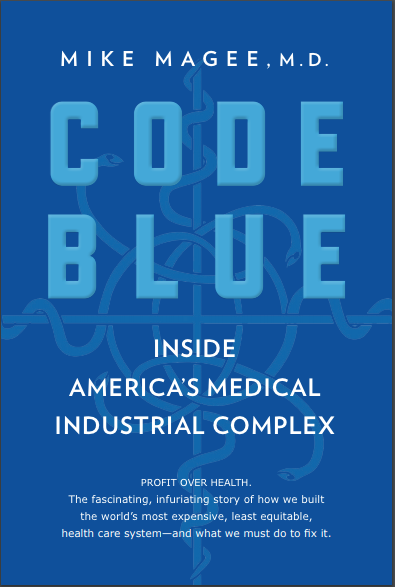
"Code Blue INDEX online"


Prospective Health Blog
BIOGRAPHY

NIH Precision Medicine
BIOGRAPHY

Health in 30
BIOGRAPHY

Larry's Letters
BIOGRAPHY

Precision Medicine, Euthanasia, Abortion, Communism, Trillions of Dollars, Losing Freedom, and Town Hall Mobs BIOGRAPHY

Yearning for Universal Coverage Is Not Universal
BIOGRAPHY

