Holiday Greetings: What is Health?
Posted on | December 19, 2015 | Comments Off on Holiday Greetings: What is Health?
Magee Grandchildren

In this country, we continue to struggle in answering the fundamental question “What is health?” A large part of our thought process has involved defining what health is not. It is not the health care system. It is not the reactive elimination of disease. It is not a simple commodity to be weighed against all other commodities in society. It is different from these things, and more than these things.
Health is universal and common to the people of the world, independent of geography, race, income, gender, and culture. Health is an active state of well being that encompasses mind, body and spirit. It is the capacity to reach one’s full human potential, and, on a larger scale, a nation’s potential for development. Dr. Gro Brundtland, former director-general of the World Health Organization, wrote in the World Health Report 2000 that “The objective of good health is twofold – goodness and fairness; goodness being the best attainable average level; and fairness, the smallest feasible differences among individuals and groups.”
Now, fifteen years later, the notion that health is a preferred state of being, rather than a set of disconnected functions or services, is increasingly being embraced. With this in mind, it becomes impossible to ignore a significant modern-day truism. Health is profoundly political.
Why is this the case?
For multiple reasons: Health is a collection of resources unequally distributed in society. Health’s “social determinants” such as housing, income, and employment, are critical to the accomplishment of individual, family, and community well being and are themselves politically determined. Health is recognized by many throughout the world as a fundamental right, yet it is irreparably intertwined with our economic, social, and political systems. And growth in health, health care, and health systems requires political debate and political consensus.
For these reasons and more, it is entirely reasonable to acknowledge and attempt to structure in a purposeful manner the politics of health. To do so requires mention of some of the major forces shaping health worldwide. These include aging demographics, the growth of home-based caregivers, the dual burden of disease, the Internet, and consumer empowerment and activism.
In the United States, nearly 50 percent of all 60 year olds have a parent alive, and by 2050 there will be 1 million people over age 100. This means that the three-generation family has been supplanted by the four- and five-generation family. Twenty-five percent of American homes have an elder caregiver in place, and 85 percent of them are volunteer family members. The vast majority of these caregivers are third generation women, managing parents and grandparents on the one hand and children and grandchildren on the other. In the United States, their focus is predominately on chronic diseases, seven of which cause 90 percent of the disability in senior populations.
In the developing world, the health focus remains primarily on infectious diseases, nutrition, and maternal and fetal issues, which are challenging the human and financial resources of these countries. But urbanization and the influx of tobacco and unhealthy foods are accelerating the onset of chronic diseases and creating a dual burden of disease.
And finally, consumer empowerment is being fueled by the Internet and supported by physicians, nurses and other caregivers. This has led to emancipation and engagement of an increasingly activist-oriented public. We desire education, behavioral modification, home-based care solutions, inclusion in the health care team, and financial incentives to reward wellness.
As these trends play out and the definition of health continues to evolve, we will see the seat of political power in health continue to shift. It will move away from paternalism toward partnership. It will move away from individual care models to team approaches. And it will move away from intervention toward prevention. It will embrace evidence-based clinical care but incorporate educational and social missions as well. It will move away from hospitals and outpatient care sites toward home settings. And it will move away from thought elites toward patients and their care teams.
Despite this shifting environment, there is a growing political disconnect between those who make health policy and those most affected by health policy. While the former continue to reinforce silos and the status quo, the latter seek broad, fundamental and comprehensive reform. Such reform has included expansion of insurance coverage under the Accountable Care Act, realignment of financial incentives toward prevention, increased reimbursement of physicians and nurses for team coordination that include home health managers, support for early diagnosis and screening, and expansion of education and behavioral modification for individuals and families.
Due to its profound impact on the future of individuals, families, communities, and societies, the politics of health deserves broad debate, active public participation, and focused scholarly pursuit.
Here are two suggested areas for growth.
First, we need to step up consumer education empowerment. We can build on the strong success we’ve already seen with increased understanding of the scientific lexicon, organ function, and disease management. To move another step forward, we must now offer strategies and incentives in home health management, lifespan planning, and customized health system design.
Second, in the area of scholarly pursuit, we must harness the best scholars in medical sociology, political sociology and political psychology, health economics, public health, medicine, nursing, pastoral care, and bereavement, to create interdisciplinary social health leadership curricula and degrees that are equipped to manage the rapidly evolving health environment. Such a commitment will empower us to more effectively challenge outdated thinking, outdated systems, and outdated approaches to health.
We are pleased to continue to offer you Health Commentary, an advertisement free and open, free resource for all. We appreciate our loyal subscribers in this tenth year of service, and wish you and your family a happy and healthy holiday season!
Mike Magee
Dealing with Cholera – Educational Video and WHO Cholera Vaccine Position Paper.
Posted on | December 17, 2015 | Comments Off on Dealing with Cholera – Educational Video and WHO Cholera Vaccine Position Paper.
As the recently reported cholera epidemic in Kenya illustrates, this infectious disease remains a killer. The video above, produced in 2006, provides an open source summary of Cholera well worth viewing. The original program (Health Politics) no longer exists. But the transcript of this program can be downloaded HERE. The 2010 WHO position paper on the Cholera Vaccine is available HERE. Cholera epidemics still challenge Public Health professionals worldwide.
Rooting Out Gun Violence — NEJM
Posted on | December 16, 2015 | Comments Off on Rooting Out Gun Violence — NEJM
Editorial from The New England Journal of Medicine — Rooting Out Gun Violence
Source: Rooting Out Gun Violence — NEJM
The Man-made Opioid Epidemic: Part 5 – Quality Control of AMA Federation Societies.
Posted on | December 9, 2015 | 2 Comments
CDC: Rx Drug Overdoses

Mike Magee
“Since the desire of man to alter his state of consciousness is as old as human history, and technology continues to provide a breathtaking array of drugs capable of producing everything from oblivion to nirvana, I think it safe to assume that we may never win a ‘war’ against drugs.” Senator Moynihan
When Senator Daniel Patrick Moynihan voiced the words above, he was referring back to 1971, when President Nixon famously declared a “war on drugs”. That “war” in its first decade took on a hard edge, as small offenses led to long sentences and “three strikes you’re out” became the law of the land for most of the next four decades. Between 1980 and 2009, incarcerations of mostly young, and mostly black men, rose from 40,000 to a half million.
That remarkable overreach was ignited, in part, by the moderate Republican Governor of New York, Nelson Rockefeller, who was the standard bearer for the state from 1959 until 1973, when he was selected by Gerald Ford for the vice presidency of the United States. Two years earlier, Gov. Rockefeller had witnessed the infamous prison riot at the state’s Attica prison, which was apparently enough to radicalize the usually mild mannered leader. The Rockefeller Laws were subsequently passed in New York state, and the inmate population of 12,500 grew to a record high of 72,584 by the end of the century.
It would be another decade before those laws were swept aside in 2009. This occurred, not coincidentally, with a now infamous spike in opioid prescription drug abuse. This time however, the faces were largely white, not black; the epicenters were not urban, but rural and suburban; and the drugs were legal in origin, not illegal – at least in the beginning.
As I’ve catalogued in the first 4 parts of this series, The Man-made Opioid Epidemic, there was ample warning of a problem as early as 1997, centered around the over-prescribing and oft-denied abuse potential of Oxycontin. The company, Purdue Pharma, and hired guns like Rudolph Guilliani, and helpful advocates and supporters within medical leadership, managed to fight off regulators for over a decade. By 2007, charges and fines against the company stuck. But with the offending product and others like it remaining on the market, and state monitoring databases still in infant form, drug fatality rates reached a remarkable 43,982 by 2013.
A majority (56%) of these were from opioids – 2/3 prescription drugs and 1/3 opium in the form of street heroin. The heroin, evidence shows, was a late add-on. The most common 1st offender, studies now reveal, was a legal prescription to white patients (90% of the time) for Oxycontin. Once hooked, street heroin became a far more affordable alternative. In the year that included 8,257 heroin-related deaths (2013), an estimated 330,000 Americans were regularly purchasing the illegal drug on streets across our nation.
The reaction to the current problem, compared to its parent in 1973, has been far more cerebral and considered. The current Administration has pledged $12 billion to prevention and treatment. Several thousand non-violent inmates, imprisoned for drug-offenses, have been released. There is a definite swing toward treatment over punishment. The use of buprenorphine and methadone to treat addiction, laws enabling family and friends to administer Narcan themselves to family members, and the recent approval of nasal naloxone (Narcan), a life-saving antagonist to opioid overdose, as well as the movement to promote joint prescribing of that antidote drug at the time of opioid prescription, has been vigorously applauded by the AMA and many others.
Less notable is evidence of a significant internal examination of the rather startling and complicit failures of the medical profession and pharmaceutical industry in this episode. Purdue Pharma, fined and forced to come clean in 2007, still stands. Oxycontin is still available, though less prescribed and with prominent “black box” warnings on its label. The company apparently still sees financial opportunity on the horizon for addiction proof opioids, and currently has new patents pending. Since 2010, J. David Haddox, M.D., Vice-President of Health Policy, has filed six separate patents for new opioid time release technologies.
The ability to prescribe is central to the identity and authority of the medical profession. As such, it is a primary policy concern for the American Medical Association, of which I, and my father before me, have been lifelong members. Commendably, the AMA this year has come out in opposition to DTC advertising, noting that the US and New Zealand are the only two nations that allow mass broadcast marketing of prescription drugs. They have also encouraged physicians to support broad availability of the opioid antidote, naloxone, and to support treatment over incarceration of addicted patients. Finally , they have somewhat grudgingly endorsed the Prescription Drug Monitoring Programs (PDMPs), which they had opposed in the past due to mandatory physician requirements to consult databases prior to prescribing opioids.
While these approaches all have merit, they deflect energy from more systemic and permanent preventive solutions. What requires addressing are the fundamental building blocks of the financial conflict of interest that set the stage for driving consumer demand and physician supply of prescription opioid drugs.
A simple examination of the Oxycontin experience reveals that this company, and others like it, carefully followed Arthur Sackler’s 1950’s playbook.
Step 1. Create a quasi-medical organization for legitimacy.
Step 2. Provide funding to the organization to sponsor quasi-academic vehicles (journals and CME programs) to publish supportive articles, and then re-educate practitioners toward the medicalization of your target condition and the need for treatment of this condition with your therapy.
Step 3. Expand the number of professional and consumer organizations to create momentum, demand, and implied consensus.
Step 4. Integrate these programs with mainstream intelligentsia by ample funding in high end medical journals and generous philanthropic support of brand institutions, so that by simple name association, you reinforce your own brand’s integrity.
Step 5. When over-prescribing ignites a backlash, generously and magnanimously participate in the corrective steps, which you yourself made necessary.
Specifically, the seeds of the current Man-made Opioid Epidemic were planted in 1983 with creation of the American Association of Pain Medicine and its subsequent inclusion in the AMA Federation. Over the next few years, with active funding from Purdue Pharma, articles and speeches emanating from this organization, and a sibling at the University of Wisconsin, advanced the theory, utilizing data from scientifically unsound publications, that chronic pain was being massively under-treated and that opioids could be safely employed without addicting patients.
One of the lead professionals was a paid speaker of Purdue Pharma in those early years while an officer in the AMA specialty society (and its president in 1998) and a lead in the University of Wisconsin group. Within a short period of time, he would become an employee of the company, and a lead proponent, to this day, of their drug, Oxycontin. He and the company’s leadership used the carefully nurtured, and AMA endorsed “pain specialists” (a group of diverse psychiatrists, neurologists, anesthesiologists, emergency medicine specialists, and oncologists – all of whom already had their own specialty organizations), to aggressively re-educate and inculturate primary care physicians to pain, the “fifth vital sign”, using marketing presentations masked as CME offerings. The messaging was reinforced and legitimized by company-supported peer review articles and advertising buys in top shelf medical journals. At the same time, Purdue Pharma expanded support for a wide range of other AMA specialty societies.
Currently there are 121 national societies listed within the AMA Federation. They are not all equal. There are long-standing giants including two I have belonged to, the American College of Surgeons and the American Urologic Association. But there are also more recent entries like the American College of Mohs Surgery (dedicated to advancing the skin cancer treatment approaches championed by Frederic E. Mohs M.D.), the Spine Intervention Society (dedicated to the practice of interventional procedures in the diagnosis and treatment of spine pain) , and the Undersea and Hyperbaric Medical Society (dedicated to the science of undersea diving activities and hyperbaric oxygen therapy).
The area of pain management is especially well-represented within the AMA Federation. Beyond the historic societies that cover psychiatry, neurology, anesthesiology, emergency medicine, physical medicine and rehabilitation, and oncology (all of whom have strands devoted to pain management), there are also The American Academy of Pain Medicine (1983), The American Academy of Hospice and Palliative Medicine (1988), the American Society of Addiction Medicine (1988), and The American Society of Interventional Pain Physicians (1998).
How does one become a National Society member of the AMA Federation? You apply for membership, and are aided by a set of online guidelines including a sample letter of application. A heavy emphasis is played on advancing individual AMA memberships, sending elected delegates to participate in the AMA House of Delegates meetings, and supporting advocacy positions held by the AMA.
According to their sample letter, “a specialty organization must demonstrate that it has 1,000 or more AMA members; or …that it has a minimum of 100 AMA members and that twenty percent (20%) of its physician members who are eligible for AMA membership are members of the AMA.” The society members need not be all physicians, only a majority of the voting members need be physicians. They must be voluntary and have paid dues. According to the sample letter, “The organization must cooperate with the AMA toward increasing its AMA membership, particularly if it is at a level of less than 50%.” As for standing, the organization must have been in existence for at least 5 years prior to application, hold at least 1 meeting a year, and “represent a field of medicine that has recognized scientific validity” and be “national in scope”.
In terms of quality control (educational offerings, conflict of interest, financial management), the Guidelines for Admission mention only that a national medical society member of the Federation “not be in conflict with the constitution and bylaws of the American Medical Association.” There is a 5 year recertification requirement. For example, the American Academy of Pain Management was re-certified in 2013, and the next review is scheduled for 2018. But the review is only “designed to verify: 1) that AMA membership within the specialty society is sufficient for continued eligibility in the AMA House of Delegates and, 2) that the specialty society meets the guidelines and by-law requirements for representation in the House of Delegates.” Member databases are carefully checked against AMA member databases. But there appear to be no educational quality monitors, financial reporting, or ethics-based data measures required for either approval or recertification.
This laissez-faire approach to Federation expansion and quality management has left the AMA’s Federation highly vulnerable to commercial manipulation by organizations like Purdue Pharma. Official recognition by the AMA, as was seen with the American Academy of Pain Medicine, can anchor a commercial, profit-driven, integrated public affairs and government relations campaign that puts patients at risk and can end in disaster.
If there is one important take-away from this Man-made Opioid Epidemic, it is that the AMA should critically examine the quality control and oversight of their own National Medical Societies. Questions that the AMA Board of Trustees need to address include:
1. As with 501C3’s, should each national member be required to submit a full financial report, including educational offerings, and complete list of sponsors each year?
2. Should leadership of participating member organizations be required to complete and sign-off on a conflict of interest online program each year to maintain membership?
3. Should Federation member websites be required to include a “sponsor” heading in their navigation bar displaying a complete list of commercial sponsors/advertisers which provided financial/in-kind support for operations, CME funding, public affairs funding, and/or journal advertisements, for the past 5 years, including donations to the member organization and any associated Foundations?
4. Should the results of that annual declaration be available on the AMA public website?
5. Has the AMA ever decertified a Federation National Medical Society? Which, when, and why?
6. Should the AMA establish formal Quality Assessment of their Federation members focused not on membership, but on educational, financial, and ethical performance.
7. Should the AMA commission, as they did with the Sunbeam scandal in 1997, an independent report examining the role of its Federation member organization in the current Man-made Opioid Epidemic, and steps that might be taken to better protect American patients from recurrences like these in the future?
Tags: ama > AMA Federation > AMA specialty societies > american academy of pain medicine > american medical association > narcan > opioid addiction > opioid death > opioid overdose > opioids > oxycontin > purdue pharma
The Man-made Opioid Epidemic: Part 4 – The Linchpin.
Posted on | December 1, 2015 | Comments Off on The Man-made Opioid Epidemic: Part 4 – The Linchpin.
 Bronze Linchpin,Zhou Dynasty, China
Mike Magee
In the first three segments of this 5-part series, The Man-Made Opioid Epidemic, I have defined the crisis, the shared responsibility, and the growth of Prescription Drug Monitoring Programs (PDMPs) as a counter-balance to pharmaceutical data mining and marketing, which have been a shared venture of pharmaceutical and medical organizations for the past 60 years
I have also suggested that the recently documented bending of the survival curve of middle aged white males in America reflects a broad systemic problem, anchored by a deeply conflicted and financially interdependent Medical Industrial Complex.
Since World War II, this cabal has been transferring financial and human resources back and forth across the porous boundaries of academic medicine, government and the pharmaceutical industry. Along the way, leadership and regulatory bodies, like the AMA, the FDA, and the NIH, on whom our nation has depended to maintain a balance of power and legitimacy in all things science, have rationalized a steady and slippery slide, dismantling protective boundaries and diverting attention when necessary, in the interest of parochial organizational gain and individual career advancement.
In this regard, opioid over-prescribing is simply a symptom of a much larger problem which is many decades old, of which all are aware, and which nearly all have chosen to leave unaddressed. Central narratives have been carefully rewritten to emphasize the laudable goals of scientific progress and philanthropy, while largely expunging the driving instinct and natural tendencies of many individuals to aggressively pursue fame and fortune. No greater example exists of this strategy than that of Arthur Mitchell Sackler, the founding funder and benefactor of what would become Purdue Pharma, the producer of Oxycontin.
The official narrative, as it exists today, oft repeated by premier medical and cultural organizations, who maintain schools, exhibit halls, and colloquia that bear his name, features:
1. A remarkably industrious boy who, from an early age, supported his parents (who lost everything in the Depression), put himself through college and medical school at NYU, doing the same for two younger brothers who sought medical school overseas to escape prejudice.
2. A boy who grew up in “hard times”, whose parents were grocers in Brooklyn, chose medicine as a vocation at the age of four, but whose passion drew him more than equally to Art, pursuing art and sculpture lessons as a teen, and taking courses at New York’s famed Coopers Union while attending college and funding the family besides.
3. A committed physician and researcher who generated 140 science related papers, dealing primarily with exploring biologic approaches to psychiatric illness in the 1950’s.
4. A remarkably prolific philanthropist focused on brand name institutions in Medicine and the Arts.
5. A very successful business man, whose extended family fortune was pegged in 2015 , at $14 billion, 18 years after his untimely death at age 73 from a heart attack.
All of this is largely true. Yet, the details that tie Arthur M. Sackler to the Man-made Opioid Epidemic, and the well established tactics that helped consummate the Medical Industrial Complex in the second half of the 20th century are equally true, but somewhat hidden from public view. What is the full picture?
Arthur Sackler was born in 1913, the son of immigrants, his father from the Ukraine, his mother from Poland. They lived in Brooklyn. By all accounts their son, who attended the famed Erasmus Hall High School, was both intelligent and industrious.
 Erasmus Hall High School, 1930
A statue of the school’s namesake was erected in 1930 and sits in the school’s courtyard. An accompanying inscription, which likely inspired the young Arthur, graduating that same year, read, “Desiderius Erasmus, the maintainer and restorer of the sciences and polite literature, the greatest man of his century, the excellent citizen who, through his immortal writings, acquired an everlasting fame.”
By 1937, (even while narratives suggest he was functioning as a significant source of financial support to parents, siblings, and self), he completed both college and medical school in record time, and married his first wife, Else Finnich Jorgenson. Three years later, in 1940, after completing an internship at Lincoln Hospital, he adjusted his career path and was already wealthy enough to begin to seriously collect art. He was now a pharmaceutical managing director, and head of the Medical Research Division at Schering Corp., a American based subsidiary of German parent, Schering A.G., established “in preparation for its assignment of supplying and holding the foreign markets of Schering A.G. for the duration of the anticipated hostilities”.
His role as head of the Medical Research Division apparently included medical affairs. During Medical School, he had earned his keep doing “medical editing”. One organization listed as a client was The Association of Medical Students and its journal. By 1940, we are able to see the first concrete indication that Arthur has become accomplished in the art of Public Affairs and Medical Communications. In that year, on behalf of Schering Corp, he presented an endowment check at the Annual Convention of The Association of Medical Students. The funding was to fully support a new award program called “The Schering Award”, to encourage student interest in the burgeoning field of endocrinology – central to Schering current product line.
Two years later, the award and Schering Corp., were gone, seized by the US government with other “German interests”. It would be another ten years before the government released the 440,000 shares of Schering stock being held, and allowed the company to once again function independently.
Arthur used that decade well. With Schering gone, he joined the William Douglas MacAdams Advertising Agency in 1942, and by 1947 gained a controlling interest in the firm. At the same time, with a healthy understanding by now of medicinal chemistry, he decided to pursue the growing field of Psychiatry and enrolled in the New York residency program at Creedmore Mental Institution on Long Island. The specialty was getting a huge boost from the war effort. U.S. Army head of Psychiatry, William Menninger, was systematizing the treatment of “Shell Shock” including the liberal use of barbiturates. His playbook, Medical 203, would become the basis of DSM 1 in just a few years, and launch the medicalization and pharmacologic treatment of mental illness.
By 1949, Arthur not only controlled his own Medical Advertising Agency and had completed his training, but had now established, with his two brothers, Mortimore and Ray, the Creedmore Institute of Psychobiological Studies. Experimenting with a variety of agents, including sex hormones and histamine, on patients with psychosis, they began to churn out papers advancing their theories on the biologic basis of treatment for psychiatric illness. There was no scarcity of research subjects. Creedmore by now, in the post-war period, had over 7000 occupants. In 1949, as well, he married his second wife, Marietta Lutze, the third generation manager of the German Pharmaceutical firm, Dr. Kade. All the time, Arthur had been ramping up his art collecting, now focused heavily on Asian artifacts. And as luck would have it, he was flush with cash. The Antibiotic Era was in full bloom.
Between 1950 and 1957, advertising revenue in JAMA for broad spectrum ads increased seven-fold. At the top of the list was Pfizer and its new antibiotic, Terramycin. Between 1950 and 1952, 68% of all JAMA broad spectrum ads were funded by Pfizer. Between 1952 and 1956, nearly every JAMA issue included Pfizer’s in-house magazine titled “Spectrum”. The push paralleled an increase in Pfizer detail men from 8 to 2000 (including medical students). They targeted doctors and hospital pharmacies, and developed a sophisticated range of CME materials for the first time. Pfizer’s agency of record? The William Douglas MacAdams Advertising Agency. The principal on the account? Arthur M. Sackler.
Arthur’s groundbreaking innovations would, in the future, be enshrined in the Medical Advertising Hall of Fame. In the posthumous award, they stated, “In the late 1940s and 1950s, Rx companies were not marketing-oriented. They had small field forces and lacked extensive marketing resources. At this time, however, scientific breakthroughs in steroids, antibiotics, antihistamines, oral hypoglycemics, and psychotropics were revolutionizing medicine and creating a highly competitive market for brand-name prescription drugs. Dr. Sackler saw the important role non-personal selling could play in this environment and became an advocate for the full-blown marketing programs (field force plus multimedia promotional activities) employed today….It can be said that Dr. Sackler helped shape pharmaceutical promotion as we know it today (he even experimented with medical radio and TV in the 1950s), as well as established the role of communications and promotional programs in pharmaceutical marketing.”
The Hall of Fame also acknowledged that he used his psychiatric training quite effectively. As they said, “Dr. Sackler was a psychiatrist who published 140 scientific papers on neuroendocrinology, psychiatry, and experimental medicine. His experience in those fields enabled him to position different indications for Roche’s Librium and Valium—to distinguish for the physician the complexities of anxiety and psychic tension. Accordingly, Valium became the first $100 million drug, a then staggering sales figure.”
What they failed to mention, in 1997, perhaps intentionally, a decade after his death, was the fact that, in 1952, their honoree provided funding to allow the purchase of a fledgling New York based pharmaceutical firm, Purdue Frederick Co. which initially focused on antiseptics like Betadine and laxatives like Senokot. But within a decade, they went shopping overseas and purchased Napp Pharmaceuticals in the UK.
Napp owned the patent to several sustained released technologies, initially used for asthma treatment. But in the years ahead, with the Hospice movement arising at St. Christopher’s in London, the Sackler’s supported the development of the first sustained released morphine, MSContin, in 1984, three years before Arthur’s death. Its progeny, 11 years into the future, would be the firm’s notorious Oxycontin. Following Arthur’s playbook, the drug would be heavily markeded by a collection of paid “pain specialists” to gullible generalists as addiction proof.
If the Hall of Fame missed this fact, they more then made up for it in touting one of the jewels of Sackler’s vertical integration scheme, the Medical Tribune. Of this, they said, “He developed a newspaper house organ called Scope for Upjohn. In 1960, based on this model, he began publishing Medical Tribune, which, in time, became a major scientific publication reaching over a million physicians each week in 20 countries.”
Primarily an advertisement cash cow, his editorials supporting free enterprise and scientific progress, and promoting friends while critiquing foes, brought glowing praise in his obituary from many medical luminaries of his own wholly controlled subsidiary. For example, his friend Michael DeBakey said, “In many ways, Medical Tribune is probably the best medical publication in the English-speaking world. It is regarded in many respects as the best way to keep up with what is happening in medicine.”
Scratching at the surface of Arthur M. Sackler’s narrative reveals the rather staggering challenge we face in addressing the systemic issues underlying what appear to be isolated occurrences like the current Man-made Opioid Epidemic. Here in one individual – whose praise and awards, bestowed so luxuriously by the highest levels of American Science and Medicine, in equal measure to the resources he provided to these very same bodies – can be observed the full tangle that is the Medical Industrial Complex.
Over a period of a half century, under the title of beneficent physician, Arthur Sackler built a vertically integrated empire that created pharmaceutical demand, magnified and multiplied it, and then sold into it as it rose. And at every step along the way, he was aided and abetted by those who coveted the Sackler brand. In 2001, his third wife, Jill Sackler, was present to celebrate the Inaugural Arthur M. Sackler Colloquium on Neural Signaling held at the National Academy of Sciences in Washington, DC, February 15–17, 2001. Johns Hopkins neuroscientist and psychiatrist Solomon H. Snyder delivered the remarks. He said, “ The Sackler colloquia are predicated on the notion that creativity in science is fostered by vigorous interactions among scientists.” Eleven years later, his institution produced “The Prescription Opioid Epidemic: An Evidence Based Approach” which actively raised the question whether our style of medicine and prescribing has become too “creative” and “vigorous” for our own health.
In part 5, the final concluding segment of The Man-made Opioid Epidemic, I will describe the difference between prevention and intervention in addressing opioids and pharmaceutical prescribing practices.
Tags: ama > arthur sackler > CDC > dapp pharmaceuticals > NIH > opioid > opioid addiction > oxycontin. purdue pharma > public health
The Man-made Opioid Epidemic: Part 3 – Opioids Are The Tip of the Iceberg.
Posted on | November 23, 2015 | Comments Off on The Man-made Opioid Epidemic: Part 3 – Opioids Are The Tip of the Iceberg.
 NOAA
NOAA
Mike Magee
The Man-made American Opioid Epidemic represents a supply chain failure and a management challenge if system flaws are to be corrected. In its simplest terms, the process involves approval, production, distribution, prescribing, dispensing, and consuming. For all pharmaceuticals, the goal should be to personalize and customize the prescription with the intent of maximizing benefit and minimizing risk. For opioids specifically, the goal should be to appropriately and wisely meet the requirements of patients with pain, while maintaining a series of safeguards to prevent, correct and treat misuse, abuse, disability and potential intentional or accidental death from overdose.
Process analysis and oversight require real time access to data. Up till now, the only ones who have had it, through a cooperative arrangement that has included the AMA, were the pharmaceutical companies. Clearly, the lack of coordinate access to information has been a well-known, and not infrequent, fatal flaw in America’s fiercely independent and dis-integrated health care system. This system has placed the highest value on professional autonomy, featuring largely self-regulating physicians, empowered to make independent decisions for, and sometimes with, patients. Since World War II, the profession’s most potent instrument, and most jealously guarded right, has been the license to prescribe medications.
This highly vaulted system has now allowed a level of abuse in consumption of opioids sufficient to bend the survival curve of white middle aged males in America. As laid out in Part 2 of this series, automated Prescription Drug Monitoring Programs (PDMPs), where utilized, as in Kentucky, have proven effective in stemming abuse, saving lives, and saving money.
The need for PDMPs, which rely on real time downloads from multiple databases, reflects existing deficiencies in the system of medical regulation and oversight. For example, large nationwide pharmacy chains electronically track and survey controlled substance prescriptions to detect prescriber or consumer abuse. But they only have access to those prescriptions filled in one of their own stores. Similarly, insurers or their agents, Pharmacy Benefit Management (PBM) companies, track claims data for abuse, but they can not detect prescriptions paid for with cash. Federal programs, like Medicaid, Medicare, VA, DOD, and Indian Health Service are unable to track purchases made in cash outside their benefits programs, and usually do not share data with the new PDMPs. Finally, state PDMP’s are not yet fully integrated with each other forming a seamless, reliable network nationally for analysis and oversight.
Though certainly imperfect and incomplete, PDMP’s, which exist in 49 states, as well as existing databases controlled by insurers, PBMs and pharmacy chains, maintain moderately effective programs to detect the most egregious opioid abusers. For example Oregon zeroed in on just 4% of the state’s prescribers because they were generating 60% of the prescriptions for controlled substances. And one national pharmacy chain uncovered 42 prescribers, each on average generating some 5000 scripts for controlled substances per month.
While criminal “pill mills” certainly do exists, the issues that have generated the current opioid crisis are far more systemic and involve long-standing, generalized, widespread, and inappropriate overprescribing of powerful pharmaceutical agents with and without high abuse potential. These insights, long suspected, will increasingly be revealed by newly established PDMPs, and shine a glaring light on the dysfunctional relationship between producers of pharmaceuticals and prescribers of pharmaceuticals.
A Johns Hopkins consensus paper revealed that proactive investigatory data analysis is now conducted by PDMPs in 26 states. Only four of those states are currently distributing algorithm driven analytics to prescribers, pharmacists, professional licensing boards and law enforcement agencies without request. But this aggressive approach is likely to spread rapidly to include most states within the next 12 to 24 months. In 32 states, some insurers are permitted to access PDMP databases, and licensing boards currently have unimpeded access in 46 states. Five states are analyzing Medicare prescribing data as well. A PDMP Center of Excellence has been established with joint funding from the CDC, FDA, and Justice Department.
While the careful tracking and analysis of prescription patterns is a relatively new capability among insurers, regulators, and law enforcement agencies, it is old hat to pharmaceutical companies. Some 60 years ago, the enterprising leadership of IMS Health began to collect raw data from pharmacies to spreadsheet and resell to pharmaceutical sales teams. The broad numbers of products sold in a region were valuable, but what the sales teams really needed was the number of scripts for each of their products written by each specific physician.
To achieve that level of granularity, the IMSs of the world needed identifier numbers for the physicians. As it turns out, the AMA possessed those numbers in what was termed the Physician Masterfile, and were willing to sell the database. The identifiers were controlled by the Liaison Committee on Medical Education (LCME) and the Accreditation Council for Graduate Medical Education (ACGME) which agreed to provide them to the AMA years ago. When physicians enter medical school or enroll in a residency program anywhere in the US, they receive a ME (medical education) number. That number is a lifelong tracker and the key to identifying future prescriptions written by those physicians in real time.
For the pharmaceutical industry, such information is a gold mine. That’s why, by 2005, as sales of Oxycontin (the premier prescriptive opioid at the center of this epidemic) exploded, IMS Health had revenues of $1.75 billion, and why the AMA charted a profit of $44 million that same year from the licensing of their Physician Masterfile to a wide range of interested parties. In the wake of criticism, the AMA created a set of voluntary guidelines for manufacturers and a process for physicians to opt-out of the Physician Masterfile on request.
The clear purpose of the pharmaceutical industry’s purchase of refined prescriber data from IMS Health and others was to inform their sales detailing, and sell more drugs. They have no vested interest in critiquing the appropriateness of prescribing practices. Over the past two decades, pharmaceutical prescribing has markedly liberalized with deliberate widening of indications, expanded use of pharmaceuticals in children, medicalization of behaviors to achieve “disease status”, and creation of pharma-funded medical research and CME organizations and patient advocacy groups who, in return for funding, willing support industry goals. These industry actions have had a single, consistent over-arching purpose – to sell more drugs.
What the PDMPs have revealed for opioids, and will soon reveal quite glaringly for a range of other agents, most notably psychiatric drugs, is that industry, in partnership with many physicians and medical institutions and member organizations, have been fabulously successful in expanding profitability and patient risk over benefit. In response, the PDMP empowered regulatory bodies will increasingly push back.
What might be expected policy wise, at minimum in the near future? Expansion of the scope of practice of pharmacists; elimination of DTC advertising which has little/no value in this modern era; the end of detailing and physician prescriber level data mining; and expanded strategies to disrupt the six decade old, self-enriching financial relationship within the Medical-Industrial complex in America.
In Part 4 of this 5-part series, I’ll explore the origins of this relationship in the immediate post-WWII period, and share the story of a single widely celebrated physician who was responsible for modern day pharmaceutical advertising tactics, facilitated drug reliance in behavioral health care, and created an addictive agent (by manipulating a WWI vintage generic product), which ignited the current opioid epidemic.
Tags: AMA policy > IMS Health > opioid epidemic > oxycontin > PDMP > pharmaceutical prescribing practices > Physician Masterfile > prescription drug monitoring programs
The Man-Made Opioid Epidemic: Part 2 – Prescription Drug Monitoring Programs.
Posted on | November 19, 2015 | 2 Comments
 CDC
CDC
Mike Magee
In part 1 of this 5-part series, the focus was on responsibility, which is multiple and shared by pharmaceutical companies, physicians and their representative organizations, state legislators and state medical boards coerced to ease regulatory oversight, and criminal profiteers. The scope of the problem was also writ large: a 5-fold increase in opioid related overdose death rates since 1980; 2.1 million opioid addicts, and an additional 2.5 million pain patients “who may be suffering from an opioid use disorder”.
In a landmark effort by Johns Hopkins to assess the problem, it was clear at the outset that:
1. An overwhelming majority of the prescription drugs abuse in this opioid epidemic originate from legitimate physician prescriptions.
2. Prescription opioids are frequently diverted to others illegally.
3. 70% of those abusing prescription opioids accessed their most recent supply through a friend or family member.
Can we track the early movement of this “abuse trail”, from health prescriber to prescription to patient to acquaintance? If so, where do we start? Well, the good news is we are not starting from scratch. According to the Hopkins study, there are 51 Prescription Drug Monitoring Programs (PDMPs) in the US and territories. Almost every state (except Missouri) has one. State controlled and regulated, almost all collect precription data from state pharmacies and most also capture prescriptions drugs imported into the state through mail order outlets.
Health professional prescribers and pharmacists can access these state databases to check on a potential abusers activity (at least in that one state). Drug name, dose, quantity, and date. It’s all there in black and white. But studies show that about half of physicians have never accessed their state PDMP and over a quarter don’t even know it exists. Pharmacists are much more likely to access PDMPs. For example, a study of Indiana pharmacists found that 94% were aware of the program, and 71% had accessed it. What prevents prescribers and pharmacists from accessing PDMPs? Studies reveal a range of deterrents including time required, legal ramifications, and absence of reimbursement for the activity.
The value of PDMP’s is well-established, were they to be utilized properly. Here is a list of deliverables:
1. Reveals multiple doctor and pharmacy shopping.
2. Reveals prescription forgery.
3. Reveals risk of addiction or overdose.
4. Can quantify potential risk of overdose (7X normal for doctor shoppers; 13X normal for pharmacy shoppers; 9X normal for those with daily use 100mg morphine equivalents).
Faced with this well publicized crisis, and a potential (at least partial) solution, states have begun to catch up. A few examples from the recent Johns Hopkins study:
1. 36 states now allow precribers “delegates” to access PDMP information for them.
2. 16 states have grants to integrate PDMP databases with their ACA health information exchanges and EHR record system.
3. PDMP “Push Reporting” is beginning. Database managers push reports of potential abusers to prescribers, unsolicited, for their review. Early reports show prescriber acceptance and utilization of this technique.
4. Move toward real-time data collection. 22 states now require daily downloads. 27 others require weekly downloads.
5. 11 states have comprehensive mandates that PDMPs be accessed when opioids are prescribed. 16 other states mandate access under certain circumstances.
6. 28 states are experimenting with sharing of interstate PDMP data.
The Hopkins study reviews in detail the benefits that accrued to Kentucky, the first state to mandate prescribers comprehensive access of their PDMP. Their clinicians are required to check the PDMP before a patient’s first opioid prescription, and every three months after for continued refill. What happened?
1. Opioid prescriptions dropped 8.6% in the first year.
2. Opioid overdose hospitalizations decreased 26%.
3. Opioid related ER visits dropped 15%.
4. Prescription opioid deaths dropped 25%.
In Part 3 of this five part series, the role of pharmacists and Pharmacy Benefit Management organizations will be explored.
Tags: drug abuse > heroin > man-made opioid epidemic > opioid epidemic > PDMP > prescription drug abuse > prescription drug monitoring programs

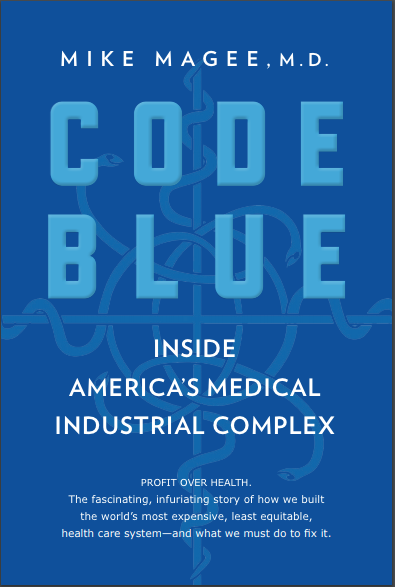
"Code Blue INDEX online"


Prospective Health Blog
BIOGRAPHY

NIH Precision Medicine
BIOGRAPHY

Health in 30
BIOGRAPHY

Larry's Letters
BIOGRAPHY

Precision Medicine, Euthanasia, Abortion, Communism, Trillions of Dollars, Losing Freedom, and Town Hall Mobs BIOGRAPHY

Yearning for Universal Coverage Is Not Universal
BIOGRAPHY

