The Man-Made Opioid Epidemic: A 5 Part Series.
Posted on | November 18, 2015 | Comments Off on The Man-Made Opioid Epidemic: A 5 Part Series.
 CDC: Connecting Dots, Opioids-Heroin.
Mike Magee
As we learned last week, the opioid epidemic that we’ve been debating for a decade, which has been largely fueled by prescription drugs, has now managed to bend the survival curve for middle aged white males in America. And there’s plenty of blame to go around.
There’s the pharmaceutical companies that marketed products as addiction proof when they were not, and funded medical professional and consumer organizations to advance the cause of a pain free society at any cost. Their mantra: “pain” is the 5th vital sign.
There’s the medical community that endorsed new societies of pain specialists, with pharmaceutical employees on their boards, and published a stream of liberalizing pain management papers in their peer reviewed journals.
There’s the 20 state medical boards and state legislatures, which in response to active lobbying by the pharma-funded medical organizations, for the first time, lifted all regulatory prohibition on the use of opioids for non-cancer chronic pain management. As one state statute made clear in 1999,“no disciplinary action will be taken against a practitioner based solely on the quantity or frequency of opioids prescribed.”
There’s the lobbyists like Rudolph Guiliani, who went over the heads of federal prosecutors in 2002 and accessed friends in the Justice Department to shut down efforts to prosecute firms the were knowingly profiting from the drug trade.
There’s the countless primary care and specialty clinicians who drank the Kool-Aid presented by pharma-supported “pain specialists” and freely prescribed without question, reassuring some, and turning a blind eye to others.
There’s the unfortunate patients who got hooked, and the bad actors that crushed, repackaged, and pushed their wares in the secondary sale street market.
And there’s the heroin dealers, who came in on the back end, with new demand for opiates already well established, to fill in the gap when it became more difficult to find prescribed pills on the street.
But for the moment, let’s not dwell on who’s to blame. How big is the problem, and what can be done now that over 100,000 people have been lost in the past 15 years? That’s the philosophy embraced by a new Johns Hopkins report on the topic titled “The Prescription Opioid Epidemic: An Evidence Based Approach.”
It begins with a blistering critical assessment of the effectiveness of “pain specialists”, their societies, and their ambitious pharma-supported advocacy. Here’s what the report states:
“These systematic reviews concluded that the overall effectiveness of chronic opioid treatment for chronic non-cancer pain is limited, the effect on improved human function is very small and the safety profile of opioids is poor. Briefly stated, the evidence on efficacy and effectiveness of these drugs for chronic non-cancer pain has demonstrated:
1. A variety of adverse events associated with opioid use, including: hypogonadism and infertility; neonatal abstinence syndrome; sleep breathing disorders; cardiac arrhythmias; opioid-induced hyperalgesia; and falls and fractures among the elderly;
2. High rates of healthcare utilization associated with these adverse events, including emergency department visits and hospitalizations from non-fatal overdoses;
3. High rates of deaths from unintentional poisonings, especially at doses at or above 100–120 morphine milligram equivalents (MME) per day, which generally occur at home during sleep;
4. Minimal improvement in pain and function associated with long-term opioid use for chronic non-cancer pain; and
5. An overall unfavorable risk/benefit balance for many current opioid users.
….. position papers of expert groups differ, as does the soundness of their recommendations, including some recommendations under investigation by the U.S. Senate at the time of this writing.”
How big is this self-made problem? Again, Hopkins reports:
“Drug overdose death rates in the U.S. increased five-fold between 1980 and 2008, making drug overdose the leading cause of injury death. In 2013, opioid analgesics were involved in 16,235 deaths — far exceeding deaths from any other drug or drug class, licit or illicit. According to the National Survey on Drug Use and Health (NSDUH), in 2012 an estimated 2.1 million Americans were addicted to opioid pain relievers and 467,000 were addicted to heroin. These estimates do not include an additional 2.5 million or more pain patients who may be suffering from an opioid use disorder because the NSDUH excludes individuals receiving legitimate opioid prescriptions.”
What’s to be done? In the next four Health Commentary reports, I’ll address four active areas that show promise:
1. Prescription Drug Monitoring Programs linked with mandatory electronic prescribing for opiates.
2. Roll-backs on liberalizing statutes and regulations governing prescribing of controlled substances.
3. Active oversight involvement of Pharmacies and Pharmacy Benefit Managers in the prescription use and abuse of opioids.
4. New technologies that should help track the movement and impact negligent or criminal distribution of prescription opiods.
Tags: addiction > drug abuse > heroin epidemic > Johns Hopkins > mortality in middle aged white males > opioids > oxycontin > prescription drug abuse > purdue pharma
CDC Methodology: Explaining The Rise In Autism Spectrum Disorder Prevalence.
Posted on | November 13, 2015 | Comments Off on CDC Methodology: Explaining The Rise In Autism Spectrum Disorder Prevalence.
Mike Magee
The results of the recent 2014 CDC survey of childhood developmental diasabilities, on first glance last week, turned more than a few heads. The dramatic, but simplistic take-away was that lifetime prevalence of autism spectrum disorder (ASD) had jumped from 1.25% based on data from 2011 to 2013, to 2.24% based on 2014 data. But most of the headlines were far more nuanced, thanks to a careful and complete interpretation of the changes by the CDC.
It turns out that the methodology of the survey instrument had been fundamentally changed in order to bring the CDC survey and its’ wording more in line with other similar surveys by other branches of government including HHS and HRSA.
source

As the illustration above shows, the earlier study included autism spectrum disorder in a group of ten alternatives in a third level of questioning. In the more recent study, Autism spectrum disorder was isolated and featured on the second level of questioning. An elaborate analysis of the complete databases of both surveys led statisticians to the conclusion, “ The revised question ordering and new approach to asking about developmental disabilities in the 2014 NHIS likely affected the prevalence estimates of these conditions.”
The new estimate of 2.24% is now in line with other estimates in governmental surveys. In addition, the CDC will be using the 2014 methodology in future studies as a benchmark for assessing any future changes in incidence. The extreme interest in trend lines for ASD reflects the fact that the cause of this strange and tragic condition remains unknown.
What is known is the following:
1. The condition is diagnosed more often in boys than girls, but that is changing. The earlier study labeled 82% as male, while the 2014 study identified only 75% male.
2. Most of those diagnosed are white (60%). 13% are black and 16% hispanic.
3. Most of the kids come from two parent families (68%).
4. The wealthy are at least as likely to have a child with ASD as poor parents. 22% are below the poverty level; 25% at one to two times the poverty level; 32% at two to four times the poverty level; and 21% more than four times the poverty level.
5. Most of the kids come from well-educated households. Over 2/3 of the parents have at least one parent with more than a high school education.
6. Geographic distribution is relatively balanced: South, 31%; Midwest, 26%; West, 22%; Northeast, 21%.
7. Most experts believe that a combination of genetic and/or environmental factors before, during and immediately after birth will eventually be found to be responsible for ASD. Vaccines as causal have been repeatedly ruled out.
When Knowledge Creates Potential for Demand: MRI Detection of Silent MI’s.
Posted on | November 9, 2015 | Comments Off on When Knowledge Creates Potential for Demand: MRI Detection of Silent MI’s.

Mike Magee
In the November 10th issue of JAMA, devoted to cardiovascular disease, David Bluemke, NIH Director of Radiology and Imaging Sciences, and his team, revealed a set of findings certain to draw mixed reviews from health economists and policy professionals. It seems that quite a few more people than we had realized are walking around with scarred hearts (from myocardial infarctions in the past).
Now depending on whether you are generating a bill or paying for it, this is happy or sad news. But first a few facts from the study. The study involved 1,840 men and women, ages 45 to 84, from six US communities, and lasted a decade. The focus was on undiagnosed heart attacks. For these people, the symptoms were too mild or entirely absent to draw much attention. So they were ignored, and life fortunately went on.
Now this is not a new phenomenon. In fact, a group in 2002 checked out a population of heart attack patients, and reviewing their old ECG’s, determined that 20% had evidence that their previous heart attacks had gone undetected.
At the same time, experts have also been aware for some time that the ECG is not a perfectly sensitive test of heart muscle damage. In fact, smaller scars that result from limited episodes of ischemia caused by blocked cardiac arteries can be easily missed by the classic ECG. That is why, in this study, the NIH investigators turned up the dials and used enhanced MRI’s to look for scars – even small ones.
The group of patients all had one thing in common – they had complained of heart problems. And in response all received standard ECG’s and blood work during the ten year period. They appeared fine. Then, at the ten year mark, all received their MRI’s. The sensitive test found that 8% of them (146 people) had scarred hearts, and 78% of those weren’t aware of having ever had a heart attack. This included 13% of the males in the study and 2.5% of the females.
The incoming president of the American College of Cardiology, Richard Chazal, telegraphed a potential change in practice when he said of the study, “It’s almost like having looked at a petri dish with a magnifying glass, and then having the availability of a microscope. All of a sudden you can see things that you couldn’t see before.”
But the question is, Do we really want to know? Is this endpoint worth detecting? It’s pretty easy to predict what will happen next. Some doctors, including perhaps those with financial ties to imaging centers, will be doing many more enhanced cardiac MRI’s. Symptomless patients, especially those with great insurance or the financial means and an obsession about their own mentality, will be urgently requesting these exams. And at the end of the day, we will retrospectively, as with the PSA for prostate cancer, have to sort out whether knowing something adds or detracts from quality of life.
Tags: cardiac MRI > David Bluemke > enhanced cardiac MRI > JAMA > NIH Radiology and Imaging Sciences > silent MI
JAMA Good News Department
Posted on | October 27, 2015 | Comments Off on JAMA Good News Department
JAMA Health Statistics 1969 vs. 2013 (death rates per 100,000)
On the positive side….
Death Rate Overall ⬇ 42.9%
Death from Stroke ⬇ 77.0%
Death from Heart Disease ⬇ 67.5%
Death from Cancer ⬇ 17.9%
Death from Diabetes ⬇ 16.5%
On the negative side….
Death from COPD ⬆ 100% (21 to 42/100,000)
“Wet-Bulb Temperature” – The Limits of Human Endurance and Chaos Ahead
Posted on | October 27, 2015 | 3 Comments
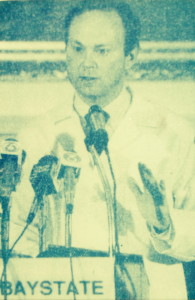 Springfield Republican, Sept. 23, 1988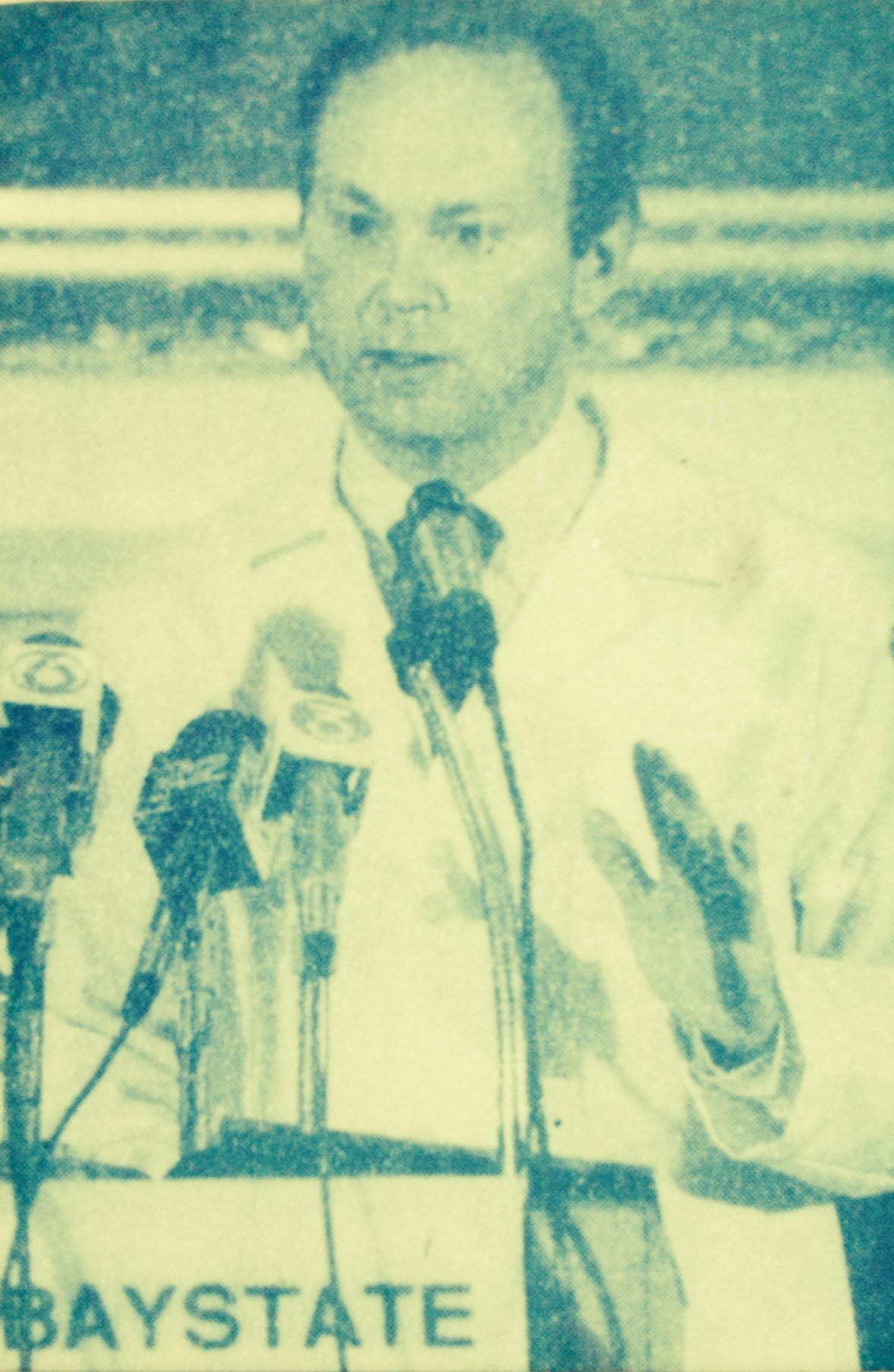
Mike Magee
On September 23, 1988, I had my first experience with the pressures of a full blown press conference. I was the chief administrative physician at Baystate Medical Center in Springfield, Massachusetts. Our governor, Michael Dukakis, was running for President of the United States, at the same time (as it turns out) that his State Police Academy was running wild.
The cause for the press conference that Friday afternoon was a deadly combination of heat, overexercise, and physical abuse sanctioned and orchestrated by those in charge of the Massachusetts State Police Academy in Agawam, MA, on September 17, 1988. Our assessment a week later of the 51 victims, one of whom would eventually die of massive liver and kidney failure, was that this was the result of a lethal combination of heat, overexercise and dehydration. My public report on camera that afternoon was met with a stern reproach by leaders of our Health System, some politicians, and members of the Dukakis administration. A cover-up by the State Police, who originally suggested the possibility of contaminated water as the cause, was soon revealed. A month later, a full recounting in People magazine confirmed our initial diagnosis, and added as well documentation of extreme physical and verbal abuse that day.
In any case, from that day forward, I’ve been especially conscious of the danger of heat to humans. And so, yesterday, I read with interest on Discovery.com the dramatic headline, “Burning Hell Coming For Mideast Deserts”. The article, based on a recent report in the journal, Nature Climate Change, first exposed me to the term, “wet bulb temperature”. And then today, the New York Times followed up with an article focused on the term called “The Deadly Combination of Heat and Humidity”.
As it turns out, the proper term is “wet-bulb globe temperature” and it was first used in the 1950’s by the U.S. military. The Army and the Marines were attempting to limit the degree of trainee casualty due to heat stress. They had noted that heat measures alone were not an adequate predictor of problems. They sought a measure that would consider humidity as well. So they wrapped a thermometer in a wet cloth, and then took a measure. They then conducted epidemiologic studies and pegged the critical point where injuries began to appear. But, for some reason, wet-bulb temperature measurements and findings never quite made it onto our athletic fields or public health departments.
According to one emergency physician at George Washington Univesity School of Medicine, beyond a certain point, “your body doesn’t cool anymore” (from sweating). So what is that point? Well that depends on what you’re doing. If you are exercising, your body loses the ability to cool itself through sweat evaporation at a wet-bulb temperature of 80. That same person sitting quitely in the shade will first experience problems at a wet-bulb temperature of 92, and if he sadly falls asleep there, under the tree, at a wet-bulb temperature of 95, he’ll die in six hours. In the Nature Climate Change study, the authors demonstrated that the recent 1.5 degrees of global warming had already resulted in a quadrupling of the likelihood of experiencing exposure to deadly wet-bulb temperatures.
The number of days in danger per year has been averaging four, but if current global warming treads persist, we will experience on average 10 such days per year by 2030. That will seem mild compared to the 17 days in 2050, and even more so compared to the 35 days in 2090. To put some human terms to all this, consider the death rates with heat spells in our recent history: July, 1995 (Chicago) – 700 deaths; August, 2003 (Europe) – 45,000; July, 2010 (Russia) – 54,000. Not small numbers.
India hit a regular temperative of 118 degrees last week with 2500 casualties, which likely triggered the “Burning Hell Coming for Mideast Deserts” article. As one of the Nature Climate Change authors said, “People who have resources will live indoors.” Of course, generating the electricity for air conditioning carries with it a carbon footprint which could make global warming worse. And if you’re poor, you’re out of luck, and on the move to anyplace that’s cooler. Speaking of migration, cultural and historical events like the annual outdoor Muslim pilgrimage to Mecca, Saudi Arabia, could become untenable. The same may be true of oil exploration as equipment breaks down and mechanics can’t function in the extreme heat. If you believe the Middle East is unstable now, don’t expect relief any time soon.
The wet-bulb temperature sets the limits of human tolerance. And clearly human behavior is magnifying our population risks. If we begin to act rationally and adopt policies that lower carbon emissions, we will create for ourselves a range of options and greater freedom. If we persist as we have, expect change similar to what the Massachusetts police cadets experienced in 1988. And as a doctor with first hand exposure to that event, let me tell you, it was not a pretty picture.
Tags: carbon footprint > climate change > environmental health > massachusetts state police > michael dukakis > wet-bulb temperature
Sustainable Prevention: At The Intersection of America’s Two Most Powerful Social Networks
Posted on | October 21, 2015 | 2 Comments
Mike Magee
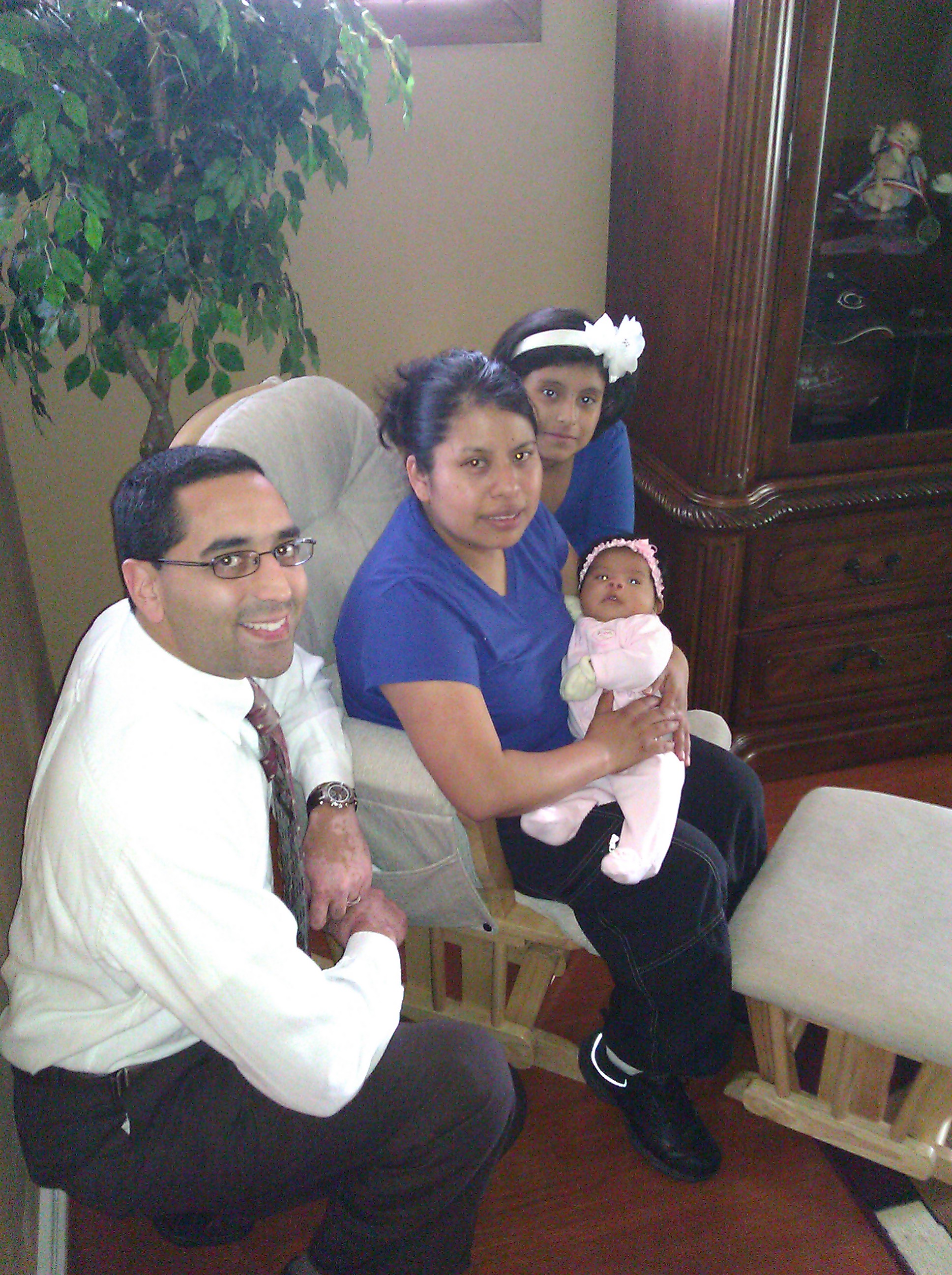
Last week, I made a quick trip to Washington – one day, back and forth, from Hartford, CT. I was there to seek advice from an old friend as we complete planning for the second decade of the Rocking Chair Project. This early childhood intervention program targets young, economically disadvantaged, expectant mothers, supporting them with a physician-led home visit which includes the gift of a upholstered glider rocking chair and ottoman as a “gift of nurturing” for both mother and child. The visits, repeated over 1000 times in the past 10 years, include reinforcement of health messages and an emphasis on long term continuity with the health care system.
The challenge now is scaling up what we know to be a low-cost, highly impactful intervention. We have been relying on individual 2nd year Family Medicine residents around the country to identify the target moms, and to follow through with these “high-touch” visits. It has worked, but requires a fair amount of hands-on coordination and is not easily scalable.
Our lead adviser, Yale Professor Emeritus, Ed Zigler (Father of Head Start), told us a long time ago that the intervention was so low cost and powerful, tapping into two critical social networks (Medicine and Family), that it should be offered to entire populations, not just a lucky few individual patients.
My DC friend summed up the challenge immediately. He said we were seeking “a vertically integrated network with existing distribution channels”. Translation, a well organized, efficient, and financially sustainable system that has the ability to identify the target population prenatally, and already is accustomed to making home visits in the immediate postnatal period.
That doesn’t sound like such a tall order, except for the fact that our health care system, with few exceptions, remains fundamentally fragmented, and our emphasis on treatment over prevention, insures that caregivers usually arrive late to the game. We, and others, have recognized this. The Rocking Chair Project, and many other valiant efforts, have been layered onto the existing system, in the hope of patching up the most obvious system weaknesses. But now, the nagging advice of broad thinkers like Ed Zigler demands fundamental change – this should be available to the entire population, not simply the lucky few.
One group that is attempting to address this challenge in a systematic and optimistic way is the ReThink Health, which is supported by the Fannie E. Rippel Foundation. It was launched in 2007 with the help of luminaries from health, economics, politics, and business including Don Berwick, Elliott Fisher, Marshall Ganz, Laura Landry, Amory Lovins, Jay Ogilvy, Elinor Ostrom, Peter Senge, John Sterman, and David Surrenda.
ReThink Health’s approach is to “awaken changemakers to what is possible.”
How do they do this? In their words, “We spur big-picture thinking that allows leaders to step outside their own frames of reference. This lets them better see how the various parts of the system interact in unexpected ways and determine how and where they can exert influence. We do this by deeply understanding their challenges, listening to diverse voices, and working together to harness the information, insights, and actions needed to overcome entrenched beliefs and disrupt the status quo.”
Certainly “Active Stewardship” and “Sound Strategy” are critical foundation supports, but a third leg they mention is essential as well – “Sustainable Investment and Financing”. One of their regional sites, The Upper Connecticut River Valley (UCRV) ReThink Health, under Executive Director Steve Voight, encompasses two counties in New Hampshire and two counties in Vermont, and includes the Dartmouth-Hitchcock Medical Center, Dartmouth College’s Tuck School of Business, and The Dartmouth Institute for Health Policy and Clinical Practice, among their partners. In defining the challenge ahead, they said, “We aspire to create a model that will serve both our region and our country. The path forward is both clear and uncertain. To succeed we will have to be supportive and critical, optimistic and skeptical, cautious and bold. Above all, we will have to trust that by working together we can find a path forward.”
What suggestions might we add from our experience with the Rocking Chair Project?
1. Address your most vulnerable populations first.
2. Start as early in life as possible – that means prenatally.
3. Integrate the multi-generational family, on their terms, in their home settings.
4. Nurture the synergistic power of two social relationships – family and medical.
5. Understand that long term preventive continuity is seeded in the first days of life by demonstrating and advantaging compassion, understanding and partnership.
That’s the Rocking Chair Project.
Tags: Amory Lovins > David Surrenda > Donald Berwick > Elinor Ostrom > elliott fisher > Jay Ogilvy > John Sterman > Laura Landry > Marshall Ganz > Peter Sentge > ReThink Health > ReThink Health UCRV > Rippel Foundation > Rocking Chair Project > Steve Voight
Between A Rock and A Hard Place: The Planetary Patient
Posted on | October 16, 2015 | 2 Comments

Mike Magee
Thirty six years ago, our then President, Jimmy Carter, spoke directly to the American people about governance and energy independence in a speech titled, “Crisis of Confidence” – a speech derisively labeled “The Malaise Speech” by his then Republican Presidential opponent, Ronald Reagan.
Putting aside the fact that Carter never used the word “malaise” in the speech, it is instructive to look back three and a half decades later, and reflect on how much has changed, and how much remains the same, especially when it comes to the “1%” and our planet’s health relative to energy consumption.
Carter begins by sharing quotes from every day Americans that he has recently collected. They include:
“I feel so far from government. I feel like ordinary people are excluded from political power.”
“Some of us have suffered from recession all our lives.”
“Some people have wasted energy, but others haven’t had anything to waste.”
“The big-shots are not the only ones who are important. Remember, you can’t sell anything on Wall Street unless someone digs it up somewhere else first.”
A few paragraphs later, the President reflects, “In a nation that was proud of hard work, strong families, close-knit communities, and our faith in God, too many of us now tend to worship self-indulgence and consumption. Human identity is no longer defined by what one does, but by what one owns. But we’ve discovered that owning things and consuming things does not satisfy our longing for meaning. We’ve learned that piling up material goods cannot fill the emptiness of lives which have no confidence or purpose.”
Later he describes a Washington that is tied in knots.
“What you see too often in Washington and elsewhere around the country is a system of government that seems incapable of action. You see a Congress twisted and pulled in every direction by hundreds of well-financed and powerful special interests. You see every extreme position defended to the last vote, almost to the last breath by one unyielding group or another.”
If he was prescient about the politics at home, he was a bit short-sighted in his assessment of the energy crisis. Understandably, he sought to stem the tides of importation of oil from the Middle East. As one voter had told him, “ “Our neck is stretched over the fence and OPEC has a knife.” The Commander-in-Chief said, “Energy will be the immediate test of our ability to unite this nation, and it can also be the standard around which we rally. On the battlefield of energy we can win for our nation a new confidence, and we can seize control again of our common destiny.” As we have seen, that morphed into an aggressive philosophy of “Manifest Destiny” a few short decades later.
As for the immediate response to the crisis, as laid out on July 15, 1979, he recommended, “To give us energy security, I am asking for the most massive peacetime commitment of funds and resources in our nation’s history to develop America’s own alternative sources of fuel — from coal, from oil shale, from plant products for gasohol, from unconventional gas, from the sun.”
It’s amazing how, in such a short blink of human history, how much can change. But here we are, with the health of our “planetary patient” now hanging in the balance. Today, the potentially devastating impact of global warming is well understood and accepted by all, except the most stubbornly ignorant or politically expedient. Yet the crisis remains largely unaddressed.
Coal, most now agree, is irreparably dirty, and oil less clean than Carter’s “unconventional gas”. The oil shale, so celebrated in Canada, piled up to flow down a trans-national pipeline that will never be authorized, has become prohibitively expensive, and bears an enormous carbon footprint, as energy prices continue to head south. The promise of solar (and wind), even with continued technologic advances and improving cost effectiveness, has thus far wilted under the withering criticism of traditional fossil fuel energy investors anxious to jump on innovators at every hiccup in development.
A tumultuous Middle East, absent our subsidies as chief importers of their only real export, oil, remains an infectious threat to the “planetary patient”. Ungovernable, and living on the edge of civilization, their human populations cry out for civility, opportunity and modernity.
Our planet is changing, and yet in many ways, we humans stay the same – slow to adapt, wed to self-interest, long on aggression and short on wisdom.
Case in point: Fracking in Oklahoma for “clean natural gas”. Halfway between Tulsa and Oklahoma city sits a town of 8000 called Cushing Hub. It is also home to one of the largest oil tank storage facilities in the world. Which is fine, were it not also host to one of the largest fracking operations on the globe. That effort has resulted in the injection of tens of millions of barrels of wastewater underground. That lubricated liquid has apparently facilitated the movement of previously stable giant rock mantles, allowing them now to more easily slip over and under each other.
That the underground rock is on the move is clear from the numbers. In 2009, the area experienced 3 quakes measuring magnitude 3 or greater. Five years later, there were 585. Currently the Cushing oil storage hub holds 53 million barrels of crude awaiting transport to refineries in the south. In October, 2014, two quakes over 4.0 erupted just below the facility. Scientists are now predicting a 6.0+ quake as highly likely in the near future. One 5.7 or greater would disrupt the facility and cause a massive and devastating spill. Even the states oil and gas regulatory body, the Oklahoma Corporation Commission, is concerned. But the state legislature isn’t too sympathetic. They cut the Commission’s budget by nearly 50% in response to their vocal concerns.
Speaking for the “planetary patient”, here’s the good and the bad news. We’re no longer energy dependent on the Middle East, but have managed to insert ourselves into that unforgiving environment with destabilizing effect, instigating among others problems a mass migration of our fellow humans of Biblical proportions.
Adding to the incredible, war-induced, loss of human life (including many civilians) and massive environmental degradation, we have directed our best energy technology solutions toward a energy choice that is fraught with environmental hazard.
Yes, we have begun to move from dirty to less dirty fossil fuels, and along with China, have begun to address global warming. But we have no rational national environmental controls on fracking. Rather we rely on energy industry controlled state bodies. Often those are the very same bodies who currently have Donald Trump in the lead among Republican primary candidates, and the same bodies responsible for gerrymandering voting districts and designing various new barriers to disenfranchise voting rights for young and poor citizens.
If the “planetary patient” could talk, what would she say about our choices on energy since Carter? Likely, she would note that our United States remains dramatically ununited in the pursuit of truly clean energy. Second, she might remind us that earthquake fault lines do not respect human designated geographic state boundaries. And third, that 35 years after President Carter’s speech, our problem with “crisis in confidence” remains, and will not be cured by high walls or rampant creed or blocking the vote. Rather it will require wise leaders and the will of a majority of determined and enlightened American citizens.
For Health Commentary, I’m Mike Magee
Tags: crisi in confidence > energy policy > fracking > jimmy carter > planetary patient > the malaise speech > tracking

"Code Blue INDEX online"


Prospective Health Blog
BIOGRAPHY

NIH Precision Medicine
BIOGRAPHY

Health in 30
BIOGRAPHY

Larry's Letters
BIOGRAPHY

Precision Medicine, Euthanasia, Abortion, Communism, Trillions of Dollars, Losing Freedom, and Town Hall Mobs BIOGRAPHY

Yearning for Universal Coverage Is Not Universal
BIOGRAPHY

